Junte-se a nós em uma viagem ao mundo dos livros!
Adicionar este livro à prateleira
Grey
Deixe um novo comentário Default profile 50px
Grey
Assine para ler o livro completo ou leia as primeiras páginas de graça!
All characters reduced
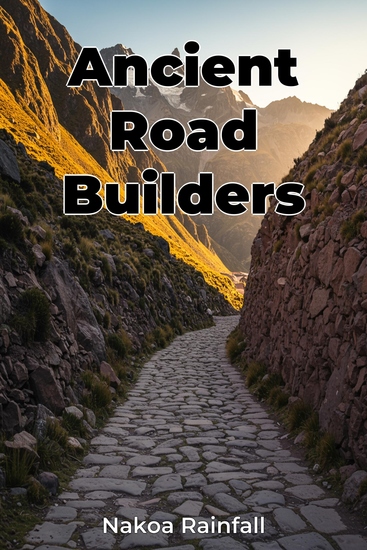
Ancient Road Builders - cover
LER

Ancient Road Builders

Nakoa Rainfall

Tradutor A AI

Editora: Publifye

  • 0
  • 0
  • 0

Sinopse

Ancient Road Builders explores the fascinating history and technology behind the construction of roads in ancient civilizations, revealing their crucial role in shaping societies. These ancient road networks were more than just pathways; they served as vital arteries for trade, communication, and military movements, profoundly impacting the economic prosperity and political stability of empires.

 
For example, the meticulously engineered Roman roads, built with gravel, stone, and concrete, showcase advanced surveying and layering techniques. Similarly, the Persian Royal Road facilitated communication and control through its relay stations and security measures. The book examines road-building techniques across diverse cultures, including the Romans, Persians, and Inca, highlighting the unique challenges and innovative solutions each civilization developed.

 
Whether it was the Inca's response to mountainous terrain with suspension bridges or the strategic importance of the Persian Royal Road, the book demonstrates how infrastructure directly influenced the rise and endurance of ancient empires. By combining archaeological findings, historical texts, and engineering principles, Ancient Road Builders provides a comprehensive understanding of ancient road construction, progressing from the initial development of roadways to the detailed examination of specific civilizations and their lasting engineering legacies.
Disponível desde: 03/03/2025.
Comprimento de impressão: 63 páginas.
Outros livros que poderiam interessá-lo

  • King's archtraitor roger casement - cover

    King's archtraitor roger casement

    William T McCartney

    • 0
    • 0
    • 0
    Roger Casement, the legendary leader of Irish Nationalism up to 1916, was also a formidable campaigner for humanitarian values. His investigations into human rights abuse lead directly to vast improvements in Congolese and Peruvian lives. He is the father of human rights protection. This is his story.
    Ver livro
  • This Thing Called You - cover

    This Thing Called You

    Ernest Holmes

    • 0
    • 0
    • 0
    The inspiration of Ernest Holmes has reached hundreds of thousands of readers through his classic works, many of which are just now becoming available. Whether a newcomer to the philosophy Holmes founded or a veteran listener, you will find great power and practicality in the words that render Holmes one of the most celebrated and beloved mystical teachers of the past hundred years.
    Ver livro
  • Ramayana of valmiki the - cover

    Ramayana of valmiki the

    Valmiki Ramayana

    • 0
    • 0
    • 0
    Narrated by Matthew Schmitz of Altrusian Grace Media, this English prose version of the Ramayana is told in a story form capturing the true and authentic spirit of the original Sanskrit and which makes it easy and enjoyable to listen to. The Ramayana is one of the greatest epics of ancient literature, a monumental work that has transcended the boundaries of time and culture to become a story cherished across generations and geographies. Composed by the sage Valmiki, it is not just a tale of heroism and divine adventure, but a profound reflection on the complexities of dharma, the power of devotion, and the triumph of good over evil. Set in a world imbued with gods, demons, and the forces of nature, the Ramayana follows the journey of Lord Rama, the prince of Ayodhya, who embodies the virtues of righteousness, honor, and compassion. His exile into the forest, the abduction of his devoted wife, Sita, by the demon king Ravana, and the epic battle that ensues form the narrative’s core. Yet, within its grand scope, it is also a story of friendship, loyalty, and the resilience of the human spirit. At its heart, the Ramayana presents universal themes that resonate with readers across eras—the struggle between light and darkness, the moral dilemmas faced in the pursuit of justice, and the ultimate victory of truth. Rama’s unwavering adherence to dharma, Sita’s unparalleled faith, Hanuman’s boundless devotion, and Ravana’s tragic ambition are all rich in lessons that continue to guide and inspire. This ancient epic is more than just a chronicle of divine exploits; it is a mirror reflecting the ideals and failings of humanity. The Ramayana offers insights into values that have shaped human civilization and provides a compass for navigating the complexities of life. Its verses are steeped in poetic beauty and layered with allegorical meanings, inviting listeners not only to witness an extraordinary saga but also reflect on their own journey.
    Ver livro
  • The Weather Girls - cover

    The Weather Girls

    Sarah Webb

    • 0
    • 0
    • 0
    It's 1944. Twelve-year-old Grace Devine lives at Blacksod Lighthouse and weather station in County Mayo with her parents and little brother. When a German plane crashes nearby, she and her best friend Sibby risk their lives to save the young pilot. Grace's family take him in, but their neighbours are horrified at having an 'enemy' in their midst.
    Meanwhile, the Met Office in England suddenly asks Blacksod to send them weather reports every hour. But why? As the wind and rain howl outside, Grace begins to understand that something important is happening, something to do with the war – and she is right in the eye of the storm.
    A tale of bravery, adventure and a remarkable friendship, inspired by true events from World War 2.
    Ver livro
  • Romaine Wasn't Built in a Day - The Delightful History of Food Language - cover

    Romaine Wasn't Built in a Day -...

    Judith Tschann

    • 0
    • 0
    • 0
    Discover how the food we love shapes the language we use in this sharp, laugh-out-loud story of the etymology of food words. All food has a story, reaching as far back into history as language itself. Throughout time, as languages followed and reflected the tides of civilizations, food language came to represent some of the highs and lows of how humans communicate: from the highbrow "Chateauneuf du Pape," which must be pronounced with a healthy dose of snootiness; to the giggle-inducing yet delicious "nun's farts" of Jamaica (also known as "beignets"); to the fascinating travels of the word "coffee" across centuries and continents, attesting to the undying and unifying allure this drink holds for us. From Spam to amuse-bouches, ciabatta to kombucha, Romaine Wasn’t Built in a Day reveals the delightful history and stories behind the words we use for the foods we love.   In Romaine Wasn’t Built in a Day, linguist Tschann takes us on a journey from the vineyards of Avignon to the shores of Tahiti to the port of Mocha on the Red Sea coast to explore the history of the history of the words we use for the food we eat. Chock full of linguistic did-you-knows and delectable trivia, this is your go-to gift for history buffs, crossword fiends, and Scrabble diehards. This is the surprising and sometimes hilarious history of food, told through the lens of the fascinating evolution of language. All food has a story, reaching as far back into history as language itself. Throughout time, as languages followed and reflected the tides of civilizations, food language came to represent some of the highs and lows of how humans communicate: from the highbrow "Chateauneuf du Pape," which must be pronounced with a healthy dose of snootiness; to the giggle-inducing yet delicious "nun's farts" of Jamaica (also known as "beignets"); to the fascinating travels of the word "coffee" across centuries and continents, attesting to the undying and unifying allure this drink holds for us. From Spam to amuse-bouches, ciabatta to kombucha, Romaine Wasn’t Built in a Day reveals the delightful history and stories behind the words we use for the foods we love.   In Romaine Wasn’t Built in a Day, linguist Tschann takes us on a journey from the vineyards of Avignon to the shores of Tahiti to the port of Mocha on the Red Sea coast to explore the history of the history of the words we use for the food we eat. Chock full of linguistic did-you-knows and delectable trivia, this is your go-to gift for history buffs, crossword fiends, and Scrabble diehards. This is the surprising and sometimes hilarious history of food, told through the lens of the fascinating evolution of language.
    Ver livro
  • Persian Corridor in World War II The: The History of the Allies’ Most Important Supply Route - cover

    Persian Corridor in World War II...

    Editors Charles River

    • 0
    • 0
    • 0
    Operation Barbarossa was the most fateful decision of World War II, and when it gave the Soviets common cause with the British (and subsequently the Americans), the purpose of the Lend-Lease Act changed in nature as well. The bulk of Germany’s formidable armed forces were committed to the offensive in the east, which relieved the pressure on the British and meant that a German attack on Britain or elsewhere in Western Europe was not going to happen, so keeping the Soviets in the war became the most essential goal of the supply program. 
    Getting supplies to the Soviets to help them resist the German armies became a strategic imperative, and Iran’s geography of bordering the Persian Gulf to the south and Soviet territory to the north brought Iran to the front and center in the strategic supply effort. The German invasion devastated much of European Russia, but also devastated Ukraine and Belarus, other member “republics” in the Soviet Union, and the portions of the Soviet Union that bordered on Iran were Armenia, Azerbaijan and east of the Caspian, Turkmenistan. 
    The Persian Corridor involved British and Dominion forces, as well as Soviet armed forces and personnel, but the operation and management of the Persian Corridor became largely an American show. Most of the immense amount of aid sent was for transshipment across Iran to the Soviets, but it also involved supplying British and Commonwealth forces in Iran, Iraq and elsewhere in the Middle East. Some was used to feed and supply Iran’s people, and some was used to modernize and maintain Iran’s infrastructure. There was also the need to supply the American troops working in the Persian Corridor. While 80% or so of the aid came from the U.S., there was also a significant amount of aid sent from Canada, Australia, South Africa and especially India. 
    Ver livro