¡Acompáñanos a viajar por el mundo de los libros!
Añadir este libro a la estantería
Grey
Escribe un nuevo comentario Default profile 50px
Grey
Suscríbete para leer el libro completo o lee las primeras páginas gratis.
All characters reduced
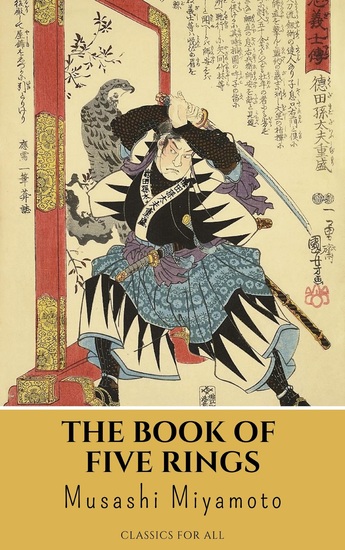
The Book of Five Rings - cover

The Book of Five Rings

Musashi Miyamoto, Classics for all

Editorial: Classics for all

  • 0
  • 0
  • 0

Sinopsis

Contains Active Table of Contents (HTML)  and include a bonus link to the free audio book.

Along with Sun Tzu's The Art of War, The Book of Five Rings is considered to be one of the most insightful texts on the subtle arts of confrontation and victory to emerge from Asia. Composed in 1643 by the famed duelist and undefeated samurai Miyamoto Musashi, The Book of Five Rings analyzes the process of struggle and mastery over conflict that underlies every level of human interaction. For Musashi, the way of the martial arts was a mastery of the mind rather than simply technical prowess—and it is this path to mastery that is the core teaching in The Book of Five Rings. This brilliant manifesto is written not only for martial artists but for anyone who wants to apply the timeless principles of this text to their life.
Disponible desde: 26/06/2022.
Longitud de impresión: 2000 páginas.
Otros libros que te pueden interesar

  • Class War - A Literary History - cover

    Class War - A Literary History

    Mark Steven

    • 0
    • 0
    • 0
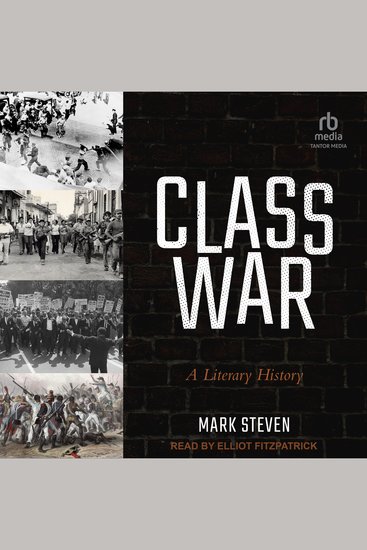
    A bold new history of the global class war 


    A thrilling and vivid work of history, Class War weaves together literature and politics to chart the making and unmaking of social class through revolutionary combat. In a narrative that spans the globe and more than two centuries of history, Mark Steven traces the history of class war from the Haitian Revolution to Black Lives Matter. 


    Surveying the literature of revolution, from the poetry of Shelley and Byron to the novels of Émile Zola and Jack London, exploring the writings of Frantz Fanon, Che Guevara, and Assata Shakur, Class War reveals the interplay between military action and the politics of class, showing how solidarity flourishes in times of conflict. Written with verve and ranging across diverse historical settings, Class War traverses industrial battles, guerrilla insurgencies, and anticolonial resistance, as well as large-scale combat operations waged against capitalism's regimes and its interstate system. 


    In our age of economic crisis, ecological catastrophe, and planetary unrest, Steven tells the stories of those whose actions will help guide future militants toward a revolutionary horizon.
    Ver libro
  • Battle of Culloden The: The History and Legacy of the Jacobite Revolts’ Most Famous Battle - cover

    Battle of Culloden The: The...

    Editors Charles River

    • 0
    • 0
    • 0
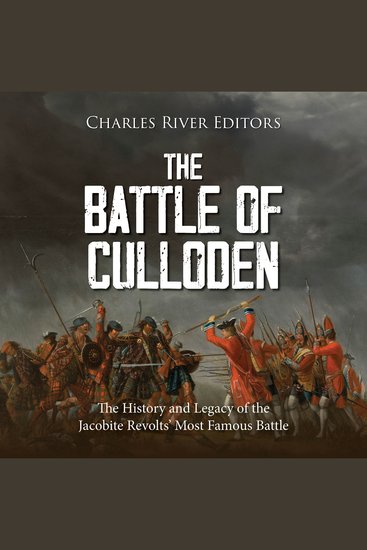
    The Jacobites conjure up many images to 21st century Britons, including romantic heroism, the Outlander series, and Bonnie Prince Charlie as the doomed hero of the cause, but Jacobitism was a cause that had far reaching consequences across 18th century Europe. The Jacobites were not only supporters of the exiled Stuart monarchy, but also against the political and religious settlements agreed to across the British Isles. As Jacobite historians such as Daniel Szechi and Frank McLynn have noted, the specter of the Jacobite threat was present for the British government and monarchy in their dealings with European powers throughout the 18th century. This was especially true in France, the country that supported the exiled Stuarts and gave them a home until 1714. This soured the French monarchy’s relationship with Britain, and the Hanoverian kings who replaced the Stuarts were always aware of it. 
    Of all the fighting conducted by the Jacobites, the Battle of Culloden, fought on April 16, 1746, was probably the most famous battle of them all, and it was a complete disaster for the Jacobite army. The government army outnumbered and outgunned the Jacobites, and when snow fell that morning, it left the battlefield wet and boggy. The exposed field also meant there would be nowhere for the Jacobites to avoid the enemy’s gunfire. The battle began around 1:00 p.m. with British artillery fire that the Jacobites struggled to respond against, and the famous Highland charge employed by the Scottish clans was hopeless in a boggy field. Their opposition had learned from previous encounters by attacking their opponent on the right instead of straight ahead, which bypassed the Highlanders’ shield. The battle lasted about an hour, and in that time the Jacobites lost about 2,000 men, a resounding defeat that marked the end of the Jacobites’ struggle to restore a Stuart to the throne.
    Ver libro
  • The PD Book - 7 Habits that Transform Professional Development - cover

    The PD Book - 7 Habits that...

    Elena Aguilar, Lori Cohen

    • 0
    • 0
    • 0
    Develop transformational professional development programs that build and sustain your school community 


    In The PD Book, bestselling author Elena Aguilar and coauthor Lori Cohen offer seven habits—and a wealth of practical tools—that help you transform professional development. In this book, you'll learn how to inspire adult learners, the importance of having clear purpose, and how to navigate power dynamics in a group. You'll also learn a new way to plan PD that allows you to attend to details and be a responsive facilitator. The dozens of tips and tricks, anecdotes and research, and tools and resources will enable you to create the optimal conditions for learning. 


    You'll also: craft effective outcomes for your adult students and design an agenda that aligns with adult learning principles; use storytelling as a tool for effective workshops and trainings; and plan backwards from evaluations and outcomes to create powerful and lasting educational experiences. 


    Ideal for educational leaders and administrators, professional development facilitators, coaches, and positional leaders, The PD Book is an incisive resource offering concrete strategies for educators at all levels.
    Ver libro
  • A City Within One Building - Exploring the Unique Architecture of Urban Life - cover

    A City Within One Building -...

    John Harpoon

    • 0
    • 0
    • 0
    In the heart of urban landscapes, the idea of a "city within one building" has evolved from a futuristic concept to a tangible reality. These monumental structures encapsulate the essence of urban life, redefining the way we live, work, and interact within confined yet dynamic environments. At their core, they embody the idea of vertical urbanism—a vision that seeks to concentrate the diversity and vibrancy of a city into a single architectural entity. 
    The origins of this vision can be traced to the pressures of urbanization and the relentless march of technological innovation. As cities expanded horizontally, they encountered spatial limitations, environmental challenges, and infrastructural strain. The solution lay not outward, but upward. Vertical urbanism emerged as a response to these challenges, combining architectural ingenuity with a commitment to sustainability. The result is a new typology of buildings that integrate residential, commercial, recreational, and even cultural spaces into a cohesive, self-contained ecosystem. 
    One of the most compelling aspects of these megastructures is their ability to transform our perception of space and connectivity. Traditional cities rely on sprawling layouts that separate different functions—housing, offices, schools, and leisure activities are often miles apart. By contrast, a city within a building integrates these elements into a seamless whole. Residents can live, work, and play without stepping outside, reducing reliance on transportation and fostering a sense of community within the structure’s walls.
    Ver libro
  • Fighting in World War I: The History and Legacy of Warfare during the Great War - cover

    Fighting in World War I: The...

    Editors Charles River

    • 0
    • 0
    • 0
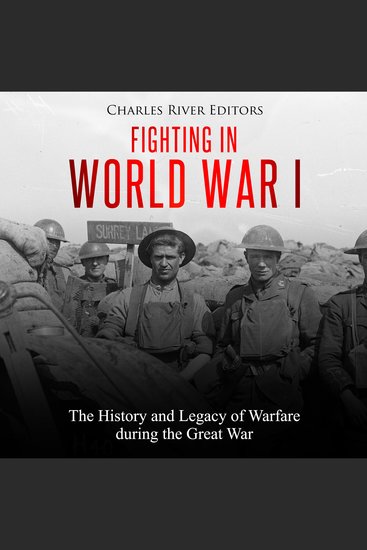
    World War I, also known in its time as the “Great War” or the “War to End all Wars”, was an unprecedented holocaust in terms of its sheer scale. Fought by men who hailed from all corners of the globe, it saw millions of soldiers do battle in brutal assaults of attrition which dragged on for months with little to no respite. Tens of millions of artillery shells and untold hundreds of millions of rifle and machine gun bullets were fired in a conflict that demonstrated man’s capacity to kill each other on a heretofore unprecedented scale, and as always, such a war brought about technological innovation at a rate that made the boom of the Industrial Revolution seem stagnant.  
    By 1918, all the great powers were fielding squadrons of fighting aircraft armed with machine-guns and bombs, to say nothing of light reconnaissance planes. Tanks, a common feature on the battlefield by 1918, had not previously existed outside of the realm of science fiction stories written by authors like H.G. Wells. Machine guns had gone from being heavy, cumbersome pieces with elaborate water-cooling systems to single-man-portable, magazine-fed affairs like the Chauchat, the Lewis Gun and the M1918 BAR.  
    These technological developments led to an imbalance. Before the introduction of the man-portable light machine gun (which took place in the second half of the war), not to mention tanks (which also joined the fight late in the game), defensive firepower vastly outweighed offensive capability. Massed batteries of artillery, emplaced heavy machine guns, barbed wire entanglements, and bewildering fortifications meant that ground could not be taken except at incredible cost.  
    Fighting in World War I analyzes the technological advancements in weaponry that produced the deadliest conflict in history up to that time, and the adjusting tactics that the combatants came up with on land, at sea, and in the air. 
    Ver libro
  • The Broken Path - Native Tribes and the Tragedy of the Trail of Tears - cover

    The Broken Path - Native Tribes...

    Davis Truman

    • 0
    • 0
    • 0
    “The Broken Path: Native Tribes and the Tragedy of the Trail of Tears” delves into one of the darkest chapters in American history, documenting the harrowing experiences of Southeastern Native American tribes during the forced relocations known as the Trail of Tears. This book offers a poignant exploration of the devastating consequences of U.S. government policies that sought to remove Indigenous peoples from their ancestral lands. Through the lens of selected tribes, whose fates, though varied, were marked by equal suffering, the narrative reveals the inhumane reality of manifest destiny.  
    This doctrine drove the relentless expansion of white settlers across the continent. Despite efforts by Native Americans to resist through legal battles and armed conflict, their struggle was tragically futile against the overwhelming forces of displacement. This powerful account underscores the enduring impact of this tragic era on the Indigenous populations of America.
    Ver libro