¡Acompáñanos a viajar por el mundo de los libros!
Añadir este libro a la estantería
Grey
Escribe un nuevo comentario Default profile 50px
Grey
Suscríbete para leer el libro completo o lee las primeras páginas gratis.
All characters reduced
The strange people - cover

The strange people

Murray Leinster

Editorial: Good Press

  • 0
  • 0
  • 0

Sinopsis

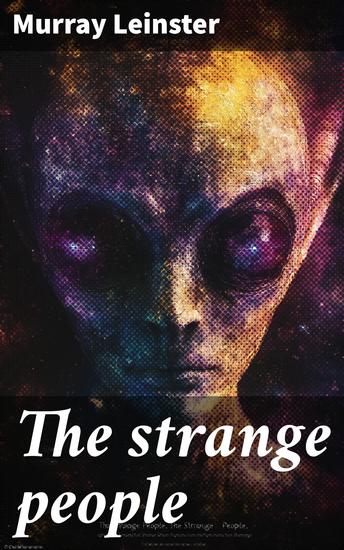
Murray Leinster's "The Strange People" explores the intricate dynamics of human interaction with alien civilizations, weaving a narrative that intertwines themes of identity, understanding, and the unknown. Written in Leinster's characteristic clear and engaging style, this work combines elements of science fiction and social commentary, serving as a poignant reflection of mid-twentieth-century perspectives towards technology and extraterrestrial life. The novel skillfully balances speculative scenarios with rich character development, prompting readers to consider the ethical implications of contact with other intelligent beings while also revealing the quirks and complexities of human nature. Murray Leinster, a prolific and innovative writer often heralded as one of science fiction's pioneers, drew inspiration from his varied life experiences, including his service in World War II and a keen interest in technology and the sciences. His extensive background in writing for magazines and his interest in complex moral questions significantly influenced his approach to storytelling, evident in "The Strange People." Leinster's ability to construct thought-provoking narratives likely stemmed from his desire to scrutinize the human condition through an imaginative lens. "The Strange People" is a compelling read for anyone fascinated by the intersections of humanity and alien life. It not only captivates with its imaginative premise but also invites deeper reflection on our values and societal norms, making it an essential addition to the library of any science fiction enthusiast.
Disponible desde: 02/03/2025.
Longitud de impresión: 190 páginas.
Otros libros que te pueden interesar

  • Don Quixote - cover

    Don Quixote

    Miguel de Cervantes

    • 0
    • 0
    • 0
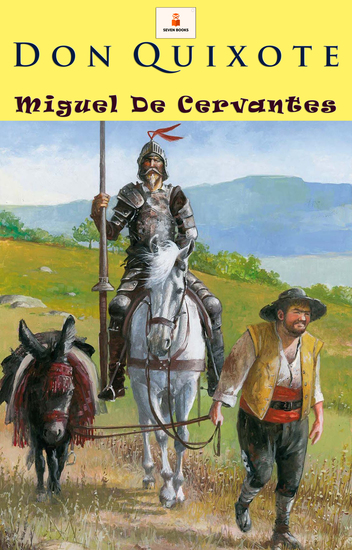
    Don Quixote is a Spanish novel by Miguel de Cervantes. It was originally published in two parts, in 1605 and 1615. Considered a founding work of Western literature, it is often labelled as the first modern novel. Don Quixote is also one of the most-translated books in the world and one of the best-selling novels of all time.The plot revolves around the adventures of a member of the lowest nobility, an hidalgo[d] from La Mancha named Alonso Quijano, who reads so many chivalric romances that he loses his mind and decides to become a knight-errant (caballero andante) to revive chivalry and serve his nation, under the name Don Quixote de la Mancha. He recruits as his squire a simple farm labourer, Sancho Panza, who brings a unique, earthy wit to Don Quixote's lofty rhetoric. In the first part of the book, Don Quixote does not see the world for what it is and prefers to imagine that he is living out a knightly story meant for the annals of all time. However, as Salvador de Madariaga pointed out in his Guía del lector del Quijote (1972 [1926]), referring to "the Sanchification of Don Quixote and the Quixotization of Sancho", as "Sancho's spirit ascends from reality to illusion, Don Quixote's declines from illusion to reality".
    Ver libro
  • History of Herodotus The - Book 6: Erato (Unabridged) - cover

    History of Herodotus The - Book...

    Herodotus, George Rawlinson

    • 0
    • 0
    • 0
    One of the masterpieces of classical literature, the "Histories" describes how a small and quarrelsome band of Greek city states united to repel the might of the Persian empire. But while this epic struggle forms the core of his work, Herodotus' natural curiosity frequently gives rise to colorful digressions - a description of the natural wonders of Egypt; an account of European lake-dwellers; and far-fetched accounts of dog-headed men and gold-digging ants. With its kaleidoscopic blend of fact and legend, the "Histories" offers a compelling Greek view of the world of the fifth century BC.
    BOOK 6: ERATO: Aristagoras, the author of the Ionian revolt, perished in the way which I have described. Meanwhile Histiaeus, tyrant of Miletus, who had been allowed by Darius to leave Susa, came down to Sardis.
    Ver libro
  • The Legacy of Cain - cover

    The Legacy of Cain

    Wilkie Collins

    • 0
    • 0
    • 0
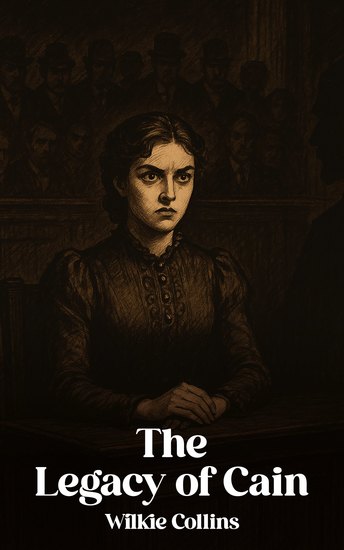
    The Legacy of Cain is a thought-provoking and emotionally charged novel by Wilkie Collins that confronts one of the most controversial questions of the Victorian age: is human behavior shaped by heredity or by upbringing? Blending social critique with psychological depth, Collins crafts a compelling narrative that challenges conventional ideas of morality, justice, and personal responsibility.
    
    The story begins with a crime that casts a long shadow over the lives of those connected to it. Two young women—raised in starkly different environments—become the focus of an unsettling moral experiment, as their futures are shaped by secrets surrounding birth, inheritance, and reputation. As their lives unfold, love, fear, and suspicion intertwine, forcing those around them to confront uncomfortable truths about prejudice and judgment.
    
    Collins builds suspense not through sensational action alone, but through intense psychological tension and ethical debate. His characters are deeply human—flawed, compassionate, and often conflicted—making their struggles resonate long after the final page. Themes of crime and punishment, nature versus nurture, and the power of social conditioning run throughout the novel, giving it both narrative drive and philosophical weight.
    
    Written with Collins's trademark clarity and emotional intelligence, The Legacy of Cain stands apart from traditional mystery novels by focusing on consequences rather than detection. It is a bold and unsettling work that questions whether society creates criminals—or merely condemns them.
    
    A striking blend of classic fiction and moral inquiry, The Legacy of Cain is essential reading for fans of Victorian literature, psychological drama, and socially conscious storytelling.
    Ver libro
  • The Case of Lady Sannox - cover

    The Case of Lady Sannox

    Arthur Conan Doyle

    • 0
    • 0
    • 0
    The Case of Lady Sannox (also published as "The Kiss of Blood") is a short story by Sir Arthur Conan Doyle published in The Idler in November 1893.The story features an arrogant surgeon, Douglas Stone, who is in love with the married Lady Sannox, one of the most beautiful women in London. On his way to a rendezvous with her, the surgeon is asked by a Turkish man to operate on the latter's wife, who has cut her lip with a poison envenomed scimitar. The doctor is informed the woman will die if the poison is not cut out.Because of his desire to meet his lover, his need for money, his professional arrogance, and the opinion of the Turk that any delay would kill his wife, the surgeon goes ahead with the operation on the heavily drugged wife, whose face is obscured by a veil. After he has performed the operation, Dr. Stone realizes his patient is Lady Sannox, and the Turk her husband, who believes the disfigurement will be morally good for his wife. The surgeon suffers a breakdown.
    Ver libro
  • The White Stocking - cover

    The White Stocking

    D H Lawrence

    • 0
    • 0
    • 0
    'The White Stocking'. In this beautifully observed study of a new marriage and the sexual tensions that run through it, Lawrence returns to his theme that happiness in marriage can only come with the submission of the woman to the man. The young wife strains against the bonds of being married and dallies with another man but returns to the arms of her husband once he shows his true feelings for her.
    Ver libro
  • Siddhartha - Hermann Hesse - cover

    Siddhartha - Hermann Hesse

    Herman Hesse

    • 0
    • 0
    • 0
    Siddhartha, the handsome and respected son of a Brahmin, lives with his father in ancient India. Everyone in the village expects Siddhartha to be a successful Brahmin like his father. Siddhartha enjoys a near-idyllic existence with his best friend, Govinda, but he is secretly dissatisfied. He performs all the rituals of religion, and he does what religion says should bring him happiness and peace. Nonetheless, he feels something is missing. His father and the other elders have still not achieved enlightenment, and he feels that staying with them will not settle the questions he has about the nature of his existence. Siddhartha believes his father has already passed on all the wisdom their community has to offer, but he longs for something more.
    Ver libro