¡Acompáñanos a viajar por el mundo de los libros!
Añadir este libro a la estantería
Grey
Escribe un nuevo comentario Default profile 50px
Grey
Suscríbete para leer el libro completo o lee las primeras páginas gratis.
All characters reduced
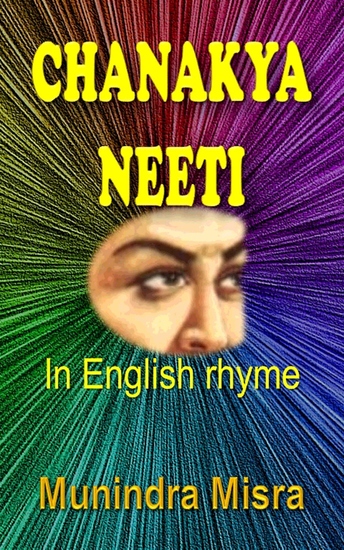
Chanakya Neeti - cover

Chanakya Neeti

Munindra Misra

Editorial: Munindra Misra

  • 0
  • 0
  • 0

Sinopsis

Chanakya was an ancient Indian philosopher, economist, jurist and royal advisor. He is traditionally identified as Kauṭilya or Vishnugupta. He was the royal advisor to emperor Chandragupta Maurya and also wrote the Artha-Shastra in the 2nd century BC. He was a teacher and jurist not a saint or a rishi.
 
Chanakya Neeti is a collection of aphorisms written by
 
Chanakya and show a remarkable understanding of the human conduct.
Disponible desde: 16/05/2022.
Longitud de impresión: 130 páginas.

Otros libros que te pueden interesar

  • 40 Game Changers in World History (2 In 1) - A Note on the Lives and Impact of these Great Minds & Historical Figures (Military Religious Explorers Scientists Philosophers Emperors Artists+) - cover

    40 Game Changers in World...

    Patrick Marcus

    • 0
    • 0
    • 0
    Unlock the Giants of History: Unveil Their Extraordinary Stories 
    Are you yearning to delve into the monumental lives of history's titans without drowning in information overload? Look no further. 
    Meet the Masters of History in Series 1 (with Series 2 awaiting):Thomas Edison (Nikola Tesla)Sigmund Freud (Carl Jung)Julius Caesar (Marcus Aurelius)Jesus Christ (Prophet Muhammad)Sir John Franklin (Roald Amundsen)Sun Tzu (Miyamoto Musashi)Genghis Khan (Napoleon)Leif Erikson (Ragnar Lothbrok)Mahatma Gandhi (Nelson Mandela)Joan of Arc (Anne Frank)Charles Ponzi (Frank Abagnale)Fyodor Dostoevsky (Victor E. Frankl)Isaac Newton (Charles Darwin)Albert Einstein (Georges Lemaître)Leonardo Da Vinci (Michelangelo)Cleopatra (Marie Curie)Socrates (Plato)Mozart (Beethoven)Emmeline Pankhurst (Rosa Parks)Gautama Buddha (Lucifer) 
    Click the “Buy Now” button and add this Unique Book Series to your collection
    Ver libro
  • Qing Dynasty - China's Last Empire and the Dawn of Modernity - cover

    Qing Dynasty - China's Last...

    Rolf Hedger

    • 0
    • 0
    • 0
    The Qing Dynasty, China’s last imperial dynasty, emerged from the northeastern frontier, led by the Manchu people. Before establishing their rule over China, the Manchus were a semi-nomadic group descended from the Jurchens, who had previously ruled northern China under the Jin Dynasty. In the early 17th century, Nurhaci, a formidable leader, laid the foundation for Manchu power by unifying various Jurchen tribes and adopting administrative and military structures inspired by the Ming Dynasty. His successor, Hong Taiji, continued these efforts, formally establishing the Qing Dynasty in 1636. However, the conquest of China was still incomplete, as the Ming Dynasty continued to rule the heartland. 
    The decline of the Ming Dynasty provided an opportunity for the Qing to assert their dominance. By the early 17th century, the Ming government was weakened by internal corruption, peasant uprisings, and economic distress exacerbated by famine and mismanagement. The most devastating of these rebellions was led by Li Zicheng, a former postal worker turned insurgent, whose forces overran Beijing in 1644. The fall of the Ming capital marked a critical turning point. With the Ming emperor dead and the central government in disarray, a Ming general, Wu Sangui, faced a difficult choice: resist the rebel forces or seek outside aid. He chose the latter, opening the gates of the Great Wall at Shanhai Pass to the advancing Qing army. The Manchus, under the leadership of Prince Dorgon, seized the moment, swiftly capturing Beijing and declaring the establishment of Qing rule.
    Ver libro
  • House of the Spirits by Isabel Allende The (Book Analysis) - Detailed Summary Analysis and Reading Guide - cover

    House of the Spirits by Isabel...

    Bright Summaries

    • 0
    • 0
    • 0
    Unlock the more straightforward side of The House of the Spirits with this concise and insightful summary and analysis!
    This engaging summary presents an analysis of The House of the Spirits by Isabel Allende, a sweeping narrative which chronicles the lives of three generations of the Trueba-del Valle family. As the members of this family grow older, fall in love, develop their own political beliefs and come into conflict with each other, their story provides a constant echo of the rise and fall of the ideologies, traditions and systems that shaped Latin America itself. Isabel Allende is a Chilean writer, and is one of the most popular Spanish-language authors in the world. The House of the Spirits was her debut novel, and its popularity with readers catapulted her to widespread fame when it was published in 1982. Allende was awarded the Chilean National Prize for Literature in 2010 in tribute to her long and varied literary career.
    Find out everything you need to know about The House of the Spirits in a fraction of the time!
    This in-depth and informative reading guide brings you:
    •A complete plot summary
    •Character studies
    •Key themes and symbols
    •Questions for further reflection
    Why choose BrightSummaries.com?
    Available in print and digital format, our publications are designed to accompany you on your reading journey. The clear and concise style makes for easy understanding, providing the perfect opportunity to improve your literary knowledge in no time.
    See the very best of literature in a whole new light with BrightSummaries.com!
    Ver libro
  • Tantric Sex - cover

    Tantric Sex

    Eva Harmon

    • 0
    • 0
    • 0
    Are you looking for a tried and true way of enhancing your sex life without all the gimmicks and tricks you find on the internet?Are you looking for a way to spice things up with your partner but don’t really know how to mix things up?Are you looking for a way to improve your understanding of sexuality but aren’t into BDSM or anything kinky?Are you looking for a means of improving your emotional connection with your partner that’s both holistic and natural?If you have been thinking about any of these questions, then this is the book for you.In this volume, you will learn about tantric sex and how it can help you find the perfect balance between you and your partner. In fact, you’ll be surprised to find that tantric sex has been around for a very long time. Yet, many of us are yet to discover it. But when you do discover it, the experience you are able to unleash is unlike anything else you may have felt before.In this book, you will learn about the following:• The fundamentals of tantric sex and what it involves• The role meditation and relaxation in tantric sex• Exercises which can help you sync your entire movements• The ways in which tantric sex can help you discover new levels of pleasure• How to pleasure your partner while pleasuring yourself at the same time• How to engage in sexual activity without thinking about “sex.”• How to foster intimacy and build mutual trust• Making the most of the time you have withyour partner so experiences are trulymemorable• Recommended positions that will surely leaveyou wanting more• Discovering the ways in which orgasms can liftyou to new heights ... and so much more!If you are expecting a book filled with sexual positions, then you will be surprised to find that tantra is so much more than that. You will discover how the right mindset is fundamental in ensuring that you find the greatest amount of pleasure.Also, you won’t find a collection of “tips” on how to improve your sex life.
    Ver libro
  • Aksumite Empire - Ethiopia's Ancient Power and the First Christian Kingdom - cover

    Aksumite Empire - Ethiopia's...

    Rolf Hedger

    • 0
    • 0
    • 0
    The Aksumite Empire was one of the most significant and influential civilizations of ancient Africa. Emerging around the first century AD, it became a powerful and sophisticated state that played a crucial role in connecting diverse cultures and trade networks across continents. Its strategic location, bridging the Red Sea and the interior of the African continent, allowed Aksum to flourish as both a political and economic hub, facilitating exchanges between the Mediterranean world, the Arabian Peninsula, and beyond. 
    At the heart of Aksum’s success was its remarkable ability to integrate various cultural and economic influences. The empire was not only a center for commerce but also a melting pot of traditions, languages, and beliefs. This rich cultural mosaic is reflected in its unique art, architecture, and inscriptions, which have provided modern scholars with invaluable insights into the life and achievements of this ancient society. The monuments and stelae scattered across the landscape serve as enduring testaments to the empire's power and its sophisticated understanding of both artistry and engineering. 
    The rise of Aksum was deeply intertwined with the development of its political structures and the establishment of a centralized administration. Early rulers of the empire forged alliances through both diplomacy and military might, thereby securing their territories against external threats and internal discord. As the state grew in power, it adopted innovative approaches to governance that balanced traditional practices with the demands of a rapidly expanding empire. These innovations laid the groundwork for what would later be recognized as the first Christian kingdom in Africa.
    Ver libro
  • Medieval History of Montenegro The: The History of the Region’s Rulers and Culture Before the Modern Era - cover

    Medieval History of Montenegro...

    Editors Charles River

    • 0
    • 0
    • 0
    Much has been written about Western intervention during the breakup of Yugoslavia, and whether it made matters worse, prevented worse atrocities, or was simply ineffective. In early 1992, however, what was clear was that Europe was hopelessly divided over the best course of action to take towards Yugoslavia, and after several years of fighting, the Bosnian War was one of the most violent conflagrations in Europe since the end of World War II.  
    	That war had been the byproduct of centuries of tensions in the Balkans, and an attempt in the wake of World War I to redraw the political boundaries of Europe and the Middle East. That included forming the Kingdom of Yugoslavia, initially known as the Kingdom of Serbs, Croats and Slovenes, a particularly fragile enterprise, and there was almost constant tension between the majority Serbs and the other Yugoslav nationalities, especially the Croats. As a result, the Kingdom was a land of political assassinations, underground terrorist organizations, and ethnic animosities. In 1929, King Alexander I suspended democracy and ruled as a dictator until he himself was assassinated in 1934.  
    	Depending on the source, many authors have focused on different catalysts for Yugoslavia’s demise, but Vesna Drapac may have succinctly summed the situation up when he wrote that by the end, the state “lacked a reason to exist.” There is certainly something in this sentiment, but the disintegration came at an enormous cost. 
    	Given what happened in Yugoslavia, it should be little surprise the area that eventually became the modern nation of Montenegro has had a turbulent history for millennia, with shifting borders, different degrees of autonomy, and various conflicts occurring within it.  
    	  
      
    Ver libro