Junte-se a nós em uma viagem ao mundo dos livros!
Adicionar este livro à prateleira
Grey
Deixe um novo comentário Default profile 50px
Grey
Assine para ler o livro completo ou leia as primeiras páginas de graça!
All characters reduced
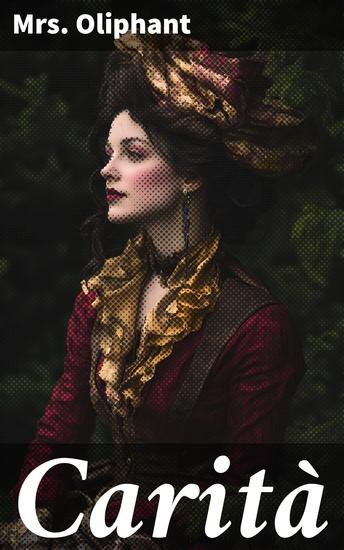
Carità - cover
LER

Carità

Mrs. Oliphant

Editora: Good Press

  • 0
  • 0
  • 0

Sinopse

In "Carità," Mrs. Oliphant intricately weaves a tale of compassion, sacrifice, and the complexities of human relationships set against the backdrop of Victorian society. This novel showcases her distinctive literary style, characterized by rich character development and vivid descriptions that breathe life into both the settings and the emotional landscapes of her characters. With an acute understanding of social structures and personal dilemmas, Oliphant offers readers a nuanced exploration of moral urgency, creatively engaging with themes such as duty, love, and redemption. The narrative, punctuated by introspection and sharp dialogue, captures the tension between societal expectations and individual desires. Mrs. Oliphant, a prolific Scottish author, emerged in the literary scene during the mid-19th century, known for her keen observations of societal norms and her advocacy for women's issues. Having experienced significant personal loss and financial struggles, her writing often reflects the intricacies of human emotion and longing for connection. These profound life experiences undoubtedly informed her portrayal of characters navigating complex moral landscapes in "Carità," making her insights all the more poignant. This compelling narrative is highly recommended for readers seeking an insightful portrayal of Victorian society, infused with timeless themes of compassion and ethical dilemmas. "Carità" not only enhances one's understanding of literary history, but also resonates with contemporary readers, inviting them to reflect on the enduring nature of human kindness and the sacrifices made for it.
Disponível desde: 02/03/2025.
Comprimento de impressão: 210 páginas.

Outros livros que poderiam interessá-lo

  • A Danse-Macabre - From their pens to your ears genius in every story - cover

    A Danse-Macabre - From their...

    Bernard Capes

    • 0
    • 0
    • 0
    Bernard Edward Joseph Capes was born on the 30th August 1854 in London.  He was one of 11 children. 
    His early work was as a journalist and this developed into writing many short stories for the periodicals of the time including Blackwood's, Cassell's, Cornhill Magazine, Illustrated London News, Macmillan's Magazine, Mall Magazine, Pearson's Magazine, The Idler, and The Queen. 
    It took him many years to decide that writing full-time could be a sustainable career path.  His initial success came with ‘The Mill of Silence’.  As well as being published it garnered second prize at a competition sponsored by the Chicago Record.  He exceeded that by winning it the following year with ‘The Lake of Wine’.   
    Capes quickly became both prolific and popular.  As well as his stories and articles for the periodicals he wrote around 40 volumes across novels, poetry, history as well as romance and mystery novels. 
    Bernard Capes died on 2nd November 1918 in the flu epidemic.
    Ver livro
  • The Adventure of the Copper Beeches - cover

    The Adventure of the Copper Beeches

    Arthur Conan Doyle

    • 0
    • 0
    • 0
    The Adventure of the Copper Beeches, one of the 56 short Sherlock Holmes stories written by Sir Arthur Conan Doyle, is the last of the twelve collected in The Adventures of Sherlock Holmes. It was first published in Strand Magazine in June 1892.Violet Hunter visits Holmes, asking whether she should accept a job as governess; a job with very strange conditions. She is enticed by the phenomenal salary which, as originally offered, is £100 a year, later increased to £120 when Miss Hunter baulks at having to cut her long hair short (her previous position paid £48 a year). This is only one of many peculiar provisos to which she must agree. The employer, Jephro Rucastle, seems pleasant enough, yet Miss Hunter obviously has her suspicions.She announces to Holmes, after the raised salary offer, that she will take the job, and Holmes suggests that if he is needed, a telegram will bring him to Hampshire, where Mr Rucastle's country estate, the Copper Beeches, is situated.After a fortnight, Holmes receives such a message, beseeching him to come and see her in Winchester. Miss Hunter tells them one of the most singular stories that they have ever heard. Mr. Rucastle would sometimes have Miss Hunter wear a particular electric blue dress and sit in the front room reading, with her back to the front window. She began to suspect that she was not supposed to see something outside the window, and a small mirror shard hidden in her handkerchief showed her that she was right: there was a man standing there on the road looking towards the house.Famous works of the author Arthur Conan Doyle's: "A Study in Scarlet", "Silver Blaze", "The Hound of the Baskervilles", "The Yellow Face", "A Scandal in Bohemia", "The Red-Headed League", A Case of Identity", "The Boscombe Valley Mystery", "The Five Orange Pips", "The Man with the Twisted Lip", "The Blue Carbuncle", "The Speckled Band", "The Engineer's Thumb", "The Noble Bachelor", "The Beryl Coronet", "The Copper Beeches" and many more.
    Ver livro
  • The Lady's Maid - cover

    The Lady's Maid

    Katherine Mansfield

    • 0
    • 0
    • 0
    "The Lady’s Maid" is a story by Katherine Mansfield: Eleven o’clock. A knock at the door... I hope I haven’t disturbed you, madam. You weren’t asleep - were you? But I’ve just given my lady her tea, and there was such a nice cup over, I thought, perhaps...
    Ver livro
  • 3 Stories About - Poverty & Struggle - A trio of classic tales perfect for a commute walk or quiet night in - cover

    3 Stories About - Poverty &...

    Anton Chekhov, O Henry, Mary Mackay

    • 0
    • 0
    • 0
    There is something about the number 3.    
     
    The Ancient Greeks believed 3 was the perfect number, and in China 3 has always been a lucky number, and they know a thing or two.   
     
    Most religions also have 3 this and 3 that and, of course, in these more modern times, three’s a crowd may be too many, except when it’s a ménage à trois.  It seems good things usually come in threes. 
     
    Whatever history and culture says WE think 3, a hat-trick of stories, is a great number to explore themes and literary avenues that classic authors were so adept at creating. 
     
    From their pens to your your ears.  
     
    01 - 3 Stories About - Poverty & Struggle 
    02 - The Gift of the Magi by O Henry 
    03 - Vanka by Anton Chekhov 
    04  - The Hired Baby, A Romance of the London Streets by Mary Mackay writing as Marie Corelli
    Ver livro
  • The Solitary Summer - cover

    The Solitary Summer

    Elizabeth von Arnim

    • 0
    • 0
    • 0
    Published in 1899, The Solitary Summer is a charming companion to von Arnim’s earlier novel Elizabeth and Her German Garden. As with its prequel, the novel is semi-autobiographical and in the form of a series of diary entries. The narrator decides to spend one summer alone in her country house far away from the demands and distractions of the world. She offers us a witty and lyrical account of a solitary summer, filled with reading and reflections on her beloved garden. However, her months removed from society turn out to be less solitary than planned: there is her husband, ‘the Man of Wrath’, to pacify, three young children to amuse, and the arrival of a regiment of soldiers. Light-hearted in tone, The Solitary Summer describes a voyage of self-discovery set against the idyllic backdrop of an ever- changing summer garden.
    Ver livro
  • Cain - From their pens to your ears genius in every story - cover

    Cain - From their pens to your...

    Alexander Kuprin

    • 0
    • 0
    • 0
    Alexander Kuprin was born in Narovchat, Penza in Russia on 7th September 1870. 
    At 3 his Father died and he and mother moved to Moscow. By 10 he was enrolled at the Second Moscow Military High School and there his interest in literature began. The Alexander Military Academy followed and two years later he was a sub-lieutenant and posted to an Infantry Regiment for a further four years. 
    Despite his duties he was a now a keen writer and published his first short story at this time. His military duties also garnered him experiences for his breakthrough work ‘The Duel’.  Leaving the military he left for Kiev to work for local newspapers.  He continued to publish both stories and novels and by 1901 he was in St Petersburg becoming part of a group that included Chekhov, Ivan Bunin, Maxim Gorky and Leonid Andreyev.  
    In the years that followed further controversial works and acclaim followed.  His comments on the regime meant he was also put under secret police surveillance.   
    As World War I erupted, Kuprin opened a military hospital but was then given command of an infantry company in Finland. He was soon discharged on grounds of ill health.  
    The October Revolution saw him praise Lenin, but he warned that the Bolsheviks threatened Russian culture and might cause further widespread suffering to the peasants.  As Civil War raged he took his family to Helsinki and then on to Paris. 
    Exile saw his talents decline further and his succumbing to alcoholism. He became lonely and withdrawn. The family's poverty increased his malaise.   
    In May 1937, the Kuprin’s returned to Moscow.  He now saw his work published but wrote almost nothing new.  In 1938 his health rapidly deteriorated.  Already suffering from a kidney problems and sclerosis, he had now developed cancer of the oesophagus.  
    Alexander Kuprin died on 25th August 1938.
    Ver livro