¡Acompáñanos a viajar por el mundo de los libros!
Añadir este libro a la estantería
Grey
Escribe un nuevo comentario Default profile 50px
Grey
Suscríbete para leer el libro completo o lee las primeras páginas gratis.
All characters reduced
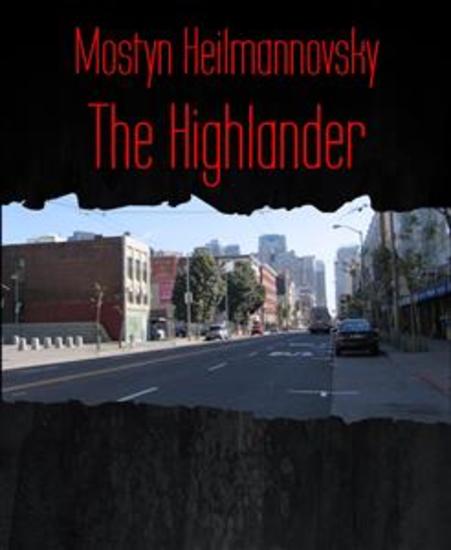
The Highlander - cover

The Highlander

Mostyn Heilmannovsky

Editorial: BookRix

  • 0
  • 0
  • 0

Sinopsis

An interesting story with a surreal connotation about an encounter with a highlander, an ageless man, who reveals himself only to those, who possess an open mind. A shorty story dealing with the different views of man and challenging the preconceived ideas of materialism itself.
Disponible desde: 21/12/2023.
Longitud de impresión: 24 páginas.

Otros libros que te pueden interesar

  • The Dunwich Horror — Part 7 of 10 - cover

    The Dunwich Horror — Part 7 of 10

    H.P. Lovecraft

    • 0
    • 0
    • 0
    Welcome to Timeless Terrors No. 62, continuing H. P. Lovecraft’s nightmarish journey into cosmic terror: The Dunwich Horror. 
    The nightmare can no longer be contained. What was once hidden in the upper rooms of the Whateley farmhouse has broken free, spilling into the countryside of Dunwich as a vast, invisible force. The earth trembles beneath its passage, farms are crushed in the dark of night, and witnesses speak in terrified whispers of air that ripples and twists around an unseen, colossal mass. 
    Wilbur’s desperate search for forbidden knowledge has given way to consequences no human mind can fully grasp. The hills groan, the trees splinter, and the land itself recoils as something ancient and alien moves through the valley, driven by instincts far older than mankind. 
    Narrated by Amazon-bestselling horror author Jonathan Dunne, this chapter draws you into the most destructive phase of Lovecraft’s vision — where reality fractures, sanity falters, and the fragile world of men bends beneath the weight of inhuman powers. 
    This is Part 7 of a 10-part complete audiobook. Stay tuned — the horror now walks free.
    Ver libro
  • The Legend of Sleepy Hollow and Rip Van Winkle - cover

    The Legend of Sleepy Hollow and...

    Washington Irving

    • 0
    • 0
    • 0
    These two shorts stories are likely the most well-known and beloved of the famed American author Washington Irving, both having been published serially between 1819 and 1820 in his renowned collection of stories and essays The Sketch Book of Geoffrey Crayon. For both of these delightful tales, the fictional Dutch historian Diedrich Knickerbocker is attributed by Irving as his authoritative source.
    Ver libro
  • Betty Brown the St Giles Orange Girl - From their pens to your ears genius in every story - cover

    Betty Brown the St Giles Orange...

    Hannah More

    • 0
    • 0
    • 0
    Hannah More was born on February 2nd, 1745 at Fishponds in the parish of Stapleton, near Bristol. She was the fourth of five daughters. 
    The City of Bristol, at that time, was a centre for slave-trading and Hannah would, over time, become one of its staunchest critics.  
    She was keen to learn, possessed a sharp intellect and was assiduous in studying.  Hannah first wrote in 1762 with The Search after Happiness (by the mid-1780s some 10,000 copies had been sold). 
    In 1767 Hannah became engaged to William Turner.  After six years, with no wedding in sight, the engagement was broken off.  Turner then bestowed upon her an annual annuity of £200.  This was enough to meet her needs and set her free to pursue a literary career.   
    Her first play, The Inflexible Captive, was staged at Bath in 1775. The famous David Garrick himself produced her next play, Percy, in 1777 as well as writing both the Prologue and Epilogue for it.  It was a great success when performed at Covent Garden in December of that year.  
    Hannah turned to religious writing with Sacred Dramas in 1782; it rapidly ran through nineteen editions. These and the poems Bas-Bleu and Florio (1786) mark her gradual transition to a more serious and considered view of life. 
    Hannah contributed much to the newly-founded Abolition Society including, in February 1788, her publication of Slavery, a Poem recognised as one of the most important of the abolition period.   
    Her work now became more evangelical.  In the 1790s she wrote several Cheap Repository Tracts which covered moral, religious and political topics and were both for sale or distributed to literate poor people.  The most famous is, perhaps, The Shepherd of Salisbury Plain, describing a family of incredible frugality and contentment. Two million copies of these were circulated, in one year. 
    In 1789, she purchased a small house at Cowslip Green in Somerset. She was instrumental in setting up twelve schools in the area by 1800. 
    She continued to oppose slavery throughout her life, but at the time of the Abolition Bill of 1807, her health did not permit her to take as active a role in the movement as she had done in the late 1780s, although she maintained a correspondence with Wilberforce and others.  
    In July 1833, the Bill to abolish slavery throughout the British Empire passed in the House of Commons, followed by the House of Lords on August 1st. 
    Hannah More died on September 7th, 1833.
    Ver libro
  • Dickon the Devil - From their pens to your ears genius in every story - cover

    Dickon the Devil - From their...

    Sheridan Le Fanu

    • 0
    • 0
    • 0
    Joseph Sheridan Le Fanu was born on 28th August 1814 in Dublin into a literary family with Huguenot, Irish and English roots.   
    For a time he and his siblings were tutored but Le Fanu would often immerse himself in the books of his father’s library. 
    In 1833 Le Fanu began his Law studies at Trinity College, Dublin and graduated in 1839. Although called to the bar he instead began a career in journalism.   
    He was also writing. His first fiction story ‘The Ghost and the Bonesetter’ was published in 1838.  In 1843 came the novella ‘Spalatro: From the Notes of Fra Giacomo’, a hero with a particular necrophiliac passion for an undead blood-drinking beauty, a forerunner to his later female vampire ‘Carmilla’.  
    In 1844 Le Fanu married Susanna Bennett with whom he had 4 children. The following year his first novel ‘The C'ock and Anchor’ was published. Works now flowed from his pen and with a rapid increase in family finances they moved, in 1851, to Merrion Square, Dublin, where he remained until his death.  
    In 1858 Susanna died and Le Fanu became reclusive. It was during this period that he produced some of his best work.  Working only by candlelight he wrote through the night, burnishing his reputation as a major figure of 19th Century supernaturalism with many classics including; ‘Green Tea’, ‘Mr Justice Harbottle’, and ‘In a Glass Darkly’.  
    Joseph Thomas Sheridan Le Fanu died in Merrion Square in his native Dublin on February 7th, 1873, at the age of 58.
    Ver libro
  • Concrete Fields - cover

    Concrete Fields

    David Gaffney

    • 0
    • 1
    • 0
    The countryside – what is it for? A paradise on earth where you can relax and get creative? Or an outdoor wool factory where every other house is an Airbnb and there are fewer trees than Camden. In his new collection of short stories David Gaffney explores the theme of town versus country through a number of different lenses, including his own experience of being brought up in west Cumbria then moving to Manchester.
    A creative residency on the coast of Scotland becomes weirder and weirder in "The Retreat"; 'I've always had the feeling that the countryside has something against me and that one day it will take its revenge.' In "The Table", a recluse in Penrith uses mid-century furniture to lure city dwellers into a world of 'depressed farmers with shotguns and bottomless pits of slurry that will swallow you so hard you'll never be seen again. And in "The Garages" the pressure of city living forces a man to become oddly obsessed with empty spaces. Often funny, often haunting, often profound, Gaffney uses dark humour and surreal characters to demonstrate a deep understanding of how places, urban or rural, can shape, influence and sometimes distort our lives. 'People who like the countryside tend to believe in things that aren't really there,' says a character in "The Country Pub".
    These are indeed stories about things that aren't really there, and this is why they resonate with you long after you have stopped reading.
    Ver libro
  • J Alan A - A Short Story Collection - Stories from the early 20th century famed magician and author - cover

    J Alan A - A Short Story...

    A J lan

    • 0
    • 0
    • 0
    Leslie Harrison Lambert was born on 11th November 1883 in Nottingham. 
     
    After attending Rugby School he trained to be a surveyor. One of his passions was magic and such was his prowess that he joined The Magic Circle, and performed at society events. 
     
    By the beginning of World War I he was an amateur radio ham and volunteered to work at a coastguard station in Norfolk to intercept German radio transmissions. By November 1914 he was with the Admiralty at Naval Intelligence Room 40.  By 1919 this had become part of the new Government Code and Cypher School.  He was still there as World War II erupted across Europe and with many of his colleagues he transferred to Bletchley Park.  There, in Hut 8, he was quoted as saying that "in contrast to his outrageously unconventional stories" that he led his life on "a monotonously regular timetable". Life outside the Intelligence services was very different.  He married but the couple had no children.  They lived at Holland Park with a second home at Potter Heigham for sailing on the Norfolk Broads.  Other interests were as an amateur radio operator, using the call sign G2ST, and an authority on food and wine. 
     
    He contacted the BBC to suggest he might tell one of his own short stories on the radio.  Thus was born A J Alan, and his broadcast of ‘My Adventure in Jermyn Street’, on New Year’s Eve, 1924.  It was an immediate success and although he only broadcast a handful of times a year he was one of the most popular radio personalities of the time.  He spent weeks working on each short story, honing his conversational style, making his stories seem like anecdotes that had peculiarly happened to him.  
     
    A live broadcast was, in fact, a performance.  He used cards to avoid any rustling noises and kept a candle lit in case the lights failed.  His attire was a dinner jacket with eye glass, and a slim black briefcase.  
     
    Many of his stories were subsequently printed in newspapers and magazines. 
     
    By 1937 his health had deteriorated, and he reduced his radio work making his last broadcast on 21st March 1940.  
     
    A J Alan died on 13th December 1941. 
     
    01 - A J Alan - A Short Story Collection - An Introduction 
    02 - My Adventure In Jermyn Street by A J Alan 
    03 - The Hair by A J Alan 
    04 - My Adventure in Norfolk by A J Alan 
    05 - The Diver by A J Alan 
    06 - The 19 Club by A J Alan
    Ver libro