Join us on a literary world trip!
Add this book to bookshelf
Grey
Write a new comment Default profile 50px
Grey
Subscribe to read the full book or read the first pages for free!
All characters reduced
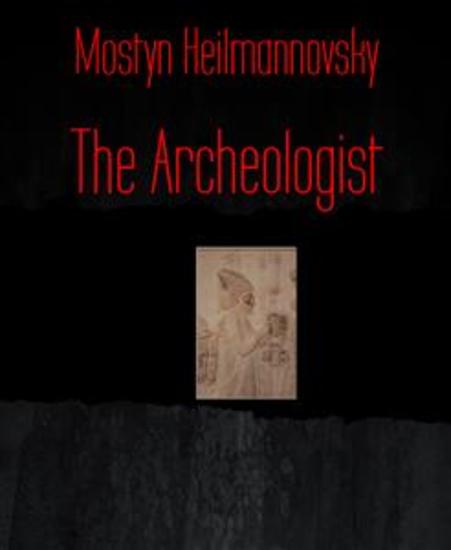
The Archeologist - Part One - cover

We are sorry! The publisher (or author) gave us the instruction to take down this book from our catalog. But please don't worry, you still have more than 500,000 other books you can enjoy!

The Archeologist - Part One

Mostyn Heilmannovsky

Publisher: BookRix

  • 0
  • 0
  • 0

Summary

The archeologist Jack Brevier is a man of reason, until he stumbles across a treasure, which is so fantastic, that he starts to question his scientific mind. But he is not the only one, who is fascinated by it. Secret powerful orders are also very keen on using the treasure for their hidden agendas.  
 
Please review the book, if you liked it!
Available since: 12/21/2023.
Print length: 23 pages.
Other books that might interest you

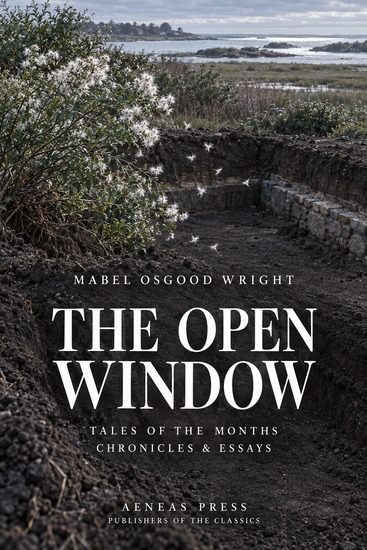
  • The Open Window - Tales of the Months - cover

    The Open Window - Tales of the...

    Mabel Osgood Wright

    • 0
    • 0
    • 0
    Twelve sketches, one for each month, from a Connecticut garden and the people who pass the window. Wright was an ornithologist and the natural history is exact even when the mood is domestic. This edition is bound with 55 plates of painting by Winslow Homer, Albert Bierstadt and Thomas Moran, among others, and includes one restored, coloured illustration.
    Show book
  • Dickon the Devil - From their pens to your ears genius in every story - cover

    Dickon the Devil - From their...

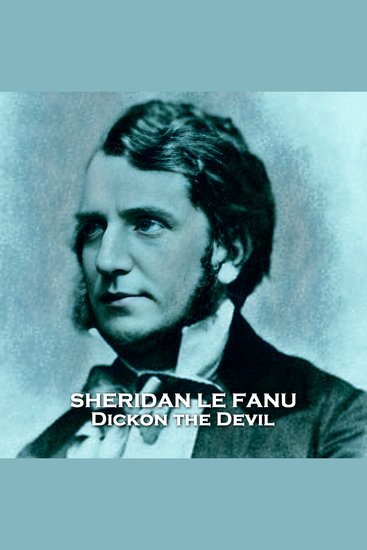
    Sheridan Le Fanu

    • 0
    • 0
    • 0
    Joseph Sheridan Le Fanu was born on 28th August 1814 in Dublin into a literary family with Huguenot, Irish and English roots.   
    For a time he and his siblings were tutored but Le Fanu would often immerse himself in the books of his father’s library. 
    In 1833 Le Fanu began his Law studies at Trinity College, Dublin and graduated in 1839. Although called to the bar he instead began a career in journalism.   
    He was also writing. His first fiction story ‘The Ghost and the Bonesetter’ was published in 1838.  In 1843 came the novella ‘Spalatro: From the Notes of Fra Giacomo’, a hero with a particular necrophiliac passion for an undead blood-drinking beauty, a forerunner to his later female vampire ‘Carmilla’.  
    In 1844 Le Fanu married Susanna Bennett with whom he had 4 children. The following year his first novel ‘The C'ock and Anchor’ was published. Works now flowed from his pen and with a rapid increase in family finances they moved, in 1851, to Merrion Square, Dublin, where he remained until his death.  
    In 1858 Susanna died and Le Fanu became reclusive. It was during this period that he produced some of his best work.  Working only by candlelight he wrote through the night, burnishing his reputation as a major figure of 19th Century supernaturalism with many classics including; ‘Green Tea’, ‘Mr Justice Harbottle’, and ‘In a Glass Darkly’.  
    Joseph Thomas Sheridan Le Fanu died in Merrion Square in his native Dublin on February 7th, 1873, at the age of 58.
    Show book
  • Upstate Tales - cover

    Upstate Tales

    Albert J Millus Jr.

    • 0
    • 0
    • 0
    This is a collection of short stories centered in upstate New York, hence the title Upstate Tales. But the stories reflect universal human experience, invoking family, friends, lovers, history, and geography. While the author focuses upon upstate New York, the writing will resonate with readers everywhere who have the gift of introspection and reflection.
    Show book
  • Anay Khoh Dy Qaidi - cover

    Anay Khoh Dy Qaidi

    Ali Anwar Ahmad

    • 0
    • 0
    • 0
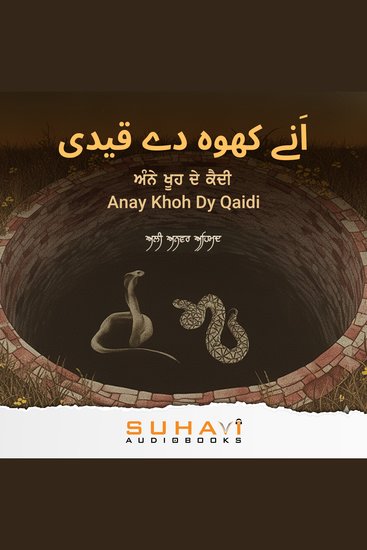
    "Anay Khoh Dy Qaidi" (Prisoners of the Dark Well) is a captivating and thought-provoking work written by Ali Anwar Ahmad. The title itself carries a deep symbolic meaning. The author narrates the story in simple yet powerful Punjabi, drawing readers so deeply into the plot that they feel as if they are descending into the well themselves. This book is not just a story—it is a reflection of human psychology, social oppression, and inner fears. "Anay Khoh Dy Qaidi" stands as a valuable contribution to Punjabi literature, leaving a lasting impression on the reader’s mind.
    Show book
  • Joseph Conrad - Six of the Best - Their legacy in 6 classic stories - cover

    Joseph Conrad - Six of the Best...

    Joseph Conrad

    • 0
    • 0
    • 0
    Joseph Conrad was born on 3rd December 1857 in Berdychiv in the Ukraine, then part of the Russian Empire.  His birthplace had been part of Poland which its neighbours dismembered into their own Empires. 
    Conrad’s early years were spent in constant moveme
    Show book
  • The Devilish Rat - From their pens to your ears genius in every story - cover

    The Devilish Rat - From their...

    Edward Page Mitchell

    • 0
    • 0
    • 0
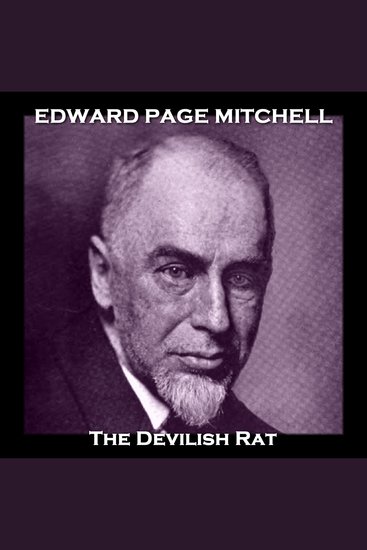
    Edward Page Mitchell was born in Bath, Maine on 24th March 1852 into a wealthy family.  When he was eight the family moved to a house on New York’s famed Fifth Avenue. 
    In 1863 he witnessed the Draft Riots and in the aftermath Mitchell's father moved the family to Tar River, North Carolina. It was there, at the age of fourteen, that his letters were first published in the local newspaper The Bath Times. 
    In 1872, at age twenty, whilst on a train journey to Bath, Maine, a hot cinder from the engine's smokestack flew in through the window blinding his left eye.  After several weeks, while doctors attempted to restore his sight, his uninjured right eye underwent sympathetic blindness.  He was now completely blind. His burnt left eye eventually regained its sight, but his uninjured right eye remained blind and was later replaced with a prosthetic glass eye. While recovering from this surgery, Mitchell wrote his dazzling story ‘The Tachypomp’. 
    Mitchell’s influence on science fiction writing is incredible and pre-dated many major themes. He wrote about a man made invisible, a time-travel machine, a thinking computer, teleportation, superior mutants and mind transfer. Add to this other stories which predicted travel by pneumatic tube, electrical heating, newspapers printed at home, food-pellet concentrates, international broadcasts, and suspended animation through cryogenics and they amount to talents that are not as publicly lauded as they should be. 
    Edward Page Mitchell died of a cerebral hemorrhage in New London, Connecticut on 22nd January 1927.  He was 76.
    Show book