¡Acompáñanos a viajar por el mundo de los libros!
Añadir este libro a la estantería
Grey
Escribe un nuevo comentario Default profile 50px
Grey
Suscríbete para leer el libro completo o lee las primeras páginas gratis.
All characters reduced
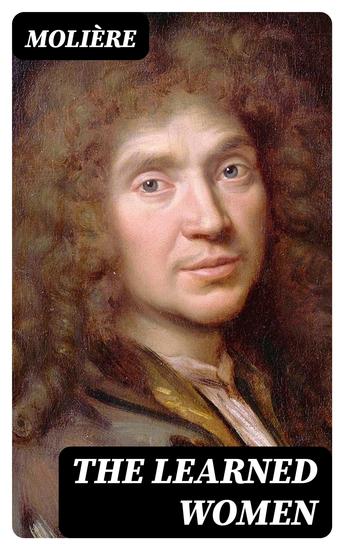
The Learned Women - cover

The Learned Women

Molière Molière

Traductor Charles Heron Wall

Editorial: DigiCat

  • 0
  • 0
  • 0

Sinopsis

In his comedic masterpiece, "The Learned Women," Molière deftly satirizes the pretensions of academicism and the societal constraints of 17th-century France. The play revolves around the tumultuous relationships within a household dominated by intellectual aspirations, particularly through the character of Philaminte, who is bent on acquiring knowledge at the expense of personal relationships. Molière's signature blend of farce, wit, and incisive dialogue illuminates the absurdity of elitism, while also exploring the tensions between traditional gender roles and the emergence of female intellect. The work reflects the broader literary context of the Enlightenment, challenging rigid norms of authority and education with humor and social critique. Molière, born Jean-Baptiste Poquelin in 1622, was a pioneering figure in French theater, celebrated for his sharp observations on human behavior and social norms. Raised in a prosperous family, he was exposed to the intricacies of Parisian society and its evolving intellectual climate. This background inspired him to pen works that fused satire with moral inquiry, making him a critical voice in literature. "The Learned Women" stands as a notable exemplar of his ability to navigate complex social themes with comedy and clarity. For readers seeking an engaging exploration of gender dynamics and intellectual dogma, "The Learned Women" offers both amusement and insight. Molière's keen social commentary resonates with contemporary audiences, making this play a timeless reflection on the pursuit of knowledge and the follies that accompany it. Essential for anyone interested in classic literature, this work invites contemplation on the relevance of its themes in today's world.
Disponible desde: 15/08/2022.
Longitud de impresión: 44 páginas.
Otros libros que te pueden interesar

  • At the Movies - cover

    At the Movies

    Lee Brady

    • 0
    • 0
    • 0
    A married woman recalls her obsession with movies and movie stars in her earlier days but then comes to realize she is much happier with reality.
    Ver libro
  • You Are Here - Poetry in the Natural World - cover

    You Are Here - Poetry in the...

    Ada Limón

    • 0
    • 0
    • 0
    In recent years, our poetic landscape has evolved in profound and exciting ways. So has our planet. Edited and introduced by the twenty-fourth Poet Laureate of the United States, Ada Limón, this book challenges what we think we know about "nature poetry," illuminating the myriad ways our landscapes—both literal and literary—are changing. 


    You Are Here features fifty previously unpublished poems from some of the nation's most accomplished poets, including Joy Harjo, Diane Seuss, Rigoberto González, Jericho Brown, Aimee Nezhukumatathil, Paul Tran, and more. Each poem engages with its author's local landscape—be it the breathtaking variety of flora in a national park, or a lone tree flowering persistently by a bus stop—offering an intimate model of how we relate to the world around us and a beautifully diverse range of voices from across the United States. 


    Joyful and provocative, wondrous and urgent, this singular collection of poems offers a lyrical reimagining of what "nature" and "poetry" are today, inviting listeners to experience both anew.
    Ver libro
  • Why I Write Poetry - Essays on Becoming a Poet Keeping Going and Advice for the Writing Life - cover

    Why I Write Poetry - Essays on...

    Ian Humphreys

    • 0
    • 0
    • 0
    What motivates poets in the 21st century? How do they find their voice? What themes and subject matters inspire them? How do they cope with set-backs and deal with success? What keeps them writing? Why I Write Poetry, edited by Ian Humphreys, combines lively and thought-provoking essays, along with individual writing prompts to help you create your own new poetry.
    In this book, twenty-five contemporary poets reflect with insight, wit and wisdom on the writing life. Each offers their distinctive take on what inspires and spurs them on to write poetry. The essays shine a light on everything from performance, dialect, the body and paying attention, to bearing witness, finding your wings and joining the journey of poetry, and encompass the practical, personal, and political. Within these pages, you'll discover how a poet's background and values can fundamentally shape and inform their work. New voices sit alongside poets with many collections under their belts and you'll find encouragement, creative provocations, advice and, above all, reasons to write. Read on, learn and enjoy.
    With essays by: Romalyn Ante, Khairani Barokka, Hafsah Aneela Bashir, Leo Boix, Vahni Capildeo, Mary Jean Chan, Jo Clement, Sarah Corbett, Jane Commane, Rishi Dastidar, Jonathan Edwards, Rosie Garland, W. N. Herbert, Ian Humphreys, Keith Jarrett, Zaffar Kunial, Rachel Mann, Andrew McMillan, Kim Moore, Pascale Petit, Jacqueline Saphra, Clare Shaw, Daniel Sluman, Jean Sprackland, and Jennifer Wong.
    Ver libro
  • The Flowers of Evil - cover

    The Flowers of Evil

    Charles Baudelaire

    • 0
    • 0
    • 0
    Loneliness, temptation, the fragility of man in a soulless new age . . . The controversial, banned masterpiece from the nineteenth-century French poet.   Sparking scandal in France, declared “an outrage to public morals” and “an offense to religious morals” by the Ministry of the Interior, The Flowers of Evil plunged Charles Baudelaire into a controversy that his public image never quite overcame. Nevertheless, the collection has since been lauded as a landmark in literary history and its writer extolled as the first modern poet.   With themes of love, world-weariness, beauty, and death, The Flowers of Evil juxtaposes the sublime with the commonplace. In the section titled “Parisian Scenes” are some of Baudelaire’s greatest poems—“The Swan,” “The Little Old Women,” and “The Seven Old Men”—which give readers an unsentimental view of the City of Light and of a bleak urban existence. As the Wall Street Journal proclaimed, “There is a sense in these angry, eructating late fragments of a man fully releasing himself to what he called ‘the joy of downward descent.’ And where Baudelaire went, modernity tended to follow.”  “The essence of a genius.” —The Guardian  “The profound originality of Charles Baudelaire is to represent powerfully and essentially modern man.” —Paul Verlaine
    Ver libro
  • Are You Judging Me Yet? - Poetry and Everyday Sexism - cover

    Are You Judging Me Yet? - Poetry...

    Kim Moore

    • 0
    • 0
    • 0
    Five 'lyric essays' exploring the dynamics of performing poetry as a female poet – confronting the implications of being a female on public display, with the connotations of sexual objectification, in a context that traditionally disregards the body. Kim states "With the strides and gains made through the #MeToo movement, I believe the time is right for a book like this to make an impact. As a female poet, I know there is a need for such a book to examine the intersection between writing, performing, feminism and sexism. I wish this book had been written when I first started working as a freelance writer and I've had many conversations with other female poets who have also confirmed my thinking – that female poets are navigating these things regularly, and yet nobody is really writing or talking about them."
    The book draws on her experiences of writing and performing the poems in her second collection All the Men I Never Married. It is a balance of memoir, academic treatise and poetry, though the author's emphasis is on writing in a popular way and making the subject accessible to a wide audience. To achieve this her models have been Maggie Nelson's Bluets, Claudia Rankine's Citizen and Sarah Ahmed's Living a Feminist Life. 
    The book's subjects include heckling at poetry readings and other interactions; problems with the 'male gaze' and what the 'female gaze' might look like in poetry; 'guilty for being a man': how guilt can be useful if it can bring about change; how writing poetry about sexism can shed add meaning to the term; the objectification of men and women, and 'bad faith' arguments.
    Are You Judging Me Yet?, by Kim Moore, is a remarkable collection of essays and poetry that explore, as the tagline suggests, everyday sexism. – neverintimate
    '…Moore's work becomes an even more vital tool in the work being done to challenge everyday sexism. Reading her work is not only a window into her own experiences, but may also act as a means of education, and that's something we all need to see more of.' – Wales Arts Review
    Ver libro
  • Fire Horse (Metzengerstein) - cover

    Fire Horse (Metzengerstein)

    Filip Halo, Edgar Allan Poe

    • 0
    • 0
    • 0
    A baby is born in 1666, the year of "Fire Horse" according to Japanese tradition, at the House of Metzengerstein in an area between Royal Hungary and the territory inhabited by Transylvanian Saxons. Frederick von Metzengerstein is nurtured by his dependable servant Bela after the Baroness passes away shortly after giving birth to him. The youngster lives a pleasant life for many years until his ailing father Baron Gotfrid is forced to negotiate the future of the region with his mortal rival Baron Willhelm von Berlifitzing. Frederick experiences a nightmare inside that castle, which haunts him for years until his father's passing, at which point the young master assumes ultimate power at the age of 17. During the celebratory ceremonies for the transition of power, Baron Berlifizing dies as a result of a fire that started in the House of Berlifitzing at their stables. By some strange coincidence, that same night, a black stallion, a proper wild beast, is captured by the guards close to the Metzengerstein property. The boy falls in love with the gorgeous animal at first sight, which alteres his fate and mental state. The secret that was eating him alive since he was an infant needs to be revealed sooner than later... 
    The new version of this Edgar Allan Poe tale follows closely the events in the original, with countless added historic elements and details, not mentioned by Poe, but still in his spirit. It can speak to the modern reader or draw in new audience to the works of the great author and poet, since it is now "dirtier", sadder, more dramatic, and feels extremely realistic. The bonus features in this book are directly tied to the narrative, and the graphics will provide a glimpse into the worlds that the stories describe.
    Ver libro