¡Acompáñanos a viajar por el mundo de los libros!
Añadir este libro a la estantería
Grey
Escribe un nuevo comentario Default profile 50px
Grey
Suscríbete para leer el libro completo o lee las primeras páginas gratis.
All characters reduced
Traditional Costumes - cover

Traditional Costumes

Mira Donnelly

Traductor A AI

Editorial: Publifye

  • 0
  • 0
  • 0

Sinopsis

Traditional Costumes explores the profound connection between clothing and cultural identity across the globe. It reveals how garments serve not only as functional attire but also as powerful expressions of cultural heritage and social norms. Intriguingly, traditional costumes often act as a visual language, communicating a community's values and historical experiences. By examining clothing through the lens of world history and social science, the study highlights the significance of understanding material culture in shaping social cohesion.

 
The book begins by introducing core concepts like cultural identity and the semiotics of clothing, then delves into specific case studies. For example, the Japanese kimono and the Mexican charro suit offer detailed insights into how garments evolve and embody national pride. Through historical records, ethnographic studies, and visual analysis, the book progresses across chapters to analyze the impact of globalization on traditional costumes, addressing challenges in cultural preservation and the emergence of hybrid identities.

 
This approach provides a valuable resource for students of history, anthropology, and fashion studies, enriching their understanding of the world's diverse cultures.
Disponible desde: 05/03/2025.
Longitud de impresión: 71 páginas.
Otros libros que te pueden interesar

  • A Grotesque Animal - cover

    A Grotesque Animal

    Amy Lee Lillard

    • 0
    • 0
    • 0
    At the age of forty-three, Amy Lee Lillard learned she was autistic. She learned she was part of a community of unseen women who fell through the gaps due to medical bias and social stereotypes. 


    A Grotesque Animal explores the making, unmaking, and making again of a woman with an undiagnosed disorder. How did a working-­class background and a deep-rooted Midwest culture of silence lead to hiding in plain sight for decades? How did sexuality and anger hide the roots of trauma among the women in her family? And what does it mean to be a queer, disabled, aging woman, a descendant of wild but tamed mothers and a survivor of the things patriarchy inflicts? 


    Through wide-ranging styles and a combination of personal storytelling and cultural analysis, Lillard dissects anger, sexuality, autistic masking, bodies, punk, and female annihilation to create a new picture of modern women.
    Ver libro
  • TikTok Killed Attention - Can You Still Focus in 2025? - cover

    TikTok Killed Attention - Can...

    Marcus Reed

    • 0
    • 0
    • 0
    Can’t finish a task without checking your phone? You’re not alone. TikTok and other short-form platforms have fundamentally changed how our brains process information. This powerful microlearning audiobook explores the neuroscience behind the attention crisis, revealing how apps hijack your dopamine system and fracture your focus. Backed by research and delivered in an urgent, conversational style, it’s both a wake-up call and a toolkit. Learn how to retrain your brain, recover deep focus, and thrive in 2025—before your attention span disappears for good.
    Ver libro
  • Prehistoric Warfare: The History of Early Human Conflicts - cover

    Prehistoric Warfare: The History...

    Editors Charles River

    • 0
    • 0
    • 0
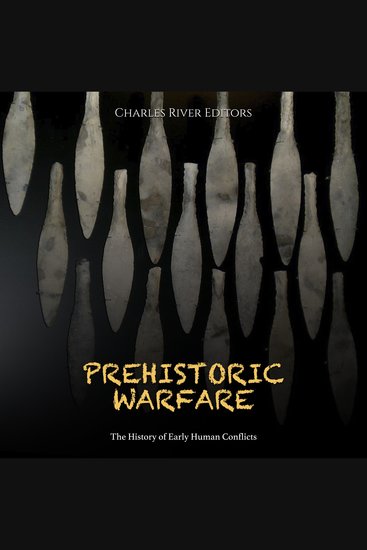
    Raymond C. Kelly, an anthropologist and ethnologist who has written extensively on societal inequality and subsequent warfare suggests that among the hunter-gatherer groups of Homo erectus, the population density was low enough to avoid armed conflict in most cases. In the same vein, a perception has persisted that during this less populated time of Earth’s history, life among the Homo species was relatively peaceful. Archaeologists have supported this theory through early cave art, little of which ever depicts humans hunting or killing each other explicitly. Kelly theorized that the migration out of Africa by Homo erectus 1.8 million years ago was “a natural consequence of conflict avoidance.” He believes that this general period of “Paleolithic warlessness” was to persist until the appearance of Homo sapiens approximately 350,000 years ago, and that it began with the occurrence of “economic and social shifts associated with sedentism.” 
    However, depictions of humans pierced with arrows began to appear in the Aurignacian-Périgordian eras (30,000 years ago), and in the early Magdalenian era (17,000 years ago). A work of Mesolithic art (20,000 to 10,000 years ago) shows an explicit battle between groups of archers, and in Valencia, a group of three archers are seen surrounded by four of the similarly armed enemy in the Cova del Roure la Vella in Castellón. In the Ares del Maestrat in Alcañiz of Aragon, another work depicts warriors fleeing a group of eight archers, while a similar work at Val del Charco del Agua in Aragon shows seven archers with plumed headgear. Other examples show warriors in lines and columns with a “distinctly garbed leader at the front.”
    Ver libro
  • Delusional - Confessions from One Intern's Rise to CEO - cover

    Delusional - Confessions from...

    Samantha Zink

    • 0
    • 0
    • 0
    I Have a Confession: I Built a Global Influencer Agency with No RoadmapSamantha Zink has witnessed the chaos of the fashion PR world in NYC and the wild, unpredictable nature of influencer management. Now, she’s ready to spill the tea. In Delusional, Samantha shares her unfiltered journey from working in fashion PR to taking a leap of faith and risking it all to start her own influencer talent agency, all because a little voice inside told her she deserved to take a chance on herself for once, that she was meant for something more extraordinary.A running theme in her story, Samantha trusted her intuition, and got to work. She founded and became the CEO of Zink Talent, a global talent agency for influencers and digital creators. In Delusional, she dishes on everything from starting an agency with no money, signing clients, navigating brand deals, building her team, the evolution of social media creators, and the truth that no one shares about influencers and the industry.Part juicy tell-all, part practical guide, this book is a must-read for any young professional who's ever dreamed of taking a chance on themselves and starting a business, or for anyone who’s simply interested in the real world behind the social media industry. Samantha holds nothing back as she shares the lessons she’s learned on her path to success, such as:Trusting your instincts and embracing your “delusional” sideAdapting to industry changes and finding your unique opportunityCultivating a strong sense of self and finding your soul purposeUsing your platform and influence for goodSamantha also gets real about the personal struggles that she’s had along the way, from finding herself in her twenties, to falling into the NYC party scene, to the challenges of dating as a powerful woman, and to the heartbreak of losing a loved one. Through her own experiences, she shows us that it’s OK to be a work in progress, as long as you never stop striving for your dreams, and more importantly, that you never stop believing in your dreams—and in yourself.With a voice that feels like your wiser, funnier, older sister, Samantha is the mentor you’ve always wanted on your journey to finding fulfillment and your own soul purpose. So, grab a latte (or a glass of wine, we won't judge), settle in, and get ready to laugh, cry, and learn from the confessions of a true industry insider. Delusional is the unfiltered, unapologetic guide to making it in the influencer world that you've been waiting for.
    Ver libro
  • Pandemic Panic - How Canadian Government Responses to COVID-19 Changed Civil Liberties Forever - cover

    Pandemic Panic - How Canadian...

    Joanna Baron, Christine Van Geyn

    • 0
    • 1
    • 0
    In October 2022, the economist Emily Oster wrote a plea for a “pandemic amnesty.” After detailing various ill-conceived public health policies throughout the pandemic, Oster concluded that “The standard saying is that those who forget history are doomed to repeat it. But dwelling on the mistakes of history can lead to a repetitive doom loop as well.” She reasoned that many admittedly poor, public health decisions were made in an information vacuum and that the salubrious thing to do going forward would be to forgive and forget.
    		 
    Oster was concerned about the fraying social fabric because of polarizing online discourse and urged the need to move forward. However, our anecdotal experience has shown a second common response to pandemic mishaps—going blank entirely on what occurred during the pandemic. We have observed a phenomenon of the surreal, sometimes inane, often unprecedented and unusual public health measures taken over the roughly three-year pandemic period being a “memory hole,” where the mind completely fogs over. Many times in the course of writing this book, we have messaged one another upon unearthing one public policy absurdity upon another: the City of Toronto taping off cherry blossoms, Quebec requiring unvaccinated people to be chaperoned in plexiglass carts through the essential aisles of big-box stores.
    		 
    We are not psychologists, but no doubt there is an evolutionary benefit to allowing a collective trauma to dissolve into the slip-stream: it is unproductive to dwell on how we got by and how our government coped in real-time. Our memories are warped, first, by the “primacy effect” our tendency to remember “firsts” exemplified by people universally naming George Washington when asked to recall former U.S. presidents. Most people have a crystal clear memory of the moment their plague year started in earnest; for us and many others; it was March 11, 2020, the day the NBA suspended games for the rest of the season.
    Ver libro
  • Piracy and the Making of the Spanish Pacific World - cover

    Piracy and the Making of the...

    Kristie Patricia Flannery

    • 0
    • 0
    • 0
    Piracy and the Making of the Spanish Pacific World offers a new interpretation of Spanish colonial rule in the Philippine islands. Drawing on the rich archives of Spain's Asian empire, Kristie Patricia Flannery reveals that Spanish colonial officials and Catholic missionaries forged alliances with Indigenous Filipinos and Chinese migrant settlers in the Southeast Asian archipelago to wage war against waves of pirates, and even the British fleet that attacked at the height of the Seven Years' War. 


    This revisionist study complicates the assumption that empire was imposed on Filipinos with brute force alone. Rather, anti-piracy also shaped the politics of belonging in the colonial Philippines. Real and imagined pirate threats especially influenced the fate and fortunes of Chinese migrants in the islands. They triggered genocidal massacres of the Chinese at some junctures, and at others facilitated Chinese integration into the Catholic nation as loyal vassals. 


    Piracy and the Making of the Spanish Pacific World demonstrates that piracy is key to explaining the surprising longevity of Spain's Asian empire, which survived the Age of Revolutions and endured almost to the end of the nineteenth century. It offers important new insight into piracy's impact on the trajectory of globalization and European imperial expansion in maritime Asia.
    Ver libro