Junte-se a nós em uma viagem ao mundo dos livros!
Adicionar este livro à prateleira
Grey
Deixe um novo comentário Default profile 50px
Grey
Assine para ler o livro completo ou leia as primeiras páginas de graça!
All characters reduced
Matriarchal Societies - cover
LER

Matriarchal Societies

Mira Donnelly

Tradutor A AI

Editora: Publifye

  • 0
  • 0
  • 0

Sinopse

Matriarchal Societies challenges conventional historical narratives by exploring cultures where women held significant power. This book examines social organizations beyond isolated instances of female leadership, focusing on entire systems where women's perspectives shaped governance, economic systems, and spiritual practices. It's crucial to understand these systems because they offer alternative models prioritizing cooperation and community well-being. For example, certain indigenous groups demonstrate women's central roles in conflict resolution and economic development, defying the notion that power is solely a male domain.

 
The book progresses by defining key concepts like matriarchy and matrilineality, distinguishing them from patriarchal structures. It then delves into case studies of indigenous cultures, such as the Mosuo of China and the Minangkabau of Indonesia, illustrating how women control resources and make pivotal decisions. It emphasizes that matriarchal societies are not simply female-dominated but rather systems of balance where women's influence is structurally embedded. This offers valuable insights into gender roles, social organization, and the lessons these societies hold for contemporary challenges related to social justice.
Disponível desde: 29/03/2025.
Comprimento de impressão: 65 páginas.
Outros livros que poderiam interessá-lo

  • New World Order The: The History of the World’s Most Notorious Global Conspiracy Theory - cover

    New World Order The: The History...

    Editors Charles River

    • 0
    • 0
    • 0
    Conspiracy theories, and particularly the belief that elements of the world are secretly controlled by individuals or groups, have been around for as long as people have lived in groups. Perhaps that’s inevitable - after all, those who are excluded from power are very likely to be inclined to see their position not as an outcome of their own choices or situation but because of the secret machinations of shadowy groups. One of the most widely discussed conspiracy theories concerns what has become known as the New World Order, a secret cabal that is said to have ambitions to become a form of World Government. 
    Part of the problem with trying to look objectively at any conspiracy theory and at the notion of the New World Order in particular is that some secret conspiracies do exist, and history tells us that these are often specifically intended to acquire power and wealth. But some conspiracy theories embrace extreme ideas such as the notion that the world is secretly ruled by reptilian creatures from another dimension, that certain minority groups have outsized power, and other farfetched concepts that have no basis in reality. Naturally, conspiracy theories work in part because it is now quite difficult to distinguish between what may be real conspiracies and downright bizarre notions. 
    Virtually universal access to the Internet in the 21st century has led to the widespread dissemination of strange theories that would previously have been known by only a handful of people. Some of the most widely discussed of these understandably seem crazy to many people. What does this say about the world in which we live? And where exactly did people get the idea that the planet is actually ruled by a secret cabal? In reality, the New World Order conspiracy has its roots in a much longer and more complex history than many people might immediately expect.
    Ver livro
  • Ashanti Empire - Kingdom of the Golden Stool - cover

    Ashanti Empire - Kingdom of the...

    Rolf Hedger

    • 0
    • 0
    • 0
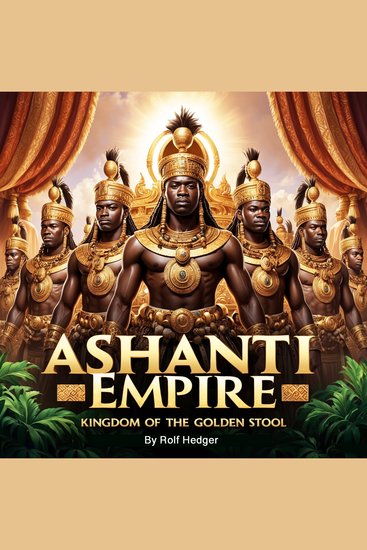
    The Ashanti Empire, flourishing from the 17th to the 19th century in what is now Ghana, stands as a testament to the resilience and sophistication of African states. This powerful kingdom was established through a unique blend of indigenous cultural traditions and political innovations, creating a centralized authority that not only governed a vast territory but also unified diverse ethnic groups under a single national identity. At the heart of this unity was the revered Golden Stool, a symbol of divine providence and the collective spirit of the Ashanti people. 
    Emerging from a landscape rich in natural resources and strategic trade routes, the Ashanti Empire developed robust economic foundations. Gold, kola nuts, and other valuable commodities flowed through well-established networks, facilitating both internal prosperity and external exchanges with neighboring regions and distant trading partners. This economic strength enabled the empire to invest in military expansion and administrative structures that further consolidated its power. 
    The political organization of the Ashanti Empire was characterized by a sophisticated hierarchy led by the Asantehene, whose authority was both political and spiritual. This dual role was crucial in maintaining social order and ensuring loyalty among the various clans and communities within the empire. The administration was further supported by councils of elders and local chiefs, who played significant roles in the governance process by mediating disputes and enforcing the laws that held the society together.
    Ver livro
  • The Plague - cover

    The Plague

    Anônimo

    • 0
    • 0
    • 0
    The Plague explores the profound changes and enduring continuities that shaped European society in the wake of the Black Death and other crises of the 1300s. Through a series of thematic chapters, the book examines the resilience of communities, the evolution of social and economic structures, the persistence of faith, and the seeds of cultural and intellectual transformation. Far from being an age of unmitigated darkness, the fourteenth century emerges as a dynamic period of adaptation, creativity, and the quiet beginnings of the modern world.
    Ver livro
  • Klondike Gold Rush The: A Captivating Guide to the Major Migration of Gold Miners to Yukon and Its Impact on the History of Canada and the United States of America - cover

    Klondike Gold Rush The: A...

    Captivating History

    • 0
    • 0
    • 0
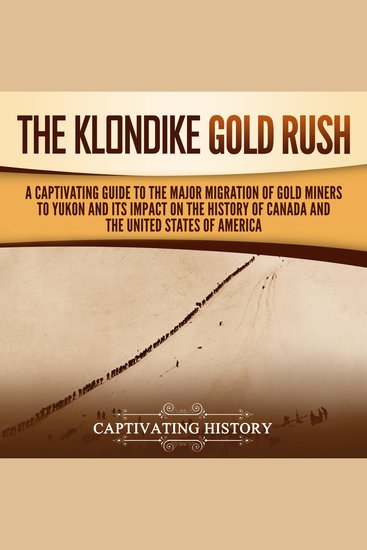
    Did you know that the Klondike Gold Rush was the biggest and fastest movement of people in North American history? 
    From 1897 to 1898, over 100,000 men and women walked, rode, paddled, and sailed thousands of miles to the Klondike River area of the Canadian Yukon in search of gold. 
    Out of those 100,000 people, only about a quarter ever made it to the goldfields, and those who did mostly went home empty-handed. But for a very lucky, hard-working, and fortunate few, the goldfields of the Yukon meant fame and fortune beyond their wildest dreams. 
    In this audiobook by Captivating History, you will discover the truth about the famous Klondike Stampede. 
    Here’s just a small “nugget” of what you’ll discover:The Klondike River area of the Yukon was the richest gold find in history to that date.The first “strike” was made entirely by accident.The first man to discover gold in the Klondike was a First Nations man named Skookum Jim, but his white brother-in-law filed the first claim because it was felt that a native claim would not be honored.The Gold Rush began with a tale told in a bar.Thousands of cheechakos or “tenderfeet” with no experience in the woods made their way to the Yukon.Men were required to take one thousand pounds of gear into Canada, which meant hiking back and forth in stages, literally covering thousands of miles on what normally would have been a seven-hundred plus mile journey.Thousands of horses and dogs were employed, and thousands were maltreated and killed due to men’s greedHundreds of women joined the rush, most of whom ended up in less than savory occupations.Many of the First Nations people worked as packers and guides for the newcomers, earning more money than most miners ever found. 
    Scroll up and click the “add to cart” button to learn more about the Klondike Gold Rush!
    Ver livro
  • Otto von Bismarck - The Politician Who Built a Powerful State - cover

    Otto von Bismarck - The...

    Kelly Mass

    • 0
    • 0
    • 0
    Otto, Prince of Bismarck, Count of Bismarck-Schönhausen, Duke of Lauenburg, was a conservative German statesman, diplomat, and author who was born Junker Otto Eduard Leopold von Bismarck. Bismarck supervised Germany's unification in 1871 and functioned as its first chancellor till 1890, throughout which time he ruled Europe for 20 years. 
    From 1867 to 1871, he was the chancellor of the North German Confederation, and from 1862 till 1890, he was Prussia's minister president and minister of Foreign Affairs, in addition to his role as chancellor of Germany. Bismarck served in both homes of the Prussian Parliament and was the Prussian envoy to France and Russia before rising to the executive power. He dealt with Prussian King Wilhelm I to join the many German countries, a cooperation that lasted the remainder of Wilhelm's life. 
    In this book, you will discover much more about him and his impact on the Unification of Germany, the decades to come, and the entire culture and economy behind it.
    Ver livro
  • Henry David Thoreau - A Very Short Introduction - cover

    Henry David Thoreau - A Very...

    Lawrence Buell

    • 0
    • 0
    • 0
    Henry David Thoreau was a leading figure in the American Transcendentalist movement and the era of US literary emergence, an intellectual with worldwide influence as essayist, social thinker, naturalist-environmentalist, and sage. Thoreau's Walden, an autobiographical narrative of his two-year sojourn in a self-built lakeside cabin, is one of the most widely studied works of American literature. It has generated scores of literary imitations and experiments in back-to-basics living. Thoreau's essay, "Civil Disobedience," is a classic of American political activism and a model for nonviolent reform movements. Thoreau also stands as an icon of modern American environmentalism, the father of American nature writing, a forerunner of modern ecology, and a harbinger of freelance spirituality. 


    Thoreau is also a controversial figure. He was an advocate for individual self-sufficiency who never broke away from home, a self-professed mystic now also acclaimed as a pioneer natural and applied scientist, and a seminal theorist of nonviolent protest who defended the most notorious guerrilla fighter of his day. All told, he remains a rather enigmatic figure both despite and because we know so much about him. Lawrence Buell gives due consideration to all these aspects of Thoreau's art and thought, framing key issues and complexities in historical and literary context.
    Ver livro