Join us on a literary world trip!
Add this book to bookshelf
Grey
Write a new comment Default profile 50px
Grey
Subscribe to read the full book or read the first pages for free!
All characters reduced
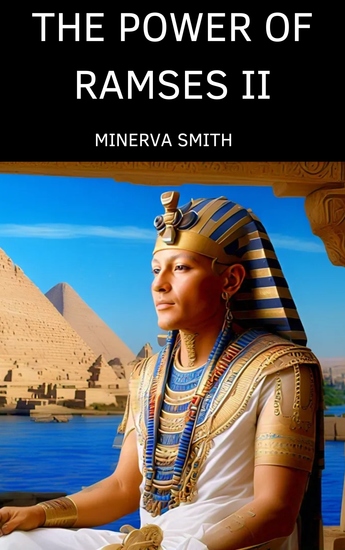
THE POWER OF RAMSES II - Pharaoh of the Exodus - cover

THE POWER OF RAMSES II - Pharaoh of the Exodus

Minerva Smith

Publisher: Heritage Books

  • 0
  • 0
  • 0

Summary

The Power of Ramses II unveils the incredible story of one of ancient Egypt's most legendary pharaohs. Known as Ramses the Great, he ruled for over six decades, building monumental temples, leading powerful armies, and shaping Egypt into a formidable empire. This book delves into his remarkable reign, exploring his military conquests, political influence, and enduring legacy as one of history’s most iconic leaders. Perfect for anyone fascinated by ancient Egypt, this account brings to life the immense power and charisma of Ramses II, a ruler whose impact is still felt thousands of years later.
Available since: 10/17/2024.
Print length: 68 pages.

Other books that might interest you

  • The Great Wall of China - cover

    The Great Wall of China

    Franz Kafka

    • 0
    • 0
    • 0
    "The Great Wall of China" is a short story by Franz Kafka. While written in 1917, it was not published until 1930, seven years after his death. Its first publication occurred in Der Morgen, a German literary magazine. A year later, Max Brod included it in Beim Bau der Chinesischen Mauer, the first posthumous collection of short stories by Franz Kafka.Contained within the story is a parable that was separately published as "A Message from the Emperor" ("Eine kaiserliche Botschaft") in 1919 in the collection Ein Landarzt (A Country Doctor). Some sub-themes of the story include why the wall was built piecemeal (in small sections in many different places), the relationship of the Chinese with the past and the present and the emperor's imperceptible presence. The story is told in the first person by an older man from a southern province.The first English translation, by Willa and Edwin Muir, was published by Martin Secker in London in 1933. It appeared in The Great Wall of China. Stories and Reflections (New York City: Schocken Books, 1946).
    Show book
  • Agents of Influence - Britain's Secret Intelligence War Against the IRA - cover

    Agents of Influence - Britain's...

    Aaron Edwards

    • 0
    • 0
    • 0
    Recruited by British Intelligence to infiltrate the IRA and Sinn Féin during the height of the Northern Ireland Troubles, they were ‘agents of influence’. With codenames like INFLICTION, STAKEKNIFE, 3007 and CAROL, these spies played a pivotal role in the fight against Irish republicanism. Now, for the first time, some of these agents have emerged from the shadows to tell their compelling stories. Agents of Influence takes you behind the scenes of the secret intelligence war which helped bring the IRA’s armed struggle to an end. 
     
    Historian Aaron Edwards, the critically acclaimed author of UVF: Behind the Mask, explains how the IRA was penetrated by British agents, with explosive new revelations about the hidden agendas of prominent republicans like Martin McGuinness and Freddie Scappaticci and lesser-known ones like Joe Haughey and John Joe Magee. Bringing to light recently declassified TOP SECRET documents and the firsthand testimonies of agents and their handlers, Edwards reveals how British Intelligence gained extraordinary access to the IRA’s inner circle and manipulated them into engaging with the peace process. 
     
    With new insights into the spy masters behind the scenes, their strategies and tactics, and Britain’s international intelligence network in Northern Ireland, Europe, and beyond, Agents of Influence offers a rare and shocking glimpse into the clandestine world of secret agents, British intelligence strategy and the betrayal at the heart of militant Irish republicanism during the vicious decades of the Troubles.
    Show book
  • Underwater Ruins of Civilization - cover

    Underwater Ruins of Civilization

    Martin K. Ettington

    • 0
    • 0
    • 0
    The level of Earth’s Oceans have changed many times over the millennia. 
     Global sea level rose by a total of more than 120 meters (360 feet) as the vast ice sheets of the last Ice Age melted back. This melt-back lasted from about 19,000 to about 6,000 years ago, meaning that the average rate of sea-level rise was roughly 1 meter per century. 
     Since many early cities and civilizations were built near the coast, there must be many submerged ruins around the world we are not yet familiar with. The study of these ruins is one of the great unmapped needs for future archeology. 
     We do know about a few of these ruins and are learning much more. This book is a summary of what we know or think we know today about these lost civilizations, cities, and towns. 
     I’ve also included the stories of many legendary cities or locations like Atlantis and Lemuria.
    Show book
  • Getting to the Promised Land - Black America and the Unfinished Work of the Civil Rights Movement - cover

    Getting to the Promised Land -...

    Kevin W. Cosby

    • 0
    • 0
    • 0
    Too often, all oppressed people in America are lumped together under the moniker people of color, as if each group's experience under the yoke of systemic racism has the same economic and social repercussions. But the American Descendants of Slavery (ADOS) hold a unique claim to economic and reparative justice: for ADOS, after all, is the only group whose ancestors were forcibly brought to America, enslaved, built much of the wealth of the country, yet continue to be specifically excluded from the same social, political, and economic rights of other Americans. To that end, Rev. Dr. Kevin W. Cosby lays out the first theology of the ADOS movement, turning the traditional lens of Black liberation theology from Moses leading escaped Hebrew slaves in Exodus to other biblical leaders like Solomon, Daniel, and Nehemiah. 


    In the stories of Nehemiah and other biblical leaders, Cosby finds inspiration on how to rebuild Black America including the necessity of government reparations for ADOS. Cosby calls all Americans to move from a place of relative nonengagement and detachment to a place of active support of ADOS's efforts for justice and healing.
    Show book
  • Summary: The Creative Act - A Way of Being By Rick Rubin: Key Takeaways Summary and Analysis - cover

    Summary: The Creative Act - A...

    Brooks Bryant

    • 0
    • 0
    • 0
    DISCLAIMER: THIS IS NOT THE OFFICIAL BOOK. 
    This is a summary, & it does not accompany the official 
    In 'The Creative Act: A Way of Being' by Rick Rubin, the renowned music producer takes readers on a journey beyond the traditional notions of artistry. Instead of focusing solely on the mechanics of creating great works of art, Rubin explores the profound concept of 'how to be.' He shares his unique approach of providing a space where artists from diverse genres can discover their true selves and unlock their creative potential. 
    Throughout the book, Rubin emphasizes the importance of transcending self-imposed limitations and reconnecting with a sense of innocence that leads to unexpected and inevitable moments of creativity. He argues that being an artist is not solely about the output but about one's relationship with the world. Creativity, he asserts, is a universal capacity that can be expanded by all individuals, making it a significant responsibility for everyone. 
    'The Creative Act' offers readers a generous and enlightening exploration of the artist's path—one that is accessible to all. It distills a lifetime of wisdom into a captivating read that empowers individuals to create moments of exhilaration and transcendence in their own lives. Rick Rubin's book encourages everyone to embrace their creative potential and broaden the scope of their creative endeavors.
    Show book
  • Reagan-Mondale Debate 1 - cover

    Reagan-Mondale Debate 1

    Ronald Reagan, Walter Mondale

    • 0
    • 0
    • 0
    The first of two debates between President Ronald Reagan and former Vice President Walter F. Mondale was held in Louisville, Kentucky on October 7, 1984. Barbara Walters was the debate moderator. James Weigart, Diane Sawyer, and Fred Barnes were the three panelists who asked questions. 
    This first debate was on the economy and domestic issues. Questions focused on the following topics: the nation’s economy, leadership qualities, religion, political issues, abortion, federal taxation, social welfare programs, the presidential campaign, and closing statements. Reagan won a landslide victory in 1984 winning every state except Minnesota and the District of Columbia. 
    Note: 43 seconds of the audio (part of Barbara Walter’s introduction) was garbled. The section from 57 seconds to 1 minute 40 seconds was omitted. This omitted section can be seen and heard in the text and video versions at the Ronald Reagan Presidential Library. Search online for “Ronald Reagan major speeches” to see both a text version and a video version of this debate.  
    Audio recording courtesy of the Ronald Reagan Presidential Library. 
    aspenleafmedia.com
    Show book