Junte-se a nós em uma viagem ao mundo dos livros!
Adicionar este livro à prateleira
Grey
Deixe um novo comentário Default profile 50px
Grey
Assine para ler o livro completo ou leia as primeiras páginas de graça!
All characters reduced
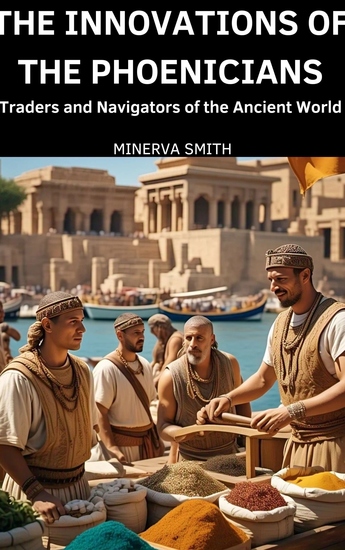
The Innovation of the Phoenicians - Traders and Navigators of the Ancient World - cover
LER

The Innovation of the Phoenicians - Traders and Navigators of the Ancient World

Minerva Smith

Editora: Heritage Books

  • 0
  • 0
  • 0

Sinopse

The Phoenicians were more than just legendary seafarers. They were innovators who revolutionized trade, navigation, and communication in the ancient world. From perfecting maritime technology to developing one of history’s first alphabets, their influence stretched across the Mediterranean, shaping the civilizations that followed.


This book explores the groundbreaking achievements of the Phoenicians, their advanced shipbuilding techniques, extensive trade networks, and the cultural exchanges that connected distant lands. Discover how these master traders laid the foundations for modern commerce, inspired future explorers, and left a lasting legacy that still echoes in today’s world.


For history enthusiasts, maritime scholars, and anyone fascinated by ancient ingenuity, this compelling account brings to life the Phoenicians’ remarkable contributions to human progress.
Disponível desde: 06/02/2025.
Comprimento de impressão: 57 páginas.


Outros livros que poderiam interessá-lo

  • The Capitalist Economy and its Prosthetics - Necessity Evolution and Dilemmas of a Brotherhood - cover

    The Capitalist Economy and its...

    Gerhard H. Wächter

    • 0
    • 0
    • 0
    Notwithstanding its ruthless dynamics, the capitalist economy has the flaw of deficient employment-generating spending. This leads to unemployment of non-owners, individual suffering, social unrest and it undermines military strength. To deal with these issues, states use prosthetic policies, artificial transfers to the productive economy and to non-owners. But the funding of such prosthetic policies - through violent wealth appropriation abroad, protectionism, war, domestic expropriation and taxation, debt and money creation - is caught in dilemmas, while politicians are caught between non-solutions. According to Gerhard H. Wächter, the history of capitalist society is largely the history of this dilemmatic brotherhood.
    Ver livro
  • The Reflective Pulse - The Mirror of Emotions - cover

    The Reflective Pulse - The...

    Ylia Callan

    • 0
    • 0
    • 0
    This audiobook is narrated by an AI Voice.   
    The Reflective Pulse - The Mirror of Emotions invites listeners on a profound journey into the hidden forces that shape human connection, empathy, and love. Blending science, philosophy, and spirituality, this audiobook reveals how emotions act as mirrors of the universe itself - reflecting patterns of energy, symmetry, and meaning that bind us together. 
    From the forgotten force of feeling to the architecture of relationship, from fractal empathy to the cosmic language of the heart, this exploration uncovers the deep resonance between the human soul and the living cosmos. Each chapter illuminates how emotions are not merely personal states, but universal principles woven into the very fabric of reality. 
    A meditation on intimacy, entanglement, and the binding principle of love, The Reflective Pulse shows how our inner lives echo the rhythms of the universe. Thought-provoking and poetic, it is a guide to understanding emotions not as fleeting moods, but as the very pulse of existence - an ever-living mirror of consciousness and creation. 
    Perfect for seekers of wisdom, explorers of consciousness, and anyone fascinated by the intersections of science and spirit, this audiobook offers a transformative vision of the heart as the ultimate mirror of reality.
    Ver livro
  • Enslaved Native Americans and the Making Of Colonial South Carolina - cover

    Enslaved Native Americans and...

    D. Andrew Johnson

    • 0
    • 0
    • 0
    A compelling study into the history and lasting influence of enslaved Native people in early South Carolina. 


    In 1708, the governor of South Carolina responded to a request from London to describe the population of the colony. This response included an often-overlooked segment of the population: Native Americans, who made up one-fourth of all enslaved people in the colony. Yet it was not long before these descriptions of enslaved Native people all but disappeared from the archive. 


    In Enslaved Native Americans and the Making of Colonial South Carolina, D. Andrew Johnson argues that Native people were crucial to the development of South Carolina's economy and culture. By meticulously scouring documentary sources and creating a database of over 15,000 mentions of enslaved people, Johnson uses a uniquely interdisciplinary approach to reconsider the history of South Carolina and center the enslaved Native people who were forced to live and work on its plantations. Johnson also employs spatial analysis and examines archaeological evidence to study Native slavery in a plantation context.
    Ver livro
  • Empire Unraveled - cover

    Empire Unraveled

    Santiago Machain

    • 0
    • 0
    • 0
    This book charts the turbulent twilight of the Mongol imperium and the astonishing resilience of the world it rewired. Beginning with the succession crises after Kublai Khan, it follows the splintering of the Yuan, Ilkhanate, Chagatai, and the Golden Horde—revealing how court intrigue, climate shocks, and the Black Death intersected with finance, technology, and faith. Across nine deeply researched chapters, the book uncovers how postal roads became arteries for ideas as much as armies; how blue-and-white porcelain, paper finance, and siege machines moved across languages and borders; and how legal reforms and city-building created bureaucratic habits that endured long after dynasties fell.
    Ver livro
  • Bagavad Gita in Tamil - Chapter 1 - Aruna Vishatha Yogam - cover

    Bagavad Gita in Tamil - Chapter...

    Viyasar

    • 0
    • 0
    • 0
    The Bhagavad Gita is a 700-verse Hindu scripture embedded within the epic Mahabharata, depicting a dialogue between Arjuna and Krishna on the battlefield of Kurukshetra. Arjuna, facing his relatives in battle, experiences despair and a crisis of conscience. Krishna, his charioteer and an avatar of Vishnu, provides philosophical and spiritual guidance, addressing themes of duty (dharma), action (karma), devotion (bhakti), and knowledge (jnana). The Gita explores the nature of the self, the divine, and humanity's place in the world, offering paths to liberation and spiritual fulfillment. 
    Ver livro
  • What Your Favorite Color Says About You - The Psychology of Color Preferences - cover

    What Your Favorite Color Says...

    John Harpoon

    • 0
    • 0
    • 0
    Color is a fundamental part of human experience, shaping emotions, perceptions, and even behavior. From ancient civilizations to modern psychology, color has been studied for its impact on the human mind. Some colors evoke feelings of warmth and excitement, while others create a sense of calm and relaxation. But beyond their immediate effects, colors can also serve as a reflection of personality and identity. The idea that a person’s favorite color reveals something about their character has intrigued psychologists, researchers, and individuals alike. This book explores the fascinating connection between color preferences and human psychology, offering insights into how and why we gravitate toward certain shades.  
    How a person develops a preference for a particular color is influenced by multiple factors, including early childhood experiences, cultural associations, and even genetic predispositions. Some psychologists suggest that color preferences are rooted in personal memories—positive experiences with a specific color may lead to a lasting affinity for it. Additionally, cultural and societal norms play a significant role in shaping perceptions of color. For example, while white represents purity and new beginnings in Western cultures, it is often associated with mourning in parts of Asia. These cultural variations demonstrate that color meanings are not universal, but rather deeply ingrained in social contexts.  
    Despite these external influences, color preferences are also highly personal and can evolve over time. A child who loves bright and playful colors like yellow or orange may later develop an appreciation for more subdued tones such as blue or gray. Life experiences, emotional growth, and shifting priorities contribute to these changes.
    Ver livro