¡Acompáñanos a viajar por el mundo de los libros!
Añadir este libro a la estantería
Grey
Escribe un nuevo comentario Default profile 50px
Grey
Suscríbete para leer el libro completo o lee las primeras páginas gratis.
All characters reduced
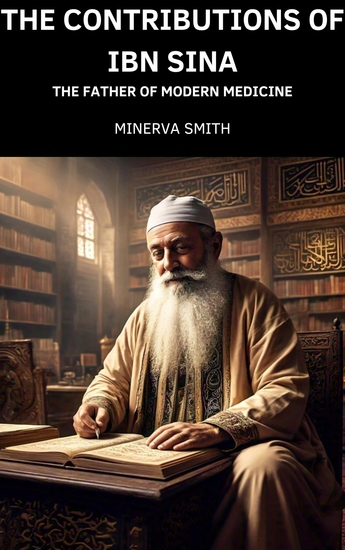
The Contributions of Ibn Sina - The Father of Modern Medicine - cover

The Contributions of Ibn Sina - The Father of Modern Medicine

Minerva Smith

Editorial: Heritage Books

  • 0
  • 0
  • 0

Sinopsis

Discover the life and legacy of Ibn Sina, known in the West as Avicenna, a towering figure in the history of medicine and philosophy. This engaging book explores how Ibn Sina’s groundbreaking work, The Canon of Medicine, became a cornerstone of medical knowledge for centuries, influencing both Eastern and Western practices.


From his profound contributions to diagnostics and pharmacology to his philosophical inquiries into the nature of existence, Ibn Sina’s genius reshaped the intellectual landscape of his time and laid the foundations for modern science.


Perfect for readers fascinated by history, science, and the remarkable achievements of great minds, this book celebrates Ibn Sina’s enduring impact on medicine and human thought, reminding us of the power of curiosity and discovery.
Disponible desde: 09/01/2025.
Longitud de impresión: 43 páginas.

Otros libros que te pueden interesar

  • Kings and Queens - The History of Mary Tudor Charlemagne and Anne Boleyn - cover

    Kings and Queens - The History...

    Kelly Mass

    • 0
    • 0
    • 0
    This is a book that consists of 3 titles, which are these: 
    1 - As King Henry VIII's 2nd marriage partner, Anne Boleyn ruled as Queen of England from 1533 till 1536. Her marriage and execution by beheading for treason and other criminal offenses made her an essential player in the political and religious chaos that identified the start of the English Reformation. Anne was the daughter of Thomas Boleyn, first Earl of Wiltshire, and his marriage partner, Girl Elizabeth Howard. She got her education in Holland and France, mainly as a housemaid of honor to Queen Claude of France. Anne went to England in early 1522, meaning to wed her Irish cousin James Butler, 9th Earl of Ormond; nevertheless, the marriage failed, and she found work as a housemaid of honor to Henry VIII's partner, Catherine of Aragon. 
    2 - Mary I, typically called Mary Tudor and called "Bloody Mary" by her Protestant challengers, ruled as Queen of England and Ireland from July 1553 till November 17th, 1558. She is well recalled for her solid attempts to reverse the English Reformation, which started throughout her dad's reign, Henry VIII's reign. 
    Bloody Mary was cruel, cold, and from what we know, there was a cause for this. Let’s take a look at her life, her problems, and the way she handled them. 
    3 - From 768 to 800, Charlemagne, also referred to as Charles the Great, was King of the Franks, King of the Lombards, and Emperor of the Romans. Charlemagne combined many western and main Europe at the time of the Early Middle Ages. Since the fall of the Western Roman Empire 3 centuries before, he was the first acknowledged emperor to rule from western Europe. The Carolingian Empire is the name given to Charlemagne's broadening Frankish world. Antipope Paschal the Third later canonized him.
    Ver libro
  • Billy the Kid - Beyond the Grave - cover

    Billy the Kid - Beyond the Grave

    W.C. Jameson, Max McCoy

    • 0
    • 0
    • 0
    Did Pat Garrett kill the wrong man in 1881 in Fort Sumner, New Mexico, or did the outlaw known as Billy the Kid live on as William Henry Roberts until 1948? W. C. Jameson analyzes the evidence, including use of new technology to produce a compelling case for Billy's survival. Heralded by Booklist as an enjoyable reexamination of a legendary piece of Americana, this book traces the life of the famous desperado and the controversy that still is debated today.
    Ver libro
  • The Ballad Of The White Horse - An epic poem about King Alfred's Christian endeavors resisting the Viking conquest of England - cover

    The Ballad Of The White Horse -...

    Gilbert Keith Chesterton

    • 0
    • 0
    • 0
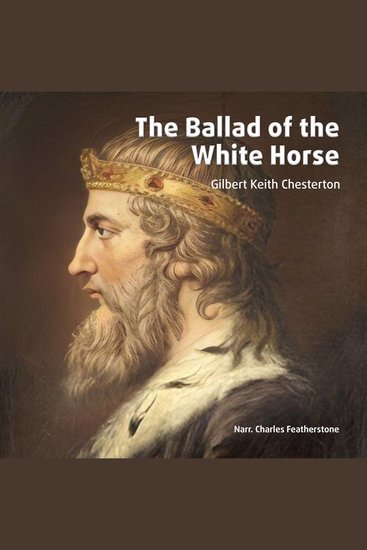
    "The Last Great Epic Poem in the English Language"- Dale Ahlquist"The ending is absurd. The brilliant smash and glitter of the words and phrases (when they come off, and are not mere loud colours) cannot disguise the fact that G. K. C. knew nothing whatever about the 'North', heathen or Christian."- JRR TolkienThe tale of King Alfred, the Christian king who in 878AD battled a Viking invasion that had conquered the rest of England and burnt some cakes. He then became the last holdout of resistance against the invaders and forced the conversion of the Danish king Guthrum to Christianity after the battle of Ethandun. Chesterton says "This ballad needs no historical notes, for the simple reason that it does not profess to be historical. All of it that is not frankly fictitious, as in any prose romance about the past, is meant to emphasize tradition rather than history. That is the use of tradition: it telescopes history."Named after the chalk horses carved into English hills (and partly set at Uffington), it begins with an exhortation to true Christianity in the face of despair and defeat, and ends with a prediction of more barbarian invasions. It focuses on the nature of faith in times of despair, and on the true strength of local kings in the face of empires."... you and all the kind of ChristAre ignorant and brave,And you have wars you hardly winAnd souls you hardly save...."In some far century, sad and slow,I have a vision, and I knowThe heathen shall return...."They shall come mild as monkish clerks,With many a scroll and pen;And backward shall ye turn and gaze,Desiring one of Alfred's days,When pagans still were men."
    Ver libro
  • Cultural Studies for Troubling Times - A Multimodal Introduction to British and American Cultures - cover

    Cultural Studies for Troubling...

    Huck Christian

    • 0
    • 0
    • 0
    Haben Sie sich schon einmal gefragt, warum es so viele irische Männer nach Barbados verschlagen hat? Oder wie das Schwarze Detroit zu Kraftwerk tanzte? Warum es auf dem Trafalgar Square keine Frauenstatuen gibt? Und was all das mit den wirtschaftlichen und politischen Aspekten von Kultur zu tun hat? Das multimodale E-Book führt alle, die sich für Fragen kultureller Identität, medialer Materialität, der Repräsentation, Popkultur und des kulturellen Gedächtnisses interessieren, in Grundbegriffe und zentrale theoretische Ansätze der Kulturwissenschaften ein.
    Ver libro
  • Finding Genius: Stories Told by Bones - A day in the Museum of Osteology: (7 compelling observations; 31 captivating photos) - cover

    Finding Genius: Stories Told by...

    Richard Jacobs

    • 0
    • 0
    • 0
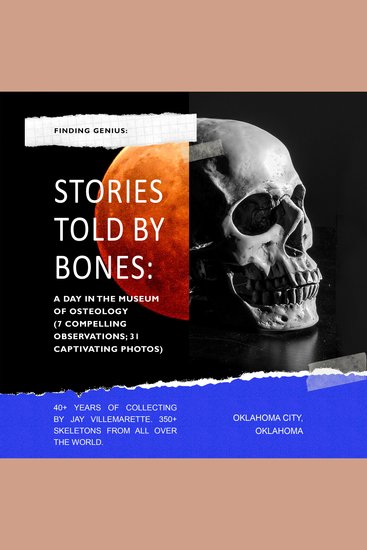
    A lifelong fascination with all things bones. A four-decades-long hunt for the specimens of 2,500+ species past and present. An unwavering desire to preserve, appreciate, and display this rich history of life on Earth. 
    These things led to the establishment of the largest privately-held collection of osteological pieces in the world; a place where science displays are more like works of art ... capturing the attention of every eye that lands upon them, and telling a profound story without uttering a single word. 
    I'm Richard Jacobs. A casual trip with my family to a bone museum sparked a number of observations that I found too intriguing not to share. 
    Enjoy. And please, never stop being curious, and never stop asking questions – the good ones can lead to the greatest discoveries of mankind. 
    Ver libro
  • Ancient Japan - Foundations of a Nation (3 in 1) - cover

    Ancient Japan - Foundations of a...

    Rolf Hedger

    • 0
    • 0
    • 0
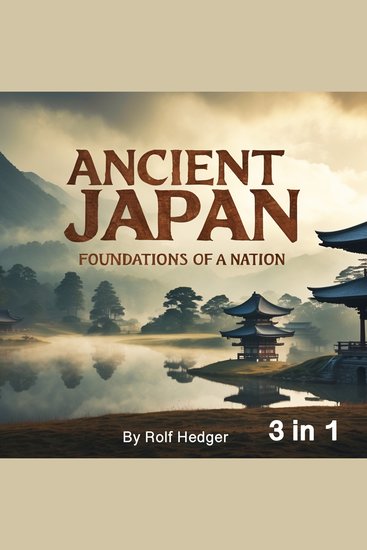
    The early history of Japan was shaped by three key periods—the Kofun, Yamato, and Asuka—each playing a crucial role in laying the foundations of the Japanese nation.  
    The Kofun Period, named after the massive burial mounds built for elite rulers, saw the rise of warrior aristocracy and the early consolidation of power by influential clans. This era transitioned into the Yamato Period, during which the Yamato clan emerged as Japan’s first ruling dynasty, establishing the imperial lineage that continues to this day.  
    The Asuka Period marked a profound transformation as Buddhism, Confucian governance, and Chinese cultural influences began shaping Japan’s political and social structures.  
    The Taika Reforms introduced centralized administration, strengthening the authority of the emperor.  
    These three periods together set the stage for Japan’s evolving identity, blending indigenous traditions with foreign influences to create a distinct and enduring civilization.
    Ver libro