¡Acompáñanos a viajar por el mundo de los libros!
Añadir este libro a la estantería
Grey
Escribe un nuevo comentario Default profile 50px
Grey
Suscríbete para leer el libro completo o lee las primeras páginas gratis.
All characters reduced
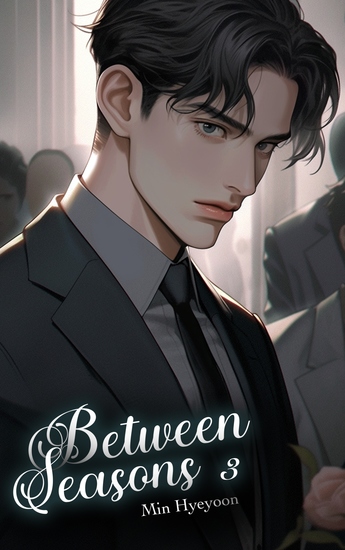
Between Seasons Vol 3 (novel) - cover

Between Seasons Vol 3 (novel)

Min Hyeyoon

Traductor WordExcerpt

Editorial: WordExcerpt

  • 0
  • 0
  • 0

Sinopsis

Kyuyoung is torn between the magnetic pull of Yoongun Jung, a man who has ignited a dangerous passion within her, and the growing realization that their relationship is toxic beyond repair. As their affair spirals into chaos, Kyuyoung grapples with the harsh truth of what they've become—manipulation, control, and emotional destruction. 
 
Yoongun, recently promoted to Chief Technology Officer, hides behind a cold, calculated persona, but beneath the surface, jealousy and possessiveness consume him. His obsession with Kyuyoung grows, a desperate need to control her emerging with every passing day.
Disponible desde: 17/10/2024.
Longitud de impresión: 341 páginas.

Otros libros que te pueden interesar

  • Selected Short Stories of Rabindranath Tagore - Alive and Dead Suva The First Look Hoimantee Letter from Your Wife and The Anonymous Lady - cover

    Selected Short Stories of...

    Rabindranath Tagore, Translator:...

    • 0
    • 0
    • 0
    This is a collection of translations of six short stories of Nobel Laureate Rabindranath Tagore.  These six short stories are selected from his book ‘Galpaguchha’.  The stories are, 'Alive and Dead' (Jeebita o Mreeta), 'Suva', 'The First Look' (Shuvadrishti), 'Hoimantee', ‘Letter from Your Wife' (Streer Patra) and 'The Anonymous Lady' (Aparichita). I have selected these stories, because first of all I enjoyed reading these stories and secondly all these six stories are concerned about the position of women in the family and in the society at that time, that is, during the late nineteenth century and early twentieth century.   
    These stories depict the vulnerability of women, their lack of control over their marriage and life as a whole.  Show a glimpse of life of another time and of another culture. The line of thinking may seem much different from today’s life, but in many parts of the world still there are some people who like to suppress the rights of women in the name of religion or culture. So, these stories are still relevant.  
    Excerpts from Alive and Dead, Kadambinee cannot tolerate any more, she says sharply, ‘Oh, please, I didn’t die, did not die!  How will I make you understand that I didn’t die? Let me show you that I am alive.’ 
    From Hoimantee, ‘My life was so full to the brim on all sides, that I could not notice any gap anywhere.  Suddenly, I witnessed a large void of hopelessness so near me!  I couldn’t understand how and with what I would fill up this void.’ 
    From Letter from Your Wife, Mreenal, ‘I can never understand the logic behind that it’s okay not to please me, but it’s not okay to make you unhappy.’
    Ver libro
  • Behind the Wall - From their pens to your ears genius in every story - cover

    Behind the Wall - From their...

    Violet Jacob

    • 0
    • 0
    • 0
    The bookshelves of British literature are incredible collections that have gathered together centuries of very talented authors.  From these Isles their fame spread and whilst among their number many are now forgotten or neglected their talents endure.  Among them is Violet Jacob.
    Ver libro
  • A Successful Rehearsal - From their pens to your ears genius in every story - cover

    A Successful Rehearsal - From...

    Anthony Hope

    • 0
    • 0
    • 0
    Sir Anthony Hope Hawkins was born on 9th February 1863 in Clapton, London.  
    He was educated at St John's School, Leatherhead, Marlborough College and Balliol College, Oxford.  Hope trained as a lawyer and barrister and was called to the Bar by the Middle Temple in 1887. Despite what was thought to be a promising legal career he had literary ambitions and wrote in his spare time. 
    His early works appeared in various periodicals of the day but for his first book ‘A Man of Mark’ (1890), with no publisher interested, he published with his own resources.  
    More novels and short stories followed, including the mildly successful ‘Mr Witt's Widow’ in 1892. Hope even found time to run as the Liberal candidate for Wycombe in the election that same year but was unsuccessful. 
    His first major literary success came with ‘The Dolly Dialogues’, a collection of previously published magazine pieces followed very quickly by his instant classic, ‘The Prisoner of Zenda’. He now gave up the vestiges of his legal career to pursue writing full-time. 
    Despite never again reaching the same pinnacle of success he was popular and wrote prolifically across novels, plays and of course, short stories though his writing output rapidly diminished after the war. 
    In 1918 he was knighted for his contribution to propaganda efforts during World War I.  
    His short stories are delicate, mannered and often surprising with their wit, humour and interplay of characters who say one thing and usually mean another.  He was very definitely a writer of escapist rather than serious fare but they are no less enjoyable for that. 
    Anthony Hope died of throat cancer on 8th July 1933 at his country home, Heath Farm at Walton-on-the-Hill in Surrey. He was 70.
    Ver libro
  • Top 10 Short Stories The - Cambridge Graduates - The top ten short stories of all time written by authors that went to Cambridge - cover

    Top 10 Short Stories The -...

    William Makepeace Thackeray, E F...

    • 0
    • 0
    • 0
    Short stories have always been a sort of instant access into an author’s brain, their soul and heart.  A few pages can lift our lives into locations, people and experiences with a sweep of landscape, narration, feelings and emotions that is difficult to achieve elsewhere. 
     
    In this series we try to offer up tried and trusted ‘Top Tens’ across many different themes and authors. But any anthology will immediately throw up the questions – Why that story? Why that author?  
     
    The theme itself will form the boundaries for our stories which range from well-known classics, newly told, to stories that modern times have overlooked but perfectly exemplify the theme.  Throughout the volume our authors whether of instant recognition or new to you are all leviathans of literature. 
     
    Some you may disagree with but they will get you thinking; about our choices and about those you would have made.  If this volume takes you on a path to discover more of these miniature masterpieces then we have all gained something. 
     
    In this volume we explore and enjoy the stories of authors who attended one of the great seats of learning.  Amongst their storied number are M R James, Hugh Walpole, William Makepeace Thackeray and a host of others. 
     
    01 - The Top 10 - Cambridge - An Introduction 
    02 - A Little Dinner At Timmin's by William Makepeace Thackeray 
    03 - Caterpillars by E F Benson 
    04 - Cohen of Trinity by Amy Levy 
    05 - The Ash Tree by M R James.wav 
    05 - Major Wilbraham by Hugh Walpole 
    07 - Far Above Rubies by Netta Syrett 
    08 - The Closed Window by A C Benson 
    09 - The Diary of a God by Barry Pain 
    10 - The 9.30 Up-Train by Sabine Baring-Gould 
    11 - The Screaming Skull by F Marion Crawford
    Ver libro
  • Night Side of the River - Ghost Stories - cover

    Night Side of the River - Ghost...

    Jeanette Winterson

    • 0
    • 0
    • 0
    A captivating collection of ghost stories from "one of the most gifted writers working today" (New York Times), The Night Side of the River is as ingeniously provocative as it is downright spooky. 


    In this delightfully chilling collection, the iconic Jeanette Winterson turns her fearless gaze to the realm of ghosts, interspersing her own encounters with the supernatural alongside hair-raising fictions. Lifting the veil between the living and the dead, Winterson spirits us away to a haunted estate that ensnares a nomadic young couple in its own dark past, a staged immersive ghost tour gone awry, a West Village séance that threatens the bounds between AI and reality, and a vacation home in the metaverse where a widow visits an improved version of her deceased husband. Gloriously gothic and unnervingly contemporary, Winterson examines grief, revenge, and the myriad ways in which technology can disrupt the boundary between life and death.
    Ver libro
  • God Sees the Truth But Waits - From their pens to your ears genius in every story - cover

    God Sees the Truth But Waits -...

    Leo Tolstoy

    • 0
    • 0
    • 0
    Leo Tolstoy was born in 1828 in the Russian province of Tula to a wealthy noble family. As a child, he had private tutors but he showed little interest in any formal education. When he went to the University of Kazan in 1843 to study oriental languages and law, he left without completing his courses.  Life now was relaxed and idle but with some writing also taking place.  Gambling debts forced an abrupt change of path and he joined the army to fight in the Crimean War.  He was commended for his bravery and promoted but was appalled at the brutality and loss of life.  He recorded these and other earlier experiences in his diaries which formed the basis of several of his works. 
    In 1852 ‘Childhood’ was published to immediate success and was followed by ‘Boyhood’ and ‘Youth’. 
    His experience in the army and the horrors he witnessed resulted in ‘The Cossacks’ in 1862 and the trilogy ‘Sevastopol Tales’. After the war he travelled around Europe, visiting London and Paris and meeting such luminaries as Victor Hugo and Charles Darwin.  
    It was now that Tolstoy began his masterpiece, ‘War and Peace’. Published in 1869 it was an epic work that changed literature. He quickly followed this with ‘Anna Karenina’.  
    These successes made Tolstoy rich and helped him accomplish many of his dreams but also brought problems as he grappled with his faith and the lot of the oppressed poor. These revolutionary views became so popular that the authorities now kept him under surveillance.  
    He led a life of asceticism and vegetarianism and put his socialist ideals into practice by establishing numerous schools for the poor and food programmes. He also believed in giving away his wealth, which caused much discord with his wife.  
    His writing continued to bring forth classics such as ‘The Death of Ivan Ilyich’ and many brilliant and incisive short stories such as ‘How Much Land Does A Man Need’.  
    In 1901 Tolstoy was excommunicated from the Church and controversially deselected for the Nobel Prize for Literature. 
    Whilst undertaking a pilgrimage by train in October 1910 with his daughter Aleksandra he caught pneumonia in the nearby town of Astapovo.  Leo Tolstoy died on November 9th, 1910, he was 82.
    Ver libro