Junte-se a nós em uma viagem ao mundo dos livros!
Adicionar este livro à prateleira
Grey
Deixe um novo comentário Default profile 50px
Grey
Assine para ler o livro completo ou leia as primeiras páginas de graça!
All characters reduced
Policy Implementation - cover
LER

Policy Implementation

Michael Johnson

Tradutor A AI

Editora: Publifye

  • 0
  • 0
  • 0

Sinopse

Policy Implementation explores why well-intentioned government policies often fail by examining the journey from policy creation to enforceable law. It scrutinizes government agencies and the challenges they face, offering insights into how policies are translated into action. The book highlights the bureaucratic processes involved, such as potential bottlenecks and conflicting mandates within agencies, and external factors like public opinion and interest groups that can either help or hinder policy objectives. Understanding these elements is crucial, as neglecting any can lead to policy failures; for example, a policy might be well-designed but fail due to lack of public support.

 
The book progresses logically, starting with foundational concepts and theoretical frameworks. It then delves into case studies from areas like environmental regulation and healthcare reform, analyzing successes and failures. By integrating empirical research, government documents, and expert opinions, the book provides a nuanced understanding of implementation challenges. One key insight is how economic incentives and social norms can influence policy compliance, showcasing the interdisciplinary nature of policy implementation. This approach helps policymakers and students understand the intricacies of governance.

 
Ultimately, Policy Implementation offers practical recommendations for improving policy implementation strategies, enhancing stakeholder engagement, and mitigating unintended consequences. It stands out by not only describing problems but also providing concrete solutions, making it valuable for students, practitioners, and informed citizens interested in the inner workings of government.
Disponível desde: 03/04/2025.
Comprimento de impressão: 81 páginas.
Outros livros que poderiam interessá-lo

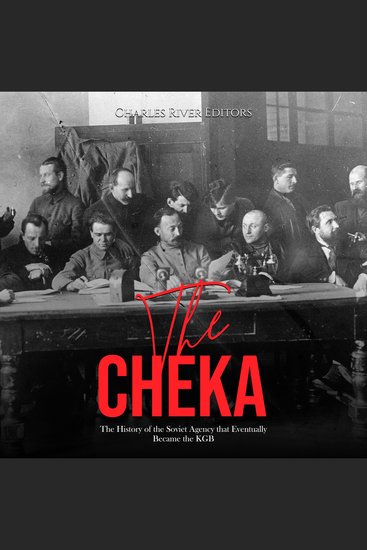
  • Cheka The: The History of the Soviet Agency that Eventually Became the KGB - cover

    Cheka The: The History of the...

    Editors Charles River

    • 0
    • 0
    • 0
    The KGB is one of the most famous abbreviations of the 20th century, and it has become synonymous with the shadowy and often violent actions of the Soviet Union’s secret police and internal security agencies. In fact, it is often used to refer to the Soviet state security agencies throughout its history, from the inception of the inception of the Cheka (Extraordinary Commission) in 1917 to the official elimination of the KGB in 1992. Whether it’s associated with the Russian Civil War’s excesses, Stalin’s purges, and even Vladimir Putin, the KGB has long been viewed as the West’s biggest bogeyman during the second half of the 20th century. 
    	However, the KGB did not appear out of thin air. Naturally, the earliest Soviet leaders utilized intelligence agencies that collected information both abroad and within the Soviet Union, targeting foreign opponents and domestic opponents alike. Lenin did not imagine the scale of the opposition he would have to face after the revolution, and he quickly came to the conclusion that "a special system of organized violence" must be created to implement the dictatorship of the proletariat. 
    	Thus, from nearly the beginning of the Bolshevik takeover of Russia, Lenin and his successors established and relied on a particularly ruthless agency: the All-Russian Extraordinary Commission for Combating Counter-Revolution and Sabotage, later abbreviated to the Extraordinary Commission. Known colloquially as the Cheka (Extraordinary Commission), it soon became as feared by non-socialists as the Tsar’s secret police had ever been. The main means approved by the Council of People's Commissars on December 20, 1917, which the Cheka had to use to fight the counter-revolution, were "seizure of property, resettlement, deprivation of cards, publication of lists of enemies of the people, etc."
    Ver livro
  • The Myth of a Guilty Nation - cover

    The Myth of a Guilty Nation

    Albert Jay Nock

    • 0
    • 0
    • 0
    Who really started World War I? Challenge the official narrative in this timeless classic of revisionist history. 
    In the immediate aftermath of the Great War, the Allied powers cemented a singular truth into the global consciousness: Germany alone was responsible for the devastation of Europe. But in 1922, legendary libertarian essayist and social critic Albert Jay Nock shattered this consensus with The Myth of a Guilty Nation. 
    Drawing meticulously from official European diplomatic documents exposed after the war, Nock pulls back the curtain on the geopolitical theater. He argues that World War I was not the fault of a single rogue empire, but the inevitable explosion of a corrupt, state-driven international system fueled by secret treaties and clandestine alliances.What you will discover in this audiobook:The Deconstruction of War Guilt: A sharp, unblinking critique of the Treaty of Versailles and the political motives behind blaming Germany exclusively.The Reality of Secret Diplomacy: How British, French, and Russian politicians laid the groundwork for conflict behind closed doors, hidden from their own citizens.The Power of State Propaganda: An eye-opening analysis of how governments manufacture consent and weaponize public opinion to justify industrialized slaughter. 
    More than just a historical critique of WWI, Nock’s work serves as a prophetic warning about state power, government transparency, and the machinery of war. Brutally honest, analytical, and deeply philosophical, this foundational text of American libertarian thought remains chillingly relevant today.
    Ver livro
  • Fbi's Fighting And Political Agendas - What A Former Agent's Saw At The Bureau Between Two Fbi’s - cover

    Fbi's Fighting And Political...

    Roberts R. Kevin

    • 0
    • 0
    • 0
    What most Americans see is a single federal agency enforcing the law. What many inside experience is far more divided.
     
    This book is a firsthand account of life inside the Bureau during a period of growing internal conflict—where dedication to public safety clashed with shifting priorities, political pressure, and decisions that placed agents at risk. Through real experiences and documented events, a former agent reveals how the mission began to change from within.
     
    The story begins with service—training, teamwork, and the belief that the law must be applied fairly. It moves into the realities of investigating violent crime, where preparation and support are essential. As cases unfold, troubling patterns emerge: uneven enforcement, shifting standards, and leadership decisions shaped more by perception than threat.
     
    At its core is a divide within the agency. On one side are agents committed to evidence, safety, and the Bureau’s original purpose. On the other are decisions influenced by politics and internal pressure, often at the expense of those on the ground.
     
    This account does not rely on speculation. It draws from lived experience and operational realities, showing how dangerous missions were approved without adequate support, how accountability became uneven, and how speaking up carried consequences.
     
    Beyond operations, it is also a human story—examining the emotional toll of violent crime, the strain of internal conflict, and the role of conscience when loyalty and integrity no longer align.
     
    FBI’s Fighting and Political Agendas is not an attack on law enforcement, but an examination of what happens when an institution loses alignment between its values and actions—and why restoring that balance matters for those who serve and the public they protect.
     
    This is a true account of duty under pressure, internal division, and the consequences of an agency turned inward.
    Ver livro
  • Emotional Justice - A Roadmap for Racial Healing - cover

    Emotional Justice - A Roadmap...

    Esther A. Armah, Brittney...

    • 0
    • 0
    • 0
    It is time for an emotional reckoning on our path to racial healing, sustainable equity, and the future of DEI. Here's the tool to help us navigate it. 


    In this groundbreaking book, Esther Armah argues that the crucial missing piece to racial healing and sustainable equity is emotional justice—a new racial healing language to help us do our emotional work. This work is part of the emotional reckoning we must navigate if racial healing is to be more than a dream. We all—white, Black, Brown—have our emotional work that we need to do. But that work is not the same for all of us. 


    This emotional work means unlearning the language of whiteness, a narrative that centers white people, particularly white men, no matter the deadly cost and consequence to all women and to global Black and Brown people. That's why a new racial healing language is crucial. 


    Emotional Justice grapples with how a legacy of untreated trauma from oppressive systems has created and sustained dual deadly fictions: white superiority and Black inferiority that shape—and wound—all of us. These systems must be dismantled to build a future that serves justice to everyone, not just some of us.
    Ver livro
  • Buddha or Karl Marx - cover

    Buddha or Karl Marx

    Dr. B R Ambedkar

    • 0
    • 0
    • 0
    Buddha or Karl Marx - is a comparative study of the two philosophies Buddhism and Marxism. 
    It concludes by presenting in plain English that Buddhism through changing man's disposition is a superior way to achieve and most importantly maintain a society sans suffering, greed and fostering Maitri (universal love and brotherhood).
    Ver livro
  • Energy Politics in the Mena Region - From Hydrocarbons to Renewables? - cover

    Energy Politics in the Mena...

    Valeria Talbot

    • 0
    • 0
    • 0
    The war in Ukraine has highlighted Europe's urgency to diversify its energy supplies and reduce dependence on Russia. While, in such context, energy security has become a top political priority for Europe, energy resources from the Middle East and North Africa (MENA) region have drawn European countries' renewed attention. Boasting abundant oil and gas reserves, the MENA region will likely play a
    leading role in Europe's current energy crisis. While MENA exporters' ability to increase their supply is limited in the short-term, more resources are likely to be available in a longer-term perspective.
    As Europeans are scrambling for alternatives, this Report analyses the different implications for a number of MENA exporters of fossil fuels. As these countries have become even more central to Europe's energy security, assessing their prospects is of paramount importance, including not only their short-term role as suppliers of fossil fuels, but also their opportunity to accelerate along the path of the green
    transition.
    How is the current energy crisis affecting the role of MENA hydrocarbons producers as Europe's energy suppliers? How will Europe's needs in additional resources redefine energy geopolitics in the Middle East and North Africa? Which new prospects for their green transition?
    Ver livro