¡Acompáñanos a viajar por el mundo de los libros!
Añadir este libro a la estantería
Grey
Escribe un nuevo comentario Default profile 50px
Grey
Suscríbete para leer el libro completo o lee las primeras páginas gratis.
All characters reduced
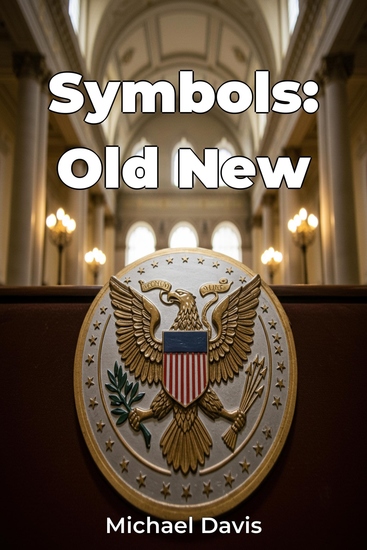
Symbols: Old New - cover

Symbols: Old New

Michael Davies

Traductor A AI

Editorial: Publifye

  • 0
  • 0
  • 0

Sinopsis

Symbols: Old New explores how societies intentionally craft national symbols after revolutions to represent new identities and political ideals. It delves into the creation of flags, monuments, and national seals, revealing how visual culture shapes political transformation. The book highlights that this process is not merely superficial; it signifies a fundamental shift in collective memory and values, reflecting a conscious effort to establish a new national identity.

 
The book examines the deliberate destruction of old symbols and the subsequent design of new ones, showing how revolutionary leaders used these tools to consolidate power. For example, creating national flags to inspire allegiance. The concept of iconoclasm is key, illustrating how removing old symbols delegitimized the previous regime.

 
The book underscores the power dynamics and ideological conflicts inherent in these transformations, which often involve negotiation and compromise. The book progresses from theoretical frameworks to case studies of flag design, national holidays, monuments, and seals. It analyzes the success of these symbols in fostering national unity and addresses the ongoing debates surrounding them. By focusing on the agency of revolutionary actors, Symbols: Old New provides a fresh perspective on how national identities are constructed and contested through visual representation.
Disponible desde: 25/02/2025.
Longitud de impresión: 55 páginas.
Otros libros que te pueden interesar

  • Technology and Cities - The Role of Technology in Shaping Urban Futures - cover

    Technology and Cities - The Role...

    Lyric Vale

    • 0
    • 0
    • 0
    In recent decades, technology has become a defining force in the development and transformation of cities. From the industrial revolution to the rise of the internet, technological advancements have continually reshaped urban life, making cities hubs of innovation, connectivity, and economic growth. Today, as cities face growing populations, climate change, and resource constraints, technology plays a central role in addressing these challenges while also opening new possibilities for urban living. The integration of digital technologies, automation, and data analytics is driving what we now recognize as the emergence of "smart cities," where every aspect of urban life is enhanced by technology. These advancements not only improve efficiency but also offer the potential to foster more sustainable, livable, and equitable urban environments. 
    The influence of technology in cities extends across various domains, including infrastructure, transportation, healthcare, and governance. In terms of urban infrastructure, cities are adopting digital systems for managing everything from electricity grids to water distribution, allowing for more responsive and efficient service delivery. Transportation has also undergone a transformation with the introduction of autonomous vehicles, electric cars, and new mobility services like ride-sharing, reshaping how people move within cities and reducing the environmental impact of urban travel. Similarly, the integration of sensors and Internet of Things (IoT) devices enables real-time data collection that informs city management, improving everything from traffic flow to waste management.
    Ver libro
  • Naples - Historical Data and Intriguing Facts - cover

    Naples - Historical Data and...

    Kelly Mass

    • 0
    • 0
    • 0
    Naples (or, in Italian, Napoli) is the local capital of Campania and Italy's third-largest city, after Rome and Milan, with a population of 967,069 people living within the city's administrative limits since 2017. With a population of 3,115,320 people, its province-level town is Italy's third-most inhabited urbane city, and its city periods for around twenty miles outside the city walls. 
    Naples, established by Greeks in the first millennium BC, is just one of the world's oldest constantly occupied cities. 
    On the isle of Megaride, a district, referred to as Parthenope, was established in the ninth century BC. It was re-founded as Neápolis in the sixth century BC. 
    Naples has a long history, all the way dating back to Roman times, the outbreak of the Vesuvius, and much more. Let’s learn more about this fascinating city’s history.
    Ver libro
  • Skirts - Fashioning Modern Femininity in the Twentieth Century - cover

    Skirts - Fashioning Modern...

    Kimberly Chrisman-Campbell

    • 0
    • 0
    • 0
    In a sparkling social history, Skirts traces the shifting roles of women over the twentieth century through the era's most iconic and influential dresses. 


    While the story of women's liberation has often been framed by the growing acceptance of pants over the twentieth century, the most important and influential female fashions of the era featured skirts. Suffragists and soldiers marched in skirts; the heroines of the Civil Rights Movement took a stand in skirts. As women made strides towards equality in the vote, the workforce, and the world at large, their wardrobes evolved with them. 


    Kimberly Chrisman-Campbell's Skirts looks at the history of twentieth-century womenswear through the lens of game-changing styles like the little black dress and the Bar Suit, as well as more obscure innovations like the Taxi dress or the Pop-Over dress, which came with a matching potholder. These influential garments illuminate the times in which they were first worn—and the women who wore them—while continuing to shape contemporary fashion and even opening the door for a genderfluid future of skirts. At once an authoritative work of history and a delightfully entertaining romp through decades of fashion, Skirts charts the changing fortunes, freedoms, and aspirations of women themselves.
    Ver libro
  • Abuso - cover

    Abuso

    Miguel Vaquero

    • 0
    • 0
    • 0
    Es posible que conozcas a alguien que está en una relación con alguien que es emocionalmente abusivo, o podrías estar en una relación con alguien así. O tal vez no sabe cómo reconocerlo y tiene curiosidad por saber cómo reconocer las señales. Cualquiera que sea la razón, ha venido a la dirección correcta.Dado que está en todos los medios y las historias horribles resuenan a través de nuestros oídos empáticos, es casi obligatorio que cualquier civil comprensivo en la sociedad comprenda al menos algunos conceptos básicos cuando se trata de abuso sexual. Los hechos están ahí afuera, y realmente le está sucediendo a la gente en secreto y, a veces, sin ocultar nada. En este libro, aprenderá a comprender la realidad de este triste fenómeno en la sociedad.Es posible que algunos de nosotros hayamos pasado por eso y otros lo hayan visto en los hogares de otras personas. La violencia doméstica es un problema grave. Las estadísticas no mienten, pero tampoco son completamente precisas. Revelan a las víctimas que hablan, pero no a las que callan. Si se pregunta qué implica la violencia doméstica, qué hacer y cómo reconocerla, entonces ha venido al lugar correcto.En una parte del libro, hay un estudio, con las cuestiones específicas que se relacionan con las tendencias suicidas. Salen a la luz causas y consecuencias, y se hacen comparaciones entre países, individuos y desencadenantes que llevan a una persona en estado depresivo a contemplar lo impensable.Quizás no uno severo, pero el abuso verbal ocurre todo el tiempo. Cada vez que las personas son malas entre sí, en cierto grado, están abusando de otro con sus palabras. Pueden ser extraños, compañeros de trabajo, jefes, tu cónyuge, tus padres, tu novio o novia, o tus amigos.
    Ver libro
  • Sociology of Social Structures - Understanding Social Systems and Institutions (5 in 1) - cover

    Sociology of Social Structures -...

    Fred Grandsen

    • 0
    • 0
    • 0
    This book provides an in-depth exploration of the intricate social systems that shape human behavior, societal norms, and everyday life.  
    The Sociology of Crime examines the complex relationship between social structures and criminal behavior. It looks into how crime is defined, why individuals commit crimes, and how societal reactions to crime shape both law enforcement and criminal justice policies. 
    The Sociology of Deviance delves into behaviors that deviate from societal norms and the social processes that label them as deviant. This section explores how norms are constructed, the role of social institutions in defining deviance, and the impact of these labels on individuals and groups. 
    The Sociology of Education explores the role of education in society, focusing on how educational institutions serve as agents of socialization, reproduction of social structures, and vehicles for upward mobility. 
    The Sociology of Work highlights the changing nature of work, labor markets, and employment practices in contemporary society. It covers the evolution of work structures, from industrial labor to service-oriented economies, and the social implications of labor practices on individuals and communities. 
    The Sociology of Consumption looks at the cultural and social aspects of consumption, including how consumer behaviors are influenced by economic forces, marketing, and social norms. This book explores the relationship between identity and consumption, how consumer culture reflects social values, and the environmental and ethical implications of consumerism.  
    Together, these five books offer a comprehensive understanding of the key social structures and institutions that influence human behavior and societal development.
    Ver libro
  • Cosmic Order - Brockwood Park 1980 - Dialogue 10 - cover

    Cosmic Order - Brockwood Park...

    Jiddu Krishnamurti

    • 0
    • 0
    • 0
    Cosmic order - 7 June 1980  
    • Is there an order which is not man-made? 
    • Can the brain ever be free from the impositions, pressures, wounds, bruises, all 
    the trivialities of existence? 
    • Time is my whole existence. I take refuge in the past, which cannot be 
    changed. Why does the brain accept this way of living, and why doesn’t it break it down? 
    • As long as I have my roots in the past there cannot be order. 
    • If the universe is not of time, can the mind which has been entangled in time, 
    unravel itself and so be the universe?
    Ver libro