Junte-se a nós em uma viagem ao mundo dos livros!
Adicionar este livro à prateleira
Grey
Deixe um novo comentário Default profile 50px
Grey
Assine para ler o livro completo ou leia as primeiras páginas de graça!
All characters reduced
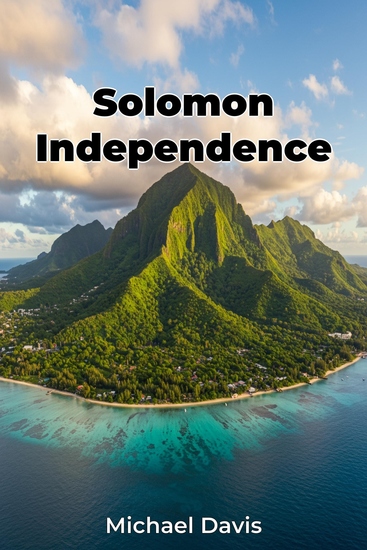
Solomon Independence - cover
LER

Solomon Independence

Michael Davies

Tradutor A AI

Editora: Publifye

  • 0
  • 0
  • 0

Sinopse

Solomon Independence explores Solomon Islands' journey to self-determination, analyzing its evolution from a British Protectorate to an independent nation. The book examines the intricate interplay of political evolution, economic development, and the lasting colonial legacy that shaped the Solomon Islands. Readers will learn how the nation addressed sustainable development and resource management in its post-colonial era.


The book's narrative is structured around three main sections: the historical backdrop of British colonialism, the growth of political movements, and the economic difficulties encountered after independence. For example, the book highlights the initial establishment of the British Solomon Islands Protectorate and its subsequent administration, revealing the social and economic structures imposed during this period. This journey was not straightforward; it was characterized by internal political dynamics and external economic pressures.


The book provides a balanced view of the Solomon Islands' journey, making it appealing to those with an interest in History, Politics, and post-colonial studies.
Disponível desde: 20/03/2025.
Comprimento de impressão: 63 páginas.

Outros livros que poderiam interessá-lo

  • Maurya Empire - The Rise of Ancient India's First Great Dynasty - cover

    Maurya Empire - The Rise of...

    Rolf Hedger

    • 0
    • 0
    • 0
    The Maurya Empire, one of the most significant dynasties in Indian history, emerged in the late 4th century BCE. Its foundations were laid by Chandragupta Maurya, who, with the guidance of his advisor Chanakya, overthrew the ruling Nanda dynasty and established a powerful empire. The rise of the Mauryas marked a turning point in Indian history, as they created a centralized and efficient administration that governed vast territories. 
    Before the Maurya Empire, the Indian subcontinent was fragmented into various kingdoms and republics. The dominant power during this time was the Nanda dynasty, which ruled over Magadha, a region in present-day Bihar. Though the Nandas controlled a significant portion of northern India, their rule was marked by heavy taxation and unpopular policies, which created discontent among the people and the military. This environment of dissatisfaction provided an opportunity for Chandragupta Maurya to challenge their authority. 
    Chandragupta’s rise to power is closely linked to Chanakya, a scholar and strategist who had been humiliated by the Nandas. Seeking revenge, Chanakya trained Chandragupta in statecraft, military tactics, and governance. With his mentor’s guidance, Chandragupta built an army and gradually expanded his influence. By allying with local rulers and gaining the support of disgruntled soldiers, he launched a successful campaign against the Nandas, eventually seizing control of Magadha around 321 BCE.
    Ver livro
  • The Complete History of Ancient Egypt - cover

    The Complete History of Ancient...

    Omar Khalil

    • 0
    • 0
    • 0
    The story of Ancient Egypt begins along the fertile banks of the Nile River, where geography shaped the destiny of one of the world’s most iconic civilizations. The Nile provided more than just water—it was the lifeline that enabled agriculture, transportation, and trade, making permanent settlement possible in an otherwise arid desert. As early as 5000 BCE, small communities began to emerge, relying on the predictable flooding of the river to support grain cultivation. Over time, these settlements evolved into more complex societies, each developing distinct cultural and political practices. 
    The predynastic period saw the rise of two major regions: Upper Egypt in the south and Lower Egypt in the north. These regions were marked by different customs, burial practices, and artistic expressions, yet both shared a reverence for the Nile and its central role in life and death. Villages grew into city-states ruled by local chieftains, and as competition and alliances formed, a gradual move toward centralization began. Archaeological evidence, including pottery styles and tomb construction, shows increasing social stratification and technological innovation during this period. 
    The unification of Upper and Lower Egypt around 3100 BCE marks the beginning of pharaonic rule and the dynastic era. Traditionally attributed to a ruler named Narmer (also known as Menes), this event was not just a political milestone but also a cultural one. Narmer’s unification is immortalized on the Narmer Palette, a ceremonial artifact that symbolically represents the king’s authority over both lands. With unification came the birth of a centralized administration, standardized religious practices, and a single ruler who was seen not only as a political leader but also as a divine intermediary between the gods and the people.
    Ver livro
  • Ancient China: 500 Interesting Facts About Early Chinese History - cover

    Ancient China: 500 Interesting...

    Ahoy Publications

    • 0
    • 0
    • 0
    Unlock the secrets of ancient China with 500 interesting facts! 
    Do you want to learn more about ancient China? Look no further than 500 Interesting Facts About Ancient China. This audiobook is packed full of exciting facts and historical information that will captivate listeners. Here’s just a snippet of what you will discover:Over two thousand years of Chinese imperial history, featuring famous emperors like Shi Huangdi and famous philosophers like Confucius;A look at ancient Chinese art, literature, philosophy, music, and other cultural aspects;The military strategies employed by Chinese generals throughout antiquity;The different religions practiced in ancient China, such as Taoism, Buddhism, and Confucianism;The everyday life of ancient Chinese people, including their traditions, customs, cuisine, and daily activities;And so much more! 
    This audiobook is an unforgettable journey into one of the most fascinating civilizations in human history. Don’t hesitate—unlock the secrets of ancient China today with 500 Interesting Facts About Ancient China!
    Ver livro
  • The Thriving Self - A New Paradigm for Healing Trauma in the Mind Body and Spirit and Moving Beyond It - cover

    The Thriving Self - A New...

    Karen Sprinkel Ancelet

    • 0
    • 0
    • 0
    Do you feel stuck in your life? Have you been in therapy for a long time and wonder why you aren’t feeling better? This book will show you how to break out of stuck patterns. You will create your own pathway to healing, first by identifying your survival override, and using self-guided reflections and assessments to help you move forward. It provides guidance about deciding which mental health treatment is needed to heal your core wounds and grow towards a thriving self. 
    Are you a clinician looking to be more trauma-informed? This book will guide you through the new diagnostic dimension of the three ways individuals store or locate trauma - in the mind, body, or spirit - and how to use that knowledge to help your clients heal from suffering, as well as major trauma.
    Ver livro
  • Addictions and the Future - The Challenges Our Young Generation Is Facing (4 in 1) - cover

    Addictions and the Future - The...

    Valerie Vogue

    • 0
    • 0
    • 0
    This book contains the following 4 titles: 
    Hooked on Tomorrow - The rapid pace of technological and social change has become the defining characteristic of modern life. We live in an age where innovation is constant, and the desire to keep up with it is almost addictive. From the devices we use daily to the way we communicate, everything is designed to keep us moving forward, often faster than we can comprehend. The term "progress" is no longer just about improvement but about a relentless drive toward the future, regardless of the consequences. 
    Narcissism -  At its core, narcissism is a defense mechanism that helps individuals maintain an exaggerated sense of self-worth. This inflated self-image may stem from deep insecurities or past trauma, and it can be a way for individuals to shield themselves from feelings of inadequacy or vulnerability. Narcissists often rely on external validation—through admiration, praise, and attention—to affirm their worth, which means their sense of self is fragile and dependent on how others perceive them. 
    The Future with Gen Z - Generation Z, often referred to as Gen Z, comprises individuals born roughly between 1997 and 2012. This cohort represents a unique blend of cultural, social, and technological influences, making it distinct from previous generations. Growing up in an era defined by rapid technological advancements and global interconnectedness, Gen Z is the first true generation of digital natives. 
    The Singularity Paradox - Artificial intelligence (AI) has evolved from the realm of science fiction to become an integral part of modern society, influencing nearly every aspect of human life. This transformative technology, once envisioned as futuristic and far-fetched, is now a driving force behind innovations in industries ranging from healthcare to transportation, and it continues to reshape the way we live and work.
    Ver livro
  • Captive Gods - Religion and the Rise of Social Science - cover

    Captive Gods - Religion and the...

    Kwame Anthony Appiah

    • 0
    • 0
    • 0
    Philosopher Kwame Anthony Appiah explores how early social scientists developed our modern understandings of society through their theories of religion The foundations of modern social science were built on the study of religion, the acclaimed thinker Kwame Anthony Appiah argues. Delving into the intellectual currents of the nineteenth and early twentieth centuries, he investigates how formative thinkers—notably Edward Burnett Tylor, Émile Durkheim, Georg Simmel, and Max Weber—grappled with the concepts of society and religion as interdependent categories. Appiah shows how their efforts to define religion, or evade the task, mark the power and limitations of social thought in ways that persist among theorists today. Religion was not an object of study but a framework through which early social scientists established sociology as a discipline. Appiah also examines recent work in both interpretive sociology and evolutionary and cognitive psychology about the mechanisms through which communities form beliefs and values—while underscoring the enduring significance of these earlier debates for contemporary social thought. Throughout, he intertwines storytelling, historical analysis, and philosophical reflection to show how our ideas about society and culture have been, and continue to be, forged in dialogue with religious questions.
    Ver livro