Junte-se a nós em uma viagem ao mundo dos livros!
Adicionar este livro à prateleira
Grey
Deixe um novo comentário Default profile 50px
Grey
Assine para ler o livro completo ou leia as primeiras páginas de graça!
All characters reduced
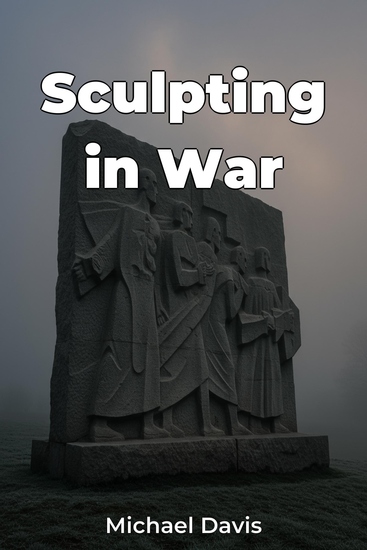
Sculpting in War - cover
LER

Sculpting in War

Michael Davies

Tradutor A AI

Editora: Publifye

  • 0
  • 0
  • 0

Sinopse

Sculpting in War delves into the profound connection between art, military history, and remembrance, exploring how sculptors have transformed the harsh realities of war into lasting monuments. These war sculptures serve not only as aesthetic objects but also as potent historical documents, reflecting evolving societal attitudes toward armed conflict. From ancient victory monuments to contemporary memorials, the book examines the creation, meaning, and impact of these sculptures, revealing their role in shaping cultural memory. One intriguing aspect is how these works evoke emotions like grief and hope, contributing to collective healing.

 
The book progresses chronologically, starting with the earliest forms of war commemoration and moving through distinct historical periods, including classical antiquity, the World Wars, and modern conflicts. Each chapter focuses on specific artistic styles, technological innovations, and socio-political contexts that influenced the creation and reception of these works. By drawing on diverse sources, including historical photographs and artist biographies, Sculpting in War offers a nuanced understanding of the complex relationship between art and war, making it valuable for art historians, military historians, and anyone interested in understanding the role of art in shaping our understanding of war.
Disponível desde: 26/02/2025.
Comprimento de impressão: 79 páginas.


Outros livros que poderiam interessá-lo

  • The Unification of Germany - The History of the Merge of Germany with Prussia - cover

    The Unification of Germany - The...

    Kelly Mass

    • 0
    • 0
    • 0
    The Unification of Germany had a significant impact on the whole country, the empire, and the decades after that. It was the inauguration for Germany into the 20th century, and the dreaded World War I and World War II that were partially consequences of that unification. 
    On January 18th, 1871, in the Palace of Versailles in France, Germany was lawfully merged into the German Empire, a Prussia-dominated country state with federal components. Throughout the Franco-Prussian War, princes of German countries assembled there to declare King Wilhelm I of Prussia Emperor of the German Empire. 
    The Treaty of Verdun in 843 developed a confederated kingdom of German princedoms that had existed for over 1,000 years. Even so, till 1800, there was no development of a German country identity, owing to the independent nature of baronial states; most occupants of the Holy Roman Empire, beyond those straight governed by the emperor, determined themselves mainly with their prince, instead of with the Empire as a whole. Kleinstaaterei, or "small-statery," happened called a result of this practice. Improvements in transport and interactions brought these areas closer together by the nineteenth century. 
    Today, you can learn more about what made this unification so special, and how it led to other events in history.
    Ver livro
  • The Political Thought of Xi Jinping - cover

    The Political Thought of Xi Jinping

    Steve Tsang, Olivia Cheung

    • 0
    • 0
    • 0
    Over the course of the last half dozen years, China's supreme leader Xi Jinping has made extraordinary changes which have profound implications not only for the Chinese people but nations throughout the world. Given how swiftly and fundamentally China's relations with the rest of the world are changing under Xi's rule, it is imperative that we know what Xi Jinping Thought is, how it evolved, and why it is so important. 


    In The Political Thought of Xi Jinping, Steve Tsang and Olivia Cheung provide an authoritative overview of what "Xi Jinping Thought" is and is not and what it means for both China and the world. Xi, now effectively leader for life, has worked to ensure that "Xi Jinping Thought" becomes cemented as the new state ideology. Clearly inspired by the doctrine of "Mao Zedong Thought," which shaped the parameters of acceptable thinking for a quarter century, Xi wants his doctrine to define what he calls the "China Dream of national rejuvenation" and serve the pathway to its fulfillment by 2050. Drawing from original research of Xi's speeches, writings, and policies, Tsang and Cheung conceptualize Xi's vision independently from interpretations provided by the Chinese Communist Party or other sources. They further examine and explain how Xi seeks to transform this vision into reality.
    Ver livro
  • Meditations - cover

    Meditations

    Marcus Aurelius

    • 0
    • 0
    • 0
    Brought to you by Altrusian Grace Media and narrated by Matthew Schmitz. 
    Meditations is a series of personal writings by Marcus Aurelius, Roman Emperor from AD 161 to 180, recording his private notes to himself and ideas on Stoic philosophy. 
    Marcus Aurelius wrote the 12 books of the Meditations in Koine Greek as a source for his own guidance and self-improvement. It is possible that large portions of the work were written at Sirmium, where he spent much time planning military campaigns from 170 to 180. Some of it was written while he was positioned at Aquincum on campaign in Pannonia, because internal notes reveal that the first book was written when he was campaigning against the Quadi on the river Granova (modern-day Hron in Slovakia) and the second book was written at Carnuntum. 
    It is unlikely that Marcus Aurelius ever intended the writings to be published. The work has no official title, so "Meditations" is one of several titles commonly assigned to the collection. These writings take the form of quotations varying in length from one sentence to long paragraphs.
    Ver livro
  • Reckoning of Power - Oppenheimer the Atomic Bomb & World War 2 - cover

    Reckoning of Power - Oppenheimer...

    History Brought Alive

    • 0
    • 0
    • 0
    Discover the untold story of the most terrifying invention in human historyThis audiobook explores the history of the Atomic Bomb in World War II, and uncovers Robert Oppenheimer's mysterious role as its visionary leader.As the world plunged into war, Oppenheimer found himself at the centre of a moral and scientific dilemma. Could science save humanity, or would it be its downfall?With gripping narratives and meticulous research, this book takes you on a riveting journey from the Manhattan Project to the Atomic Bombings at Hiroshima and Nagasaka, traversing the landscapes of WWII, and the nuclear age aftermath.Here are some of the highlights: 
    J. Robert Oppenheimer, the brilliant, but troubled physicist who played a key role in the development of the Atomic Bomb 
    Explore the turbulent backdrop of World War II, where global conflict ignited scientific innovation 
    Step into the shoes of some of the greatest scientific minds in history—Albert Einstein, Edward Teller, Leslie Groves, Niels Bohr, and Leo Szilárd 
    Witness the crucial moments and decisions that led to the dropping of the "Little Boy" and "Fat Man" Atomic Bombs on Hiroshima and Nagasaki 
    Discover the Manhattan Project, a top secret mission that assembled the world's brightest minds in a race against the sinister, Nazi Atomic Project 
    E = mc²: Unravel the mysteries of Einstein's groundbreaking equation that laid the foundation for atomic science 
    Explore the Cold War and the arms race, followed by a glimpse into the future of nuclear energy 
    All of this and much, much more….Whether you're a history enthusiast or new to the subject, this book tells all about Oppenheimer, the Atomic Bomb, World War II, and the Nuclear Age Aftermath.Grab your copy of this book today!
    Ver livro
  • The Cancel Culture Panic - How an American Obsession Went Global - cover

    The Cancel Culture Panic - How...

    Adrian Daub

    • 0
    • 0
    • 0
    In this incisive new work, Adrian Daub analyzes the global spread of cancel culture discourse as a moral panic, showing that, though its object is fuzzy, talk of cancel culture in global media has become a preoccupation of an embattled liberalism. There are plenty of conservative voices who gin up worries about cancel culture to advance their agendas. But more remarkable perhaps is that it is centrist, even left-leaning, media that have taken up the rallying cry and really defined the outlines of what cancel culture is supposed to be. 


    From French crusades against "le wokisme" via British fables of the "loony left" to a German obsession with campus anecdotes to a global revolt against "gender studies": countries the world over have developed culture war narratives in conflict with the US, and, above all, its universities—narratives that they themselves borrowed from the US. 


    Who exactly is afraid of cancel culture? To trace how various global publics have been so quickly convinced that cancel culture exists and that it poses an existential problem, Daub compares the cancel culture panic to moral panics past, investigating the powerful hold that the idea of "being cancelled" has on people around the world.
    Ver livro
  • One Fair Wage - Ending Subminimum Pay in America - cover

    One Fair Wage - Ending...

    Saru Jayaraman

    • 0
    • 0
    • 0
    Before the COVID-19 pandemic devastated the country, more than six million people earned their living as tipped workers in the service industry. They served us in cafes and restaurants, they delivered food to our homes, they drove us wherever we wanted to go, and they worked in nail salons for as little as $2.13 an hour—the federal tipped minimum wage since 1991—leaving them with next to nothing to get by. 


    These workers, unsurprisingly, were among the most vulnerable workers during the pandemic. As businesses across the country closed down or drastically scaled back their services, hundreds of thousands lost their jobs. As in many other areas, the pandemic exposed the inadequacies of the nation's social safety net and minimum-wage standards. 


    One of New York magazine's "Influentials" of New York City, one of CNN's Visionary Women in 2014, and a White House Champion of Change in 2014, Saru Jayaraman is a nationally acclaimed restaurant activist and the author of the bestselling Behind the Kitchen Door. In her new book, One Fair Wage, Jayaraman shines a light on these workers, illustrating how the people left out of the fight for a fair minimum wage are society's most marginalized. They epitomize the direction of our whole economy, reflecting the precariousness and instability that is increasingly the lot of American labor.
    Ver livro