¡Acompáñanos a viajar por el mundo de los libros!
Añadir este libro a la estantería
Grey
Escribe un nuevo comentario Default profile 50px
Grey
Suscríbete para leer el libro completo o lee las primeras páginas gratis.
All characters reduced
Protected Area Boundaries - cover

Protected Area Boundaries

Michael Davies

Traductor A AI

Editorial: Publifye

  • 0
  • 0
  • 0

Sinopsis

Protected Area Boundaries explores the pivotal role of clearly defined and enforced boundaries in environmental protection, particularly for national parks and wildlife reserves. It argues that effective conservation depends not just on environmental law, but on the practical application and acceptance of these boundaries. A key insight is that precise boundaries mitigate environmental degradation by separating conservation areas from exploitation zones. The book examines how clarity in boundary demarcation directly reduces encroachment and illegal resource extraction, thereby safeguarding the integrity of protected areas.

 
The book progresses from foundational legal concepts to practical enforcement challenges and future strategies. It dissects real-world case studies, highlighting the complexities of balancing land use, indigenous rights, and economic pressures. The book uniquely emphasizes the importance of community involvement and transparent governance.

 
Furthermore, it addresses innovative approaches like buffer zones and the use of GIS technology for enhanced monitoring in an era defined by climate change and increasing population. This book offers significant value by providing a comprehensive understanding of the social, legal, and ecological constructs of protected area boundaries. It connects environmental law with geography, sociology, and economics, offering a nuanced perspective for environmental lawyers, policymakers, and conservation professionals.

 
By using comparative legal analysis, the book examines different legal systems and their approaches to boundary enforcement, making it a practical guide for improving boundary management practices and ensuring the sustainability of natural resources.
Disponible desde: 05/04/2025.
Longitud de impresión: 72 páginas.

Otros libros que te pueden interesar

  • In the Name of Sharks - 1st Edition - cover

    In the Name of Sharks - 1st Edition

    François Sarano

    • 0
    • 0
    • 0
    Twenty meters below water, the oceanographer François Sarano came face to face with a five-and-a-half-meter great white shark. Seduced by the gentle elegance of this majestic creature, Sarano experienced a profound sense of affinity with her as they swam side by side, shoulder to shoulder, eye to eye, cutting a single figure through the ocean depths. It was an experience which made him realize the depth of our ignorance of the lives of sharks, leading him to become a passionate advocate for their protection. 


    Drawing on the latest scientific research on the biology and ethology of sharks and their exceptional characteristics, this book aims to break through the barrier of prejudice and to pay homage to their true nature. Representing a last vestige of wildness, their populations are nevertheless under threat—like so many species, they have been hunted and exploited by humans. Sarano argues for a change of mindset in which we lose ourselves in the world of the other, so that each living entity, human and non-human, can take their rightful place in the broader global ecosystem.
    Ver libro
  • Light Overcoming Darkness - God’s Healing and Hope in the Shadow of Abuse and Moral Injury - cover

    Light Overcoming Darkness -...

    Jayson Summers

    • 0
    • 0
    • 0
    When we're trapped in the darkness, despair takes control. We desperately need the light. Margaret's nightmarish personal darkness started with the horrors of childhood trauma, were exacerbated by appalling medical abuse but finally, totally, overcome. A loving husband and a simple faith longed for a miracle. In Light Overcoming Darkness, Jason Summers authentically shares his mum's incredible journey and gives us a gentle and kind compass to navigate the storms of emotional hurt and personal pain. This book makes a profound and encouraging impact. 
    Ver libro
  • The Cognitive Amplification Engine - Learning to Think Better - cover

    The Cognitive Amplification...

    Martin K Ettington

    • 0
    • 0
    • 0
    This book describes a way of thinking, not a tool. 
    It argues that artificial intelligence is not intelligent, that fluent output is not understanding, and that the real risk in human–machine interaction is not that machines will replace us—but that we will stop thinking clearly while using them. The central idea of the book is cognitive amplification: using tools to extend human reasoning while preserving human judgment, intent, and responsibility. 
    Methods like this, however, face a practical problem. They are easy to understand and difficult to apply consistently. 
    Most people already believe they think in stages. In practice, intent is vague, constraints are assumed rather than defined, options are prematurely narrowed, and conclusions are accepted because they sound coherent. Under time pressure or when interacting with persuasive systems, discipline collapses. 
    This is where the Cognitive Amplification Engine (CAE) enters—not as an authority, and not as an artificial mind, but as a structured environment. 
    This book is a companion for the CAE plugin for wordpress which helps automate this structured thinking process
    Ver libro
  • AI Agent Mastery Collection — Build Your 7-Agent Army - Agentic AI Strategy ChatGPT & No-Code Automation Scale Workflows and Cut Costs Grow Faster Without Hiring or Coding - cover

    AI Agent Mastery Collection —...

    Zero-Hire Systems

    • 0
    • 0
    • 0
    Most founders don't need more hours. They need systems that do the work before the day starts. 
    AI Agent Mastery Collection — Build Your 7-Agent Army is a tactical audiobook for entrepreneurs, freelancers, creators, consultants, and small teams ready to move from operator to architect. 
     
    This is not another AI hype guide. It is a practical roadmap for building an AI-powered workforce with Agentic AI Strategy, ChatGPT, and No-Code Automation—so you can scale workflows, cut costs, and grow faster without hiring or coding. 
     
    Inside, you'll learn how to identify bottlenecks, turn repeatable tasks into automated workflows, and design a 7-Agent Army that supports the core engine of your business. 
     
    You'll discover how to build agents for: 
    • Lead generation that finds and qualifies opportunities 
    • Sales follow-up that keeps prospects moving 
    • Content marketing that creates consistency without burning you out 
    • Customer success that protects retention and improves response time 
    • Research and business intelligence that turns scattered data into decisions 
    • Operations that reduce manual friction 
    • Growth systems that help you work on the business, not just inside it 
     
    This audiobook shows you how to think in systems, create Minimum Viable Agents, connect AI tools into real workflows, and use automation as leverage instead of noise. 
     
    No-code does not mean low power. AI does not mean random prompting. And growth does not have to mean adding more people to every problem. 
    If you are tired of being the bottleneck in your own business, this is your blueprint. 
     
    Stop doing everything yourself. Build the agents. Scale the workflows. Become the architect of a business that can grow beyond you, Today.
    Ver libro
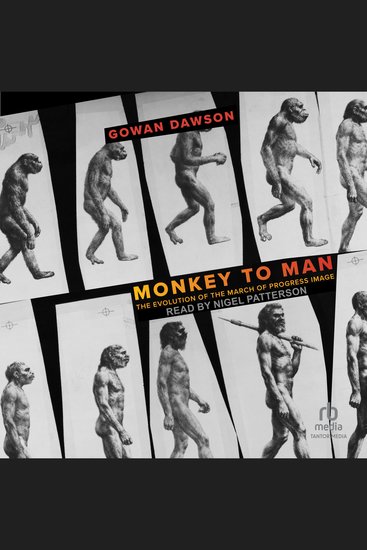
  • Monkey to Man - The Evolution of the March of Progress Image - cover

    Monkey to Man - The Evolution of...

    Gowan Dawson

    • 0
    • 0
    • 0
    The first book to examine the iconic depiction of evolution, the "march of progress," and its role in shaping our understanding of how humans evolved 


    We are all familiar with the "march of progress," the representation of evolution that depicts a series of apelike creatures becoming progressively taller and more erect before finally reaching the upright human form. Its emphasis on linear progress has had a decisive impact on public understanding of evolution, yet the image contradicts modern scientific conceptions of evolution as complex and branching. 


    This book is the first to examine the origins and history of this ubiquitous and hugely consequential illustration. In a story spanning more than a century, from Victorian Britain to America in the Space Age, Gowan Dawson traces the interconnected histories of the two most important versions of the image: the frontispiece to Thomas Henry Huxley's Evidence as to Man's Place in Nature (1863) and "The Road to Homo Sapiens," a fold-out illustration in the bestselling book Early Man (1965). Dawson explores how the recurring appearances of this image pointed to shifting scientific and public perspectives on human evolution, as well as indicated novel artistic approaches, and advancements in technology.
    Ver libro
  • Nightstalkers - The Wright Project and the 868th Bomb Squadron in World War II - cover

    Nightstalkers - The Wright...

    Richard Phillip Lawless

    • 0
    • 0
    • 0
    “Takes the reader into the Pacific war and offers a front-row seat to the exploits of the Wright Project and their highly innovative technology.” —War History Network 
     
    In August 1943, a highly classified US Army Air Force unit, code-named the “Wright Project,” departed Langley Field for Guadalcanal in the South Pacific to join the fight against the Empire of Japan. Operating independently, under sealed orders drafted at the highest levels of Army Air Force, the Wright Project was unique, both in terms of the war-fighting capabilities provided by classified systems the ten B-24 Liberators of this small group of airmen brought to the war, and in the success these “crash-built” technologies allowed. The Wright airmen would fly only at night, usually as lone hunters of enemy ships. In so doing they would pave the way for the United States to enter and dominate a new dimension of war in the air for generations to come.  
     
    This is their story, from humble beginnings at MIT’s Radiation Lab and hunting U-boats off America’s eastern shore, through to the campaigns of the war in the Pacific in their two-year march toward Tokyo. The Wright Project would prove itself to be a combat leader many times over and an outstanding technology innovator, evolving to become the 868th Bomb Squadron.  
     
    Comprehensive and highly personal, this story can now be revealed for the very first time, based on official sources, and interviews with the young men who flew into the night. 
     
    “A limber romp across the world of electronics and into the history of World War II.” —ARGunners.com
    Ver libro