Junte-se a nós em uma viagem ao mundo dos livros!
Adicionar este livro à prateleira
Grey
Deixe um novo comentário Default profile 50px
Grey
Assine para ler o livro completo ou leia as primeiras páginas de graça!
All characters reduced
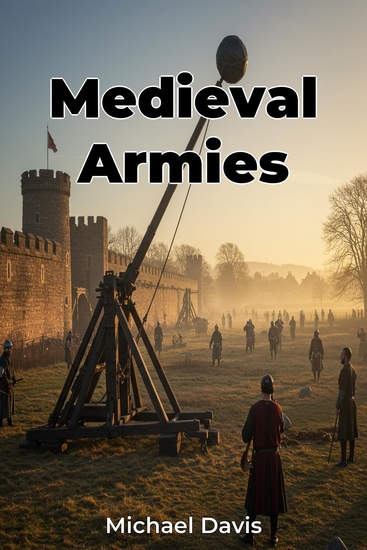
Medieval Armies - cover
LER

Medieval Armies

Michael Davies

Tradutor A AI

Editora: Publifye

  • 0
  • 0
  • 0

Sinopse

Medieval Armies explores the multifaceted nature of warfare throughout the Middle Ages, challenging common perceptions of battlefield dynamics. Rather than solely focusing on knights, the book investigates the roles of infantry, siege engineers, and the crucial logistics that sustained military campaigns. The book reveals how the composition, weaponry, and battle strategies of medieval armies were deeply entwined with the political and social structures of the time, from the feudal system's impact to the rise of mercenaries. Beginning with the fragmented warbands of the early Middle Ages, the book traces the evolution of military organization to the more professional forces of the later period. It emphasizes the integration of diverse troop types and strategic adaptability as key factors in an army's success. Case studies of key battles and campaigns, supported by historical sources and archaeological findings, illustrate the principles discussed, providing a balanced view of medieval warfare. The book uniquely connects military history with social, economic, and technological factors, offering a comprehensive view of medieval armies as complex systems. By considering the economic impact of warfare, such as the cost of equipping armies and the effects of raiding, it provides fresh perspectives relevant to students, military history enthusiasts, and anyone interested in the realities of medieval war history.
Disponível desde: 29/03/2025.
Comprimento de impressão: 68 páginas.

Outros livros que poderiam interessá-lo

  • The World Crisis: 1911–1914 - cover

    The World Crisis: 1911–1914

    Winston S. Churchill

    • 0
    • 1
    • 0
    The causes of the Great War are examined in this first volume of the series that is “essential reading, as fresh and compelling as ever” (Jon Meacham, bestselling author of Franklin and Winston).   An absorbing history of the outbreak of World War I from a true insider’s point of view, the first volume of Winston S. Churchill’s five-volume The World Crisis is unsurpassed as both a historical and personal account of the earth-shaking events leading up to WWI. Beginning in 1911, when Churchill was First Lord of the Admiralty, this report is based on thousands of his personal letters and memos.   Churchill’s epic series opens with a chilling description of the Agadir Crisis, and provides an in-depth account of naval clashes in the Dardanelles, one of Churchill’s major military failures. It takes readers from the fierce bloodshed of the Gallipoli campaign to the tide-turning battles of Jutland and Verdun—as well as the United States’ entry into the combat theatre. Written in powerful prose by a great leader who would also go on to receive a Nobel Prize in Literature, The World Crisis, 1911–1914 provides a perspective you won’t find anywhere else: a dynamic insider’s account of events that would shape the outcome of modern history.   “Whether as a statesman or an author, Churchill was a giant; and The World Crisis towers over most other books about the Great War.” —David Fromkin, author of A Peace to End All Peace
    Ver livro
  • The Cognitive Behavioral Workbook for Anxiety - A Step-By-Step Program Second Edition - cover

    The Cognitive Behavioral...

    EdD William J. Knaus, PsyD Jon...

    • 0
    • 0
    • 0
    When anxious feelings spiral out of control, they can drain your energy and prevent you from living the life you want. If you're ready to stop letting your anxiety have the upper hand, The Cognitive Behavioral Workbook for Anxiety, Second Edition can help you to recognize your anxiety triggers, develop skills to stop anxious thoughts before they take over, and keep needless fears from coming back. 


    In the second edition of this best-selling workbook, William J. Knaus offers a step-by-step program to help you overcome anxiety and get back to living a rich and productive life. With this book, you will develop a personal wellness plan using techniques from rational emotive behavior therapy (REBT) and cognitive behavioral therapy (CBT), powerful treatment methods proven to be even more effective than anxiety medication. This edition includes new evidence-based techniques such as behavioral activation and values-based action, addresses perfectionism and anxiety, and features updated, cutting-edge research. 


    Anxiety and panic are intense emotions, and in the moments that you experience them it may seem like you are powerless, but nothing could be further from the truth. This workbook offers a practical program that you can use on your own, or with a therapist, to take back that power and end anxiety once and for all.
    Ver livro
  • Worrying Is Optional - Break the Cycle of Anxiety and Rumination That Keeps You Stuck - cover

    Worrying Is Optional - Break the...

    LCSW Ben Eckstein, PhD Lisa W....

    • 0
    • 0
    • 0
    We live in an increasingly uncertain world, and if you struggle with worry, you aren't alone. You should also know that there's nothing wrong with worry. Worry happens to all of us—and it can even be helpful at times. But excessive worrying—the kind that keeps us up at night, interferes with our thinking during the day, and hijacks our ability to make decisions—is a big problem. The good news is that, while worry is inevitable, worrying is completely optional. This book will show you how to break free from the unhelpful thinking habits that keep you stuck in a loop of rumination and anxiety. 


    With help from this guide, you'll learn to build your own customizable, anti-worrying toolbox using skills and strategies from metacognitive therapy, acceptance and commitment therapy (ACT), and cognitive behavioral therapy (CBT). You'll discover the science behind why you worry, and how to put the brakes on unhelpful rumination and anxious thoughts—before they kick your worry and anxiety into high gear. 


    There's no one-size-fits-all treatment, but by assembling an arsenal of tools, skills, and strategies, excessive worry can be managed. This book will help you get started now. 


    Contains mature themes.
    Ver livro
  • This Thing Called You - cover

    This Thing Called You

    Ernest Holmes

    • 0
    • 0
    • 0
    The inspiration of Ernest Holmes has reached hundreds of thousands of readers through his classic works, many of which are just now becoming available. Whether a newcomer to the philosophy Holmes founded or a veteran listener, you will find great power and practicality in the words that render Holmes one of the most celebrated and beloved mystical teachers of the past hundred years.
    Ver livro
  • The Battle of Gettysburg - Turning Point of the Civil War - cover

    The Battle of Gettysburg -...

    Nova Ashford

    • 0
    • 0
    • 0
    The Battle of Gettysburg stands as one of the most significant events in the American Civil War. Fought from July 1 to July 3, 1863, it marked a turning point in the conflict, shifting momentum firmly in favor of the Union. It was the largest battle ever fought in North America, involving over 160,000 soldiers and resulting in nearly 50,000 casualties. The immense scale of the battle and the high human cost underscore its importance, but Gettysburg's significance goes beyond just the number of lives lost. It was a critical moment in the war, a pivotal clash that ultimately determined the future direction of the United States. 
    Before Gettysburg, the Confederate Army, led by General Robert E. Lee, had gained significant victories in the Eastern Theater, including the battles of Fredericksburg and Chancellorsville. Lee’s Army of Northern Virginia was emboldened by these successes and was determined to continue its efforts to win independence for the South. In the spring of 1863, Lee decided to take the fight to the North, hoping that a victory on Union soil would weaken Northern morale, pressure the U.S. government for a peace settlement, and gain international recognition for the Confederacy. His strategy was bold but fraught with risk, as it carried the potential to either decisively break the Union or set the stage for a resounding Confederate defeat. 
    On the other side, the Union Army, led by Major General George G. Meade, was in a period of transition. Meade had only recently been appointed to command, replacing General Joseph Hooker. The Union Army had been struggling to achieve decisive victories after a series of failures, and morale was low. However, the Union leadership understood that they could not afford another loss to the Confederacy. Gettysburg would become their test—a chance to halt Lee’s advance and potentially reverse the tide of the war.
    Ver livro
  • The History of Canada under the British Rule - 1760-1900 - cover

    The History of Canada under the...

    John G. Bourinot

    • 0
    • 0
    • 0
    Canada under British Rule covers the first 400 years of Canadian history, from the French discovery in the early 16th century until the establishing of the Confederation in 19th century.
    Ver livro