Rejoignez-nous pour un voyage dans le monde des livres!
Ajouter ce livre à l'électronique
Grey
Ecrivez un nouveau commentaire Default profile 50px
Grey
Abonnez-vous pour lire le livre complet ou lisez les premières pages gratuitement!
All characters reduced
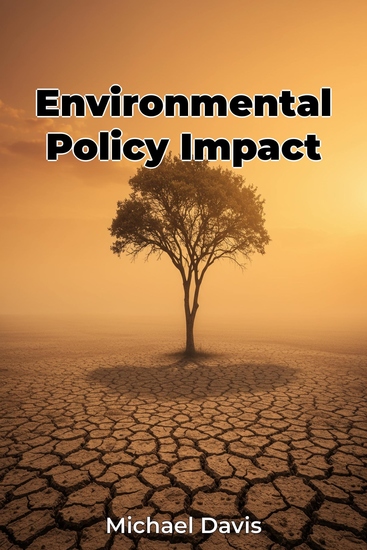
Environmental Policy Impact - cover

Environmental Policy Impact

Michael Davies

Traducteur A AI

Maison d'édition: Publifye

  • 0
  • 0
  • 0

Synopsis

Environmental Policy Impact offers a thorough examination of current environmental regulations and policies, assessing their real-world effectiveness and unintended consequences. It grapples with critical questions: Are environmental policies truly achieving their goals, and are the benefits and burdens distributed equitably across all communities? The book highlights the complexities of policy design, enforcement, and evaluation, emphasizing that factors like political will and technological innovation greatly influence outcomes. Did you know that understanding the evolution of environmental policies, from early conservation efforts to modern climate change mitigation, is key to grasping their current impact?

 
The book progresses systematically, first introducing core concepts like regulatory frameworks and economic incentives. It then delves into specific policy areas such as air and water quality, climate change mitigation, and biodiversity conservation, using case studies to illustrate challenges and opportunities. Finally, it synthesizes findings and offers recommendations for improving policy effectiveness, stressing adaptive management and international cooperation.

 
The book uniquely emphasizes the importance of evidence-based approaches and identifies best practices to avoid costly mistakes in the pursuit of a more sustainable future.
Disponible depuis: 21/02/2025.
Longueur d'impression: 83 pages.

D'autres livres qui pourraient vous intéresser

  • Populism and Democracy - How Populist Movements Challenge Established Political Norms - cover

    Populism and Democracy - How...

    Arlo Holders

    • 0
    • 0
    • 0
    Populism, as a political phenomenon, has seen a significant resurgence in recent decades, challenging both traditional political structures and the established norms of democratic governance. It is a term often used to describe political movements or leaders who claim to represent "the people" against a corrupt or out-of-touch elite. The central tenet of populism lies in its rhetoric, which typically divides society into two antagonistic groups: the virtuous, ordinary people and the corrupt, self-serving elite. These populist movements tap into widespread dissatisfaction with the status quo, offering simple, direct solutions to complex political and economic issues. The appeal of populism is particularly potent in times of economic instability, social division, or perceived political disillusionment, providing a voice to those who feel marginalized or neglected by traditional political parties. 
    Democracy, on the other hand, is founded on principles of inclusivity, pluralism, and the protection of rights. The democratic system is built upon checks and balances, where power is distributed across various institutions to prevent any one entity from gaining too much control. The rule of law and respect for civil liberties are central to the functioning of democratic societies. While democracy inherently embraces political diversity and disagreement, it relies on established norms and values, such as the protection of minority rights, the independence of the judiciary, and the free exchange of ideas.
    Voir livre
  • Abraham - The First Jew - cover

    Abraham - The First Jew

    Anthony Julius

    • 0
    • 0
    • 0
    The story of Abraham, the first Jew, portrayed as two lives lived by one person, paralleling the contradictions in Judaism throughout its history 


    In this new biography of Abraham, Judaism's foundational figure, Anthony Julius offers an account of the origins of a fundamental struggle within Judaism between skepticism and faith, critique and affirmation, thinking for oneself and thinking under the direction of another. Julius describes Abraham's life as two separate lives, and as a version of the collective life of the Jewish people. 


    Abraham's first life is an early adulthood of questioning the polytheism of his home city of Ur Kasdim until its ruler, Nimrod, condemns him to death and he is rescued, he believes, by a miracle. In his second life, Abraham's focus is no longer on critique but rather on conversion and on his leadership over his growing household, until God's command that he sacrifice his son Isaac. This test, the Akedah (or "Binding"), ends with another miracle, as he believes, but as Julius argues, it is also a catastrophe for Abraham. The Akedah represents for him an unsurpassed horizon—and in Jewish life thereafter. This book focuses on Abraham as leader of the first Jewish project, Judaism, and the unresolvable, insurmountable crisis that the Akedah represents—both in his leadership and in Judaism itself.
    Voir livre
  • Dark Folklore - cover

    Dark Folklore

    Mark Norman, Tracey Norman

    • 0
    • 0
    • 0
    How did our ancestors use the concept of demons to explain sleep paralysis? Is that carving in the porch of your local church really what you think it is? And what’s that tapping noise on the roof of your car..? 
    The fields of folklore have never been more popular – a recent resurgence of interest in traditional beliefs and customs, coupled with morbid curiosities in folk horror, historic witchcraft cases and our superstitious past, have led to an intersection of ideas that is driving people to seek out more information. Tracey Norman (author of the acclaimed play WITCH) and Mark Norman (creator of The Folklore Podcast) lead you on an exploration of those more salubrious facets of our past, highlighting those aspects of our cultural beliefs and social history that are less ‘wicker basket’ and more ‘Wicker Man’.
    Voir livre
  • Organizational Betrayal - How Schools Enable Sexual Misconduct and How to Stop It - cover

    Organizational Betrayal - How...

    Charol Shakeshaft

    • 0
    • 0
    • 0
    In Organizational Betrayal, educational researcher Charol Shakeshaft advocates a system-wide approach for safeguarding K–12 students against educator sexual misconduct. 


    Based on decades of inquiry into cases of student abuse in educational systems, the work reveals that sexual abuse of children in US K–12 schools is more prevalent than we'd like to believe. Examining the root causes and contexts, Shakeshaft concludes that school cultures and institutional structures are often complicit in cases of sexual misconduct. 


    Shakeshaft suggests straightforward actions that can interrupt patterns of abuse and trauma, including teaching both potential bystanders and potential victims of school employee sexual misconduct the policies regulating adult–student interactions in schools; training all members of a school community to recognize red flags and boundary crossing; and investigating the difference between good teaching and questionable tactics that should trigger suspicion. 


    The documentation provided in this book is persuasive, and it compels examination of school cultures, decisions, and practices, with a goal of preventing the abuse of students by school employees.
    Voir livre
  • Tsunami Days - cover

    Tsunami Days

    John Barnie

    • 0
    • 0
    • 0
    "We need more writers with bite. We have lived in the flatlands too long," writes John Barnie in one of his 'observations' ('Art in the Flatlands'). And bite he delivers.
    
    Ranging across politics, history, culture, ecological disaster, the meaning of truth, poetry, what we mean by identity and more… Barnie shares a window onto the world that is both erudite and particular. Leaning towards pessimism in a darkening world, these observations are often provocative, not from any bullish desire to antagonise, but as the result of mining a rationalist line of thought with an honesty and consistency that is applied as much to the author as to his subjects. There is a clarity here that some may find uncomfortable, but the aim is always dialogue above agreement; intellectual engagement above cheap solutions and sentimentality.
    
    Barnie asks us to think, consider and dig deeper, but most of all he asks that we "…live richly among our secondary self-created meanings, while recognising them for what they are. To face without flinching the nullity of the great void." ('Varieties of Meaning')
    Tsunami Days is a vital collection of essays for those prepared to engage with its unflinching observations.
    Voir livre
  • Philosophers of Individual Rights and Society - The Role of Rights Ethics and Political Thought in Human Society (3 in 1) - cover

    Philosophers of Individual...

    Hector Davidson

    • 0
    • 0
    • 0
    This book consists of the following three titles: 
    - Ayn Rand: Ayn Rand, born Alisa Zinov'yevna Rosenbaum in 1905 in St. Petersburg, Russia, had a formative early life that significantly influenced her later philosophical ideas. Growing up in a middle-class Jewish family, Rand experienced the upheavals of the Russian Revolution and the subsequent rise of Bolshevism. These events deeply affected her worldview and instilled in her a strong opposition to collectivism and authoritarianism. 
    - John Stuart Mill: John Stuart Mill, a British philosopher and political economist, remains one of the most influential thinkers of the 19th century. Born in 1806, Mill was exposed to rigorous intellectual training from an early age, particularly through his father, James Mill, a prominent utilitarian philosopher. This early exposure shaped Mill's understanding of the world, leading him to become a key figure in the development of utilitarianism, a moral theory that evaluates actions based on their ability to promote the greatest happiness for the greatest number of people. 
    - Mary Wollstonecraft: Mary Wollstonecraft was a pioneering British writer and philosopher whose ideas on women’s rights and education laid the foundation for modern feminism. Born on April 27, 1759, in Spitalfields, London, she grew up in a time when society severely restricted women's opportunities. Despite these limitations, Wollstonecraft’s determination, intellect, and relentless pursuit of knowledge allowed her to challenge the status quo and advocate for gender equality. Her life was shaped by personal struggles, societal constraints, and an unwavering belief in the power of education.
    Voir livre