Junte-se a nós em uma viagem ao mundo dos livros!
Adicionar este livro à prateleira
Grey
Deixe um novo comentário Default profile 50px
Grey
Assine para ler o livro completo ou leia as primeiras páginas de graça!
All characters reduced
Christmas Island - cover
LER

Christmas Island

Michael Davies

Tradutor A AI

Editora: Publifye

  • 0
  • 0
  • 0

Sinopse

Christmas Island, an Australian territory, serves as a microcosm for understanding global issues. This book explores the island's complex history, focusing on its strategic importance in resource economics and immigration policy.The story of phosphate mining on Christmas Island, for instance, reveals how a seemingly remote location became a key player in global trade, impacting the island's unique cultural and ecological landscape. The book also examines the ethical and geopolitical implications of using the island as a site for immigration detention, raising critical questions about national sovereignty and humanitarian obligations.The book provides a comprehensive historical context, tracing the island's geological formation to its present-day challenges. It begins with the discovery and exploitation of phosphate, detailing how this resource attracted laborers from various countries and transformed the island's demographics. Later chapters shift to Australia's controversial use of Christmas Island for processing asylum seekers.Christmas Island provides valuable insights into how resource management, migration control, and environmental sustainability are intertwined, making it essential reading for anyone interested in politics, history, and the challenges facing island communities in a globalized world.
Disponível desde: 20/03/2025.
Comprimento de impressão: 60 páginas.
Outros livros que poderiam interessá-lo

  • Republicanism Explained - The Principles of Republican Government and Its Variants - cover

    Republicanism Explained - The...

    Arlo Holders

    • 0
    • 0
    • 0
    Republicanism is a political ideology that emphasizes the importance of a government where power rests in the hands of elected representatives, rather than a monarch or dictator. The essence of republicanism lies in the commitment to a system that prioritizes liberty, the rule of law, and the well-being of the public. Republicanism has roots in the ancient political thought of Greece and Rome, particularly through the Roman Republic, which provided the foundational ideas of civic participation and the limitation of power. It was in the Renaissance and Enlightenment periods that these principles were revived and further refined, giving rise to modern republicanism as we know it today. 
    The core tenet of republicanism is that government should be based on consent of the governed. Unlike monarchies, where power is inherited or imposed, republicanism promotes a system in which rulers are elected by the people to serve their interests. This concept of popular sovereignty—government’s authority coming from the consent of the people—distinguishes republicanism from both monarchy and democracy. In republican systems, rulers are expected to act in the best interest of society, balancing the needs of the individual with those of the community, while also safeguarding the common good. 
    A key feature of republicanism is its emphasis on the separation of powers. Drawing from Montesquieu’s influence, republican thought advocates for dividing government authority into branches—executive, legislative, and judicial—in order to prevent any one entity from becoming too powerful. This system of checks and balances ensures that power is distributed and that no single branch or individual can dominate or misuse their authority. This is vital to maintaining the liberty of individuals within a republican system.
    Ver livro
  • Portuguese Empire and Asia The: The History and Legacy of Portugal’s Exploration and Colonization in Asia - cover

    Portuguese Empire and Asia The:...

    Editors Charles River

    • 0
    • 0
    • 0
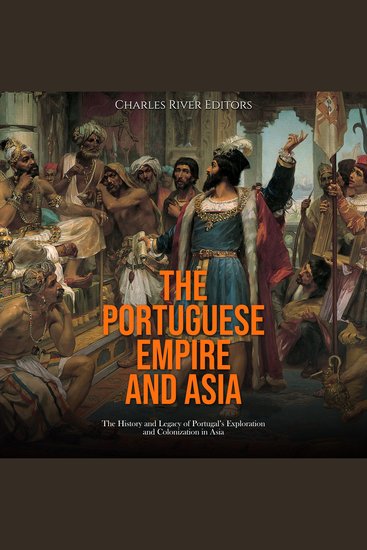
    By the mid-15th century, the Byzantine Empire had collapsed and the various Crusades that had taken place in the region had largely disrupted the overland routes of the Silk Road and trade. Compounding the difficulties of trade was the rise of the Ottoman Empire in place of the Byzantines and the outbreak of the Black Death in Europe.  
    It was roughly around this time that a period of European exploration began, and major factors that contributed to this period of exploration were introduced by the Chinese, albeit indirectly. The magnetic compass had already been developed and used by the Chinese sailors since the 12th century, although it had first been created in the 3rd century BCE as a divination device. The Portuguese started exploring the west coast of Africa and the Atlantic under orders from Prince Henry the Navigator. At this point, Europeans had not yet been capable of navigating completely around Africa since the ships being built were not yet fully capable of being able to sail very far from the coast and navigation in open waters was difficult, but the Portuguese continued pushing down the western African coast looking for ways to bypass the Ottomans and Muslims of Africa who had been making overland trade routes difficult.  
    	In 1488, Bartholomew Diaz rounded the southern tip of Africa, named the Cape of Good Hope by King John of Portugal, and entered the Indian Ocean from the Atlantic. 	The Portuguese had found access to the trade regions that they had been searching for, but sailing from Portugal to India and beyond would require too many resources to travel with at once. To remedy this problem, Portugal began establishing a number of forts and trading posts along the route. The Portuguese were able to establish a fort on the west coast of India, Fort Manuel, in 1500, and in 1505 a fort was erected off the coast of Tanzania. 
    Ver livro
  • SENSORY PROCESSING DISORDER - Understanding Managing and Thriving with Sensory Processing Challenges (2024 Beginner Guide) - cover

    SENSORY PROCESSING DISORDER -...

    DOUGLAS TITTERINGTON

    • 0
    • 0
    • 0
    "Sensory Processing Disorder" provides a comprehensive exploration of the complexities surrounding sensory processing challenges, offering practical strategies, insightful guidance, and a sense of empowerment for individuals, families, and professionals navigating this often misunderstood condition. From decoding sensory experiences to implementing effective interventions, this book serves as a beacon of hope and support for those seeking to understand and overcome the obstacles associated with SPD.Decoding Sensory Experiences: Gain a deeper understanding of sensory processing differences and how they manifest in everyday life, empowering you to recognize and interpret the unique sensory needs of individuals with SPD.Navigating Everyday Challenges: Discover evidence-based strategies and practical tips for managing common challenges associated with sensory processing difficulties, such as sensory overload, meltdowns, and sensory-seeking behaviors, fostering a more supportive and inclusive environment.Empowering Self-Advocacy: Equip individuals with SPD with the tools and strategies needed to advocate for their sensory needs and preferences, fostering autonomy, self-awareness, and confidence in navigating the world.Collaborating with Professionals: Explore the importance of collaboration between families, educators, therapists, and other stakeholders in supporting individuals with SPD, ensuring a coordinated and holistic approach to intervention and support. 
    🌈 Embark on a journey of understanding, empowerment, and resilience with "Sensory Processing Disorder." Take the first step toward embracing neurodiversity and fostering a world where everyone's sensory needs are recognized, respected, and supported! 🌟 
     
    Ver livro
  • The Kushan Empire - Rulers and the Spread of Buddhism - cover

    The Kushan Empire - Rulers and...

    Rolf Hedger

    • 0
    • 0
    • 0
    The Kushan Empire, one of the most influential powers in Central and South Asia, originated from the nomadic Yuezhi people. The Yuezhi were an Indo-European group that initially resided in the western regions of China, near the Tarim Basin. However, in the 2nd century BCE, they were forced to migrate westward due to conflicts with the Xiongnu, a dominant steppe confederation. This migration led them into Central Asia, where they eventually settled in the Bactrian region, which had previously been under Greek influence following the campaigns of Alexander the Great. 
    Over time, the Yuezhi tribes consolidated their power, and by the 1st century CE, one of their clans, the Kushans, emerged as the dominant force. Kujula Kadphises, the first major ruler of the Kushan Dynasty, is credited with unifying the fragmented Yuezhi groups and establishing the foundation of the empire. Under his leadership, the Kushans expanded their influence, incorporating regions of modern-day Afghanistan, Pakistan, and northern India. His military campaigns against the remnants of the Indo-Greek and Indo-Scythian kingdoms allowed the Kushans to gain control over crucial trade routes, solidifying their position as a major power in the region. 
    The early political structure of the Kushan Empire reflected its nomadic roots while incorporating elements from the civilizations it encountered. The rulers maintained a centralized authority but allowed local governance to continue in many areas, a practice that helped integrate diverse cultural and ethnic groups into the empire. This pragmatic approach to governance enabled the Kushans to sustain their rule over a vast and multicultural domain.
    Ver livro
  • Wonder and Worry - Contemporary History in an Age of Uncertainty - cover

    Wonder and Worry - Contemporary...

    Francis J. Gavin

    • 0
    • 0
    • 0
    The current global order appears to be collapsing. Long forgotten challenges, such as the return of great power competition and the specter of nuclear war, demand fresh attention, while novel, complex, and menacing planetary crises ranging from climate and disease to emerging technology loom. Meanwhile, the United States—the most consequential nation in the international system, behaves erratically and seems willing to abandon its decades-long strategy of building strong alliances, countering authoritarianism and supporting openness. How should we understand these unsettling trends? 
    Wonder and Worry offers Francis J. Gavin’s best insights on the pressing, fundamental questions we face. Gavin’s answers are nuanced, counterintuitive, and often surprisingly optimistic in this incisive and accessible contemporary history for our uncertain age. 
    Francis J. Gavin is Giovanni Agnelli Distinguished Professor and Director of the Henry A. Kissinger Center for Global Affairs at Johns Hopkins University School of Advanced International Studies in Washington, D C.
    Ver livro
  • The Magnificent Mitscher - cover

    The Magnificent Mitscher

    Theodore Taylor

    • 0
    • 0
    • 0
    “First-class . . . more than the biography of a great aviator and military leader. It also is a detailed and lively history of naval aviation.” —The New York Times Air Adm. Marc Mitscher is a legend in military circles for developing an entirely new concept of war at sea. His skills as both a carrier tactician and genius for leading men rank him with the best World War II combat commanders. However, because Mitscher shunned publicity and destroyed his private papers shortly before his death in 1947, his accomplishments are not widely known. In this outstanding biography, Theodore Taylor traces the aviator’s brilliant career from its beginnings and makes clear the major role played by the admiral in developing the Navy’s air program, providing a lively and detailed history of the progress of naval aviation. “The likable personality and day by day achievements of Mitscher shine through to lift this above the run of the mill military biography.” —Kirkus Reviews
    Ver livro