Junte-se a nós em uma viagem ao mundo dos livros!
Adicionar este livro à prateleira
Grey
Deixe um novo comentário Default profile 50px
Grey
Assine para ler o livro completo ou leia as primeiras páginas de graça!
All characters reduced
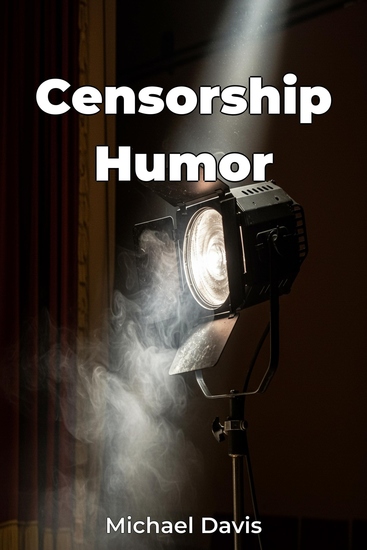
Censorship Humor - cover
LER

Censorship Humor

Michael Davies

Tradutor A Ai

Editora: Publifye

  • 0
  • 0
  • 0

Sinopse

"Censorship Humor" explores the powerful role of comedy as a tool for resistance against oppressive regimes. It examines how humor, particularly political satire, becomes a subtle yet potent form of political defiance. The book reveals the strategic ways comedians navigate censorship and use satire to expose absurdities, ultimately contributing to social and political change.

 
It analyzes the subversive nature of satire, highlighting the resilience of comedic expression, and its socio-political impact under authoritarian rule. For example, comedians have historically used irony and parody to critique those in power while minimizing repercussions. 

 
The book progresses by first introducing fundamental concepts of humor theory and censorship. It then analyzes specific case studies from various countries and historical periods such as the Soviet Union and Nazi Germany. It dissects how comedians utilized different comedic techniques to critique those in power while evading detection or minimizing repercussions.

 
Finally, the book examines the long-term effects of comedic resistance and its implications for contemporary free speech debates and activist movements. This approach provides insight into the ingenuity and bravery of individuals who dared to speak truth to power, often at great personal risk, and offers valuable lessons for navigating contemporary challenges to freedom of expression.
Disponível desde: 29/03/2025.
Comprimento de impressão: 58 páginas.


Outros livros que poderiam interessá-lo

  • The Tao of Sobriety - Helping You to Recover from Alcohol and Drug Addiction - cover

    The Tao of Sobriety - Helping...

    Ph. D. Jay S. Efran, David...

    • 0
    • 0
    • 0
    The Tao of Sobriety shows how to apply eastern philosophy to enhance recovery from addiction to alcohol and other drugs. With a few simple mental exercises, listeners can learn how to quiet "The Committee," those nasty mental voices that undermine serenity and self-esteem. With leaders of the recovery movement enthusiastically endorsing this uniquely helpful book, The Tao of Sobriety is an invaluable addition to the recovery bookshelf.
    Ver livro
  • Libertarian Policies - cover

    Libertarian Policies

    Arlo Holders

    • 0
    • 0
    • 0
    Libertarianism is a political philosophy centered on the belief that individuals should have the maximum possible freedom to pursue their own lives, with minimal interference from the government. Rooted in the principles of classical liberalism, libertarianism advocates for a limited government whose primary role is to protect individual rights and maintain peace. It emphasizes personal responsibility, free markets, and the belief that voluntary exchange is the foundation of a prosperous society. At its core, libertarianism seeks to protect the rights of individuals to live as they see fit, free from the coercive power of the state. 
    The history of libertarian thought can be traced back to influential philosophers such as John Locke, who argued for the natural rights of individuals to life, liberty, and property. His ideas formed the intellectual groundwork for the concept of limited government, which would later be expanded by thinkers like Adam Smith, who promoted the idea of free markets. The Enlightenment era, with its focus on reason, individualism, and skepticism of authority, provided a fertile ground for the development of libertarian ideas. In the 20th century, libertarianism gained further prominence through the works of economists such as Friedrich Hayek and Milton Friedman, who critiqued the expansion of government power and emphasized the importance of individual liberty in economic affairs. 
    Libertarianism's role in modern politics is to challenge the prevailing trend toward ever-expanding government intervention in people's lives. Libertarians argue that many of society’s problems are caused by government overreach, and that solutions should instead focus on allowing individuals to make their own decisions, free from state-imposed constraints.
    Ver livro
  • Master Your Mindset: Daily Habits to Boost Confidence Crush Self-Doubt & Gain Mental Clarity - cover

    Master Your Mindset: Daily...

    Bob Babson

    • 0
    • 0
    • 0
    This audiobook is narrated by an AI Voice.   
    Master Your Mindset: Daily Habits to Build Confidence, Overcome Self-Doubt & Unlock Mental Clarity is your practical guide to rewiring your thinking and taking back control of your inner world. Whether you're feeling stuck, second-guessing yourself, or simply ready to level up your mindset, this book gives you simple, science-backed strategies to create lasting mental strength and clarity. 
    Inside, you’ll discover: 
    Daily habits that build real confidence and resilience 
    Tools to silence negative self-talk and overcome fear of failure 
    Mindset shifts that lead to better decisions, stronger focus, and lasting motivation 
    Morning and evening routines to support mental clarity 
    Practices to stay calm, grounded, and focused—no matter what life throws at you 
    Whether you want to improve your performance, find more inner peace, or step into your full potential, Master Your Mindset offers the habits and guidance to get you there—one powerful day at a time.
    Ver livro
  • Hidden History of Spanish New Mexico - cover

    Hidden History of Spanish New...

    Ray John de Aragón

    • 0
    • 0
    • 0
    New Mexico's Spanish legacy has informed the cultural traditions of one of the last states to join the union for more than four hundred years, or before the alluring capital of Santa Fe was founded in 1610. The fame the region gained from artist Georgia O'Keefe, writers Lew Wallace and D. H. Lawrence, and pistolero Billy the Kid has made New Mexico an international tourist destination. But the Spanish annals also have enriched the Land of Enchantment with the factual stories of a superhero knight, the greatest queen in history, a saintly gent whose coffin periodically rises from the depths of the earth and a mysterious ancient map. Join author Ray John de Aragón as he reveals hidden treasure full of suspense and intrigue.
    Ver livro
  • Clandestine Cabals - History's Most Cryptic Organizations - cover

    Clandestine Cabals - History's...

    John Harpoon

    • 0
    • 0
    • 0
    Throughout history, secret societies have captivated the human imagination, their names whispered in shadowy corners, their rituals shrouded in secrecy. These clandestine groups, often operating in the hidden recesses of society, have been associated with the most significant events in world history, from political upheavals to revolutions. Despite the efforts of many to uncover their mysteries, much of what we know about them remains speculative, fueling a fascination that spans generations. But what drives this intrigue? Is it the promise of power, knowledge, or the allure of forbidden truths that draws people to these societies? 
    Secret societies are as old as civilization itself. From the ancient mystery schools of Egypt and Greece to the modern-day shadow organizations influencing global events, these groups have often been at the forefront of societal change, albeit behind the scenes. They are typically defined by their closed membership, strict initiation rites, and exclusive access to knowledge or practices that the outside world is not privy to. This secrecy has often been a point of both fascination and suspicion. Some view these societies as forces of good, safeguarding wisdom or advancing human progress, while others see them as dark, insidious entities working behind closed doors to manipulate world events for their own gain. 
    The historical roots of these secret organizations stretch back to times when religious, political, or philosophical beliefs were closely guarded. Ancient societies, such as the Egyptians, Greeks, and Romans, established mystery schools where knowledge was passed down only to those deemed worthy. These teachings often involved esoteric wisdom, such as alchemy, astrology, or sacred geometry, and were believed to hold the key to unlocking hidden truths about the universe and humanity's place within it.
    Ver livro
  • Espionage - A Concise History - cover

    Espionage - A Concise History

    Kristie Macrakis

    • 0
    • 0
    • 0
    A concise introduction to the history and methods of espionage, illustrated by spy stories from antiquity to today's high-tech world. 


    Espionage is one of the most secret of human activities. It is also, as the popularity of spy stories suggests, one of the most intriguing. This book pulls the veil back on the real world of espionage, revealing how spying actually works. In a refreshingly clear, concise manner, Kristie Macrakis guides listeners through the shadowy world of espionage, from the language and practice of spycraft to its role in international politics, its bureaucratic underpinnings, and its transformation in light of modern technology. Espionage is a mirror of society and human foibles with the added cloak of secrecy and deception. Accordingly, Espionage traces spying all the way back to antiquity, while also moving beyond traditional accounts of military and diplomatic intelligence to shine a light on industrial espionage and the new techno-spy. As thorough—and thoroughly enjoyable—as it is compact, the book is an ideal introduction to the history and anatomy of espionage.
    Ver livro