Junte-se a nós em uma viagem ao mundo dos livros!
Adicionar este livro à prateleira
Grey
Deixe um novo comentário Default profile 50px
Grey
Assine para ler o livro completo ou leia as primeiras páginas de graça!
All characters reduced
Censorship Humor - cover
LER

Censorship Humor

Michael Davies

Tradutor A AI

Editora: Publifye

  • 0
  • 0
  • 0

Sinopse

"Censorship Humor" explores the powerful role of comedy as a tool for resistance against oppressive regimes. It examines how humor, particularly political satire, becomes a subtle yet potent form of political defiance. The book reveals the strategic ways comedians navigate censorship and use satire to expose absurdities, ultimately contributing to social and political change.

 
It analyzes the subversive nature of satire, highlighting the resilience of comedic expression, and its socio-political impact under authoritarian rule. For example, comedians have historically used irony and parody to critique those in power while minimizing repercussions. 

 
The book progresses by first introducing fundamental concepts of humor theory and censorship. It then analyzes specific case studies from various countries and historical periods such as the Soviet Union and Nazi Germany. It dissects how comedians utilized different comedic techniques to critique those in power while evading detection or minimizing repercussions.

 
Finally, the book examines the long-term effects of comedic resistance and its implications for contemporary free speech debates and activist movements. This approach provides insight into the ingenuity and bravery of individuals who dared to speak truth to power, often at great personal risk, and offers valuable lessons for navigating contemporary challenges to freedom of expression.
Disponível desde: 29/03/2025.
Comprimento de impressão: 58 páginas.

Outros livros que poderiam interessá-lo

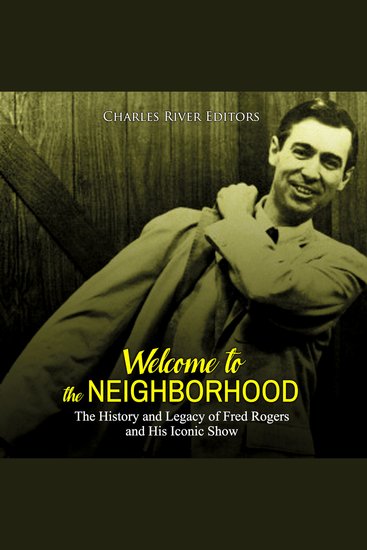
  • Welcome to the Neighborhood: The History and Legacy of Fred Rogers and His Iconic Show - cover

    Welcome to the Neighborhood: The...

    Charles River Editors

    • 0
    • 0
    • 0
    “This is what I give. I give an expression of care every day to each child, to help him realize that he is unique. I end the program by saying, 'You've made this day a special day, by just your being you. There's no person in the whole world like you; and I like you just the way you are.' And I feel that if we in public television can only make it clear that feelings are mentionable and manageable, we will have done a great service for mental health.” – Fred Rogers 
    	An anomalous YouTube video crudely entitled “Mr. Rogers is a [sic] Evil Man” stands at over 1.8 million views, with 1,000 likes and a whopping 30,000 dislikes. Similarly, saying an ill word about the universally adored Mister Rogers on the forums of the imageboard, 4Chan, will get the commenter torn to shreds by even its notoriously toxic anonymous users, and almost definitely ousted from the online community for good. In an age where even the motives of Gandhi and Mother Teresa are questioned by the cynical and they are at times vilified as “frauds,” one would be hard-pressed to find a rational argument against the untouchable character of Mister Rogers.  
    	When one does happen upon such an abnormality, the public is quick to defend the gentle soul. “It takes a special kind of scum to hate Mister Rogers,” reads the top comment on the aforementioned video, posted by user Sergei Ivanovich Mosin. The video has been picked apart by multiple journalists from the likes of Huffington Post and the Pittsburgh Magazine, amongst many others. 
    	The reactions are so swift in part because millions of people become instantly nostalgic upon hearing the sweet, xylophonic melody that kicks off the theme song of Mister Rogers' Neighborhood, including today’s children and their Gen-X and millennial parents. The show represented a simpler time, a world wherein the noses of children and teenagers weren't glued to their phones and the countless distractions of social media. Mister Rogers' Neighborhood was a revolutionary, one-of-a-kind program featuring a host that placed the welfare of children above ratings and profits. The philosophy of the mild-mannered, cardigan-wearing show creator and host was as straightforward as it was powerful: “When we can talk about our feelings, they become less overwhelming, less upsetting, and less scary. 
    	Welcome to the Neighborhood: The History and Legacy of Fred Rogers and His Iconic Show profiles one of America’s most influential kids shows, and how it developed. Along with pictures of important people, places, and events, you will learn about Mister Rogers’ Neighborhood like never before.  
    Ver livro
  • The Social Genome - The New Science of Nature and Nurture - cover

    The Social Genome - The New...

    Dalton Conley

    • 0
    • 0
    • 0
    A pioneering scientist presents a mind-expanding account of the sociogenomics revolution, which promises to upend everything we know about human development. 


    Sociogenomics brings together advances in molecular genetics and traditional social and behavioral science. The key tool is the polygenic index, which allows us to analyze DNA to measure a child's genetic potential. Today, we can estimate a child's adult height, how far they will go in school, and their weight as an adult—all from a cheek swab, finger prick, or vial of saliva. Dalton Conley and other researchers are using this new science to shed light on the ways in which genes shape our world, influencing how each person both creates and responds to the environment around them. Conley reveals a world where children's DNA influences the nurture they extract from their parents; the genes of our schoolmates affect our likelihood of smoking as much as our own DNA does; and spouses' genes influence each other's moods and behaviors. 


    The Social Genome presents a nuanced, powerful perspective on individual potential and social dynamics and raises critical ethical questions about how we will navigate a future where we have access to far more genetic information than ever before.
    Ver livro
  • The Life and Teachings of Hermes Trismegistus - cover

    The Life and Teachings of Hermes...

    Manly P. Hall

    • 0
    • 0
    • 0
    "The Life and Teachings of Hermes Trismegistus" by Manly P. Hall is a book that explores the legendary figure of Hermes Trismegistus and the wisdom attributed to him. Hermes Trismegistus is a mythical and syncretic figure often associated with ancient Egypt and Greece, believed to be a master of various esoteric and philosophical disciplines, including alchemy, astrology, and spirituality.
    In this book, Manly P. Hall delves into the life, philosophy, and teachings of Hermes Trismegistus. He discusses the Hermetic tradition and its influence on Western thought and spirituality. The book explores the concept of Hermeticism, which encompasses a wide range of mystical and philosophical ideas, such as the principles of correspondence ("as above, so below"), the unity of all things, and the pursuit of spiritual enlightenment.
    Ver livro
  • The History of the Decline and Fall of the Roman Empire Vol I - cover

    The History of the Decline and...

    Edward Gibbon

    • 0
    • 0
    • 0
    The History of The Decline and Fall of the Roman Empire, a major literary achievement of the 18th century published in six volumes, was written by the celebrated English historian Edward Gibbon. Volume I was published in 1776, and went through six printings (a remarkable feat for its time). Volumes II and III were published in 1781; volumes IV, V, VI in 1788-89. The original volumes were published as quartos, a common publishing practice of the time.The books cover the period of the Roman Empire after Marcus Aurelius, from just before 180 to 1453 and beyond, concluding in 1590. They take as their material the behaviour and decisions that led to the decay and eventual fall of the Roman Empire in the East and West, offering an explanation for why the Roman Empire fell.Gibbon is sometimes called the first “modern historian of ancient Rome.” By virtue of its mostly objective approach and highly accurate use of reference material, Gibbon’s work was adopted as a model for the methodologies of 19th and 20th century historians. (Summary from Wikipedia)
    Ver livro
  • The Student - cover

    The Student

    Michael S. Roth

    • 0
    • 0
    • 0
    From the president of Wesleyan University, an illuminating history of the student, spanning from antiquity to Zoom 
     
    In this sweeping book, Michael S. Roth narrates a vivid and dynamic history of students, exploring some of the principal models for learning that have developed in very different contexts, from the sixth century BCE to the present. 
     
    Beginning with the followers of Confucius, Socrates, and Jesus and moving to medieval apprentices, students at Enlightenment centers of learning, and learners enrolled in twenty-first-century universities, he explores how students have been followers, interlocutors, disciples, rebels, and children becoming adults. There are many ways to be a student, Roth argues, but at their core is developing the capacity to think for oneself by learning from others, and thereby finding freedom. 
     
    In an age of machine learning, this book celebrates the student who develops more than mastery, cultivating curiosity, judgment, creativity, and an ability to keep learning beyond formal schooling. Roth shows how the student throughout history has been someone who interacts dynamically with the world, absorbing its lessons and creatively responding to them.
    Ver livro
  • Seedtime And Harvest - cover

    Seedtime And Harvest

    Neville Goddard, Noah Press

    • 0
    • 0
    • 0
    Seedtime and Harvest teaches the principle of cause and effect in consciousness: every imaginal act is a seed, and circumstances are the harvest. Neville emphasises consistency; what you repeatedly entertain becomes your life. The book clarifies why reactions matter, how moods perpetuate states, and how to plant deliberately by assuming the end result. It’s a practical reminder to become selective with inner conversations and persistent with new states.
    
    Imaginal acts as “seeds” that grow
    Circumstances as effects, not causes
    Mood and repetition as the engine
    Deliberate planting through the wish fulfilled
    Ver livro