Junte-se a nós em uma viagem ao mundo dos livros!
Adicionar este livro à prateleira
Grey
Deixe um novo comentário Default profile 50px
Grey
Assine para ler o livro completo ou leia as primeiras páginas de graça!
All characters reduced
Battlefield Facts - cover
LER

Battlefield Facts

Michael Davies

Tradutor A AI

Editora: Publifye

  • 0
  • 0
  • 0

Sinopse

Battlefield Facts offers a detailed exploration into military history, dissecting pivotal battles to uncover strategic brilliance and tactical blunders that shaped historical outcomes. The book emphasizes the crucial role of geography, technology, and human agency in determining the results of warfare, providing context for understanding contemporary geopolitical strategies. Readers will discover how evolving weaponry, from ancient bronze to modern precision-guided munitions, altered the landscape of warfare.

 
The book begins by introducing fundamental concepts of battlefield analysis, such as the importance of terrain and logistics. It then progresses through case studies, deconstructing battles from Cannae, where Hannibal masterfully used envelopment, to the Normandy landings, highlighting the complexities of large-scale amphibious operations.

 
By providing a factual and unbiased account, Battlefield Facts bridges military history with political science and leadership studies, offering insights into decision-making under pressure and the enduring principles of warfare.
Disponível desde: 20/02/2025.
Comprimento de impressão: 64 páginas.


Outros livros que poderiam interessá-lo

  • Laboratories against Democracy - How National Parties Transformed State Politics - cover

    Laboratories against Democracy -...

    Jacob M. Grumbach

    • 0
    • 0
    • 0
    Over the past generation, the Democratic and Republican parties have each become nationally coordinated political teams. American political institutions, on the other hand, remain highly decentralized. Laboratories against Democracy shows how national political conflicts are increasingly flowing through the subnational institutions of state politics—with profound consequences for public policy and American democracy. 


    Jacob Grumbach argues that as Congress has become more gridlocked, national partisan and activist groups have shifted their sights to the state level, nationalizing state politics in the process and transforming state governments. He shows how this has had the ironic consequence of making policy more varied across the states as red and blue party coalitions implement increasingly distinct agendas in areas like health care, reproductive rights, and climate change. Grumbach traces how national groups are using state governmental authority to suppress the vote, gerrymander districts, and erode the very foundations of democracy itself. 


    Laboratories against Democracy reveals how the pursuit of national partisan agendas at the state level has intensified the challenges facing American democracy, and asks whether today’s state governments are mitigating the political crises of our time—or accelerating them.
    Ver livro
  • Applied Polyvagal Theory for Resilience and Post-Traumatic Growth - A Clinician's Guide - cover

    Applied Polyvagal Theory for...

    LCSW Ruby Jo Walker, Stephen W....

    • 0
    • 0
    • 0
    Support clients' growth and expansion with cutting-edge, polyvagal-informed interventions. 
     
    Post-traumatic growth refers to the personal transformation which sometimes occurs after trauma. With an understanding of Polyvagal Theory, a well-informed mental health clinician can support their clients in developing resilience and experiencing the possibility of post-traumatic growth. 
     
    This cutting-edge guide presents practical somatic interventions to support clients in the cultivation of resilience by shifting their neurobiology, creating the neural platform that underlies post-traumatic growth. Using this lens results in deeper levels of change that extend beyond the management of symptoms. Here, trauma expert Ruby Jo Walker delves into three maps of the nervous system: general nervous system functioning, co-regulation capacity, and limiting core beliefs, which are the areas encompassing the clients' presenting issues. Deactivation pathways to downregulate the nervous system are explored, diminishing trauma symptoms and resulting in greater nervous system regulation. Ultimately, listeners will learn how to guide their clients' nervous systems to a new way of functioning, allowing their authentic selves to emerge and fostering personal expansion.
    Ver livro
  • Geography - A Very Short Introduction - cover

    Geography - A Very Short...

    David T. Herbert, John A. Matthews

    • 0
    • 0
    • 0
    This Very Short Introduction answers four basic questions: what is geography, how do geographers work, why is geography important, and where is the discipline of geography heading? Geography has always been important, though it has had only a short history as an academic discipline and is much misunderstood. Modern geography has come a long way from its historical roots in exploring foreign lands, in mapping the world and in describing the physical and human features of the Earth's surface. There are two parts to the discipline: physical geography, which covers natural environments and landscapes; and human geography, which investigates people and the cultural landscape. Physical and human geographers commonly do not agree with each other. But there are also common elements and geography as a whole has an important role as a bridge between the sciences and the humanities. Using wide-ranging examples, the book paints a broad picture of the current state of geography, its subject matter, concepts and methods, how it developed, and its strengths and weaknesses. The book's conclusion is no less than a manifesto for geography's future.
    Ver livro
  • The Life of Agesilaus - cover

    The Life of Agesilaus

    Plutarch, Bernadotte Perrin

    • 0
    • 0
    • 0
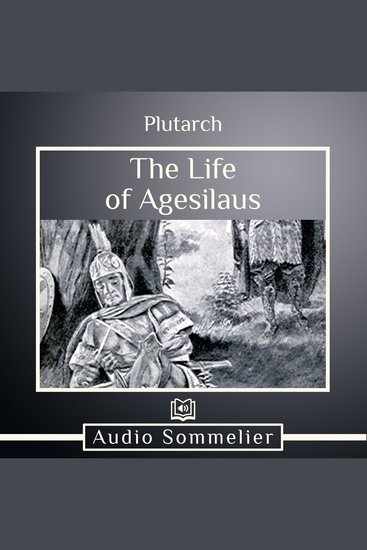
    To understand the relationship between Athens and Sparta, Plutarch set out to examine the lives of Greece and all its former and current rivals in his Parallel Lives series. Agesilaus was one of those lives and was a notable king of Sparta prior to the Athens-Spartan war. Although he won and lost many battles for the city, his legacy lived on. He was a short-statured, lame man who managed to rule an entire city state – and many looked up to him after his death.  
    Ver livro
  • Rare Recording of Neville Goddard A - Volume 2 - cover

    Rare Recording of Neville...

    Neville Goddard

    • 0
    • 0
    • 0
    Neville Goddard (February 19, 1905 – October 1, 1972) was born in St. Michael, Barbados, and came to the US in 1922 to study drama and dance. While touring with his dance company in England he developed an interest in metaphysics. After his return to New York he gave up the entertainment industry to devote his full attention to the study of spiritual and mystical matters. While living in Los Angeles in the 1950s, he gave a series of talks on television and radio. In his lectures and books Neville dealt with what he called "The Law" and "The Promise," which relate to the method of creating one's physical reality through imagining. The following recording is from a 1968 lecture.
    Ver livro
  • Laboratories of Terror - The Final Act of Stalin's Great Purge in Soviet Ukraine - cover

    Laboratories of Terror - The...

    Marc-Stephan Junge, Lynne Viola

    • 0
    • 0
    • 0
    Laboratories of Terror explores the final chapter of Stalin's Great Terror in Soviet Ukraine. 


    When the Communist Party Central Committee and the Council of People's Commissars of the USSR halted mass operations in repression in November 1938, large numbers of mainly Communist purge victims whose cases remained incomplete were released. At the same time, hundreds of NKVD operatives who had carried out the Great Terror were scapegoated and arrested. 


    Drawing on materials from the largely closed archives of the Soviet security police, this collection of essays by an international team of researchers illuminates the previously opaque world of the NKVD perpetrator. It uncovers the mechanics and logistics of the terror at the local level by examining the criminal files of a series of mid-level NKVD operatives from across Ukraine. The result offers new perspectives on both Stalin's central role in the architecture of the terror and NKVD perpetrators' agency in implementing one of the most horrific episodes of twentieth-century mass violence.
    Ver livro