¡Acompáñanos a viajar por el mundo de los libros!
Añadir este libro a la estantería
Grey
Escribe un nuevo comentario Default profile 50px
Grey
Suscríbete para leer el libro completo o lee las primeras páginas gratis.
All characters reduced
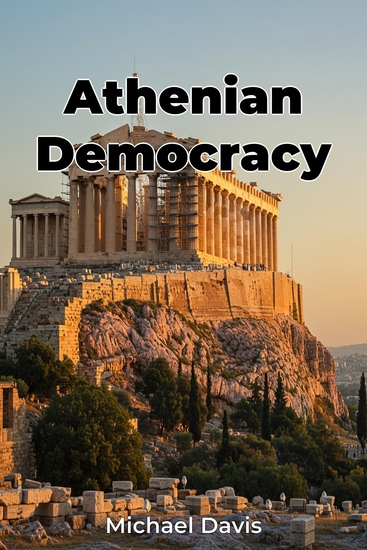
Athenian Democracy - cover

Athenian Democracy

Michael Davies

Traductor A AI

Editorial: Publifye

  • 0
  • 0
  • 0

Sinopsis

Athenian Democracy explores the radical experiment in self-governance that defined ancient Athens and forever altered political thought. This history examines the core tenets of direct participation, civic responsibility, and the common good, analyzing their enduring impact on contemporary political systems. The book delves into the historical context, from the reforms of Cleisthenes to the contributions of Pericles, illustrating how these leaders championed citizen involvement. Discover how the Assembly allowed all male citizens to debate and vote on laws, ensuring accountability and preventing the concentration of power.

 
The book progresses by introducing direct democracy and its roots, then explores the institutions of Athenian government, examining their powers and limitations. Later chapters delve into the social and cultural context, assessing the legacy of Athenian democracy and its relevance to modern challenges. By drawing upon primary sources and modern scholarship, Athenian Democracy offers a comprehensive, analytical account of this unique political system.
Disponible desde: 29/03/2025.
Longitud de impresión: 58 páginas.

Otros libros que te pueden interesar

  • Aotearoa New Zealand - The Convergence and Histories - cover

    Aotearoa New Zealand - The...

    Lillian Brooks

    • 0
    • 0
    • 0
    Aotearoa New Zealand, located in the southwestern Pacific Ocean, is a country with a rich and diverse history that stretches back over a thousand years. Its historical and cultural journey has been shaped by the convergence of Māori and European influences, which has made Aotearoa one of the most unique nations in the world. The story of Aotearoa is not just one of migration and colonization but also of resilience, adaptation, and the constant negotiation of identity, land, and culture. 
    The Māori people, the indigenous inhabitants of New Zealand, arrived from eastern Polynesia in several waves of migration around the 13th century. Over the centuries, they developed a sophisticated culture, which included a rich oral tradition, strong tribal structures, and deep spiritual and cultural ties to the land. The Māori worldview was shaped by the concept of whenua (land), whakapapa (genealogy), and wairua (spirit), and their connection to the environment played a fundamental role in shaping their social and cultural practices. 
    The arrival of Europeans, led by explorers such as Abel Tasman in 1642 and Captain James Cook in 1769, marked a turning point in New Zealand’s history. Initial encounters between Māori and Europeans were characterized by curiosity, exchange, and occasional conflict. However, as European settlement expanded throughout the 19th century, the effects on Māori society became profound. The introduction of new technologies, ideas, and diseases, coupled with land confiscation and colonization, reshaped the cultural landscape of the country. This period led to the displacement of Māori from their ancestral lands and the beginning of a long history of legal and political struggles to protect their rights and sovereignty.
    Ver libro
  • Author Paul Levinson Discusses Marshall McLuhan and The Evolution of Media - cover

    Author Paul Levinson Discusses...

    Paul Levinson

    • 0
    • 0
    • 0
    In the following keynote seminar, author Paul Levinson discusses Canadian philosopher and academic Marshall McLuhan—whose concept of "The Medium Is The Message" from his seminal book, Understanding Media: The Extensions of Man, which proposed that the media, not the content that they carry, affects the society in which it plays a role—as well as, the evolution of media over the past half-century.
    Ver libro
  • AFTERLIFE HAUNTINGS - “Echoes from Beyond the Veil — Where the Living Meet the Lost” - cover

    AFTERLIFE HAUNTINGS - “Echoes...

    AMULYA MISHRA

    • 0
    • 0
    • 0
    Afterlife Hauntings takes listeners on an immersive journey through the thin, trembling veil between life and death. Each haunting whisper, each restless echo, and each shadowed tale invites you to confront the mysteries that linger in forgotten places. Blending the paranormal with human emotion, this audio experience explores ghostly encounters, spectral memories, and the timeless question — what truly happens after we die? 
     Perfect for lovers of supernatural mysteries, psychological horror, and atmospheric storytelling, this series will leave you listening long after the last echo fades.
    Ver libro
  • Economics for Humans - Second Edition - cover

    Economics for Humans - Second...

    Julie A. Nelson

    • 0
    • 0
    • 0
    At its core, an economy is about providing goods and services for human well-being. But many economists and critics preach that an economy is something far different: a cold and heartless system that operates outside of human control. In this impassioned and perceptive work, Julie A. Nelson asks a compelling question: given that our economic world is something that we as humans create, aren’t ethics and human relationships—dimensions of a full and rich life—intrinsically part of the picture? 
     
    Economics for Humans argues against the well-ingrained notion that economics is immune to moral values and distant from human relationships. Here, Nelson locates the impediment to a more considerate economic world in an assumption that is shared by both neoliberals and the political left. Despite their seemingly insurmountable differences, both make use of the metaphor, first proposed by Adam Smith, that the economy is a machine. This pervasive idea, Nelson argues, has blinded us to the qualities that make us work and care for one another—qualities that also make businesses thrive and markets grow. We can wed our interest in money with our justifiable concerns about ethics and social well-being. And we can do so if we recognize that an economy is not a machine, but a living thing in need of attention and careful tending.  
     
    This second edition has been updated and refined throughout, with expanded discussions of many topics and a new chapter that investigates the apparent conflict between economic well-being and ecological sustainability. Further developing the main points of the first edition, Economics for Humans will continue to both invigorate and inspire readers to reshape the way they view the economy, its possibilities, and their place within it. 
    Ver libro
  • The Heart Of China - How Mindfulness Changed My Life - cover

    The Heart Of China - How...

    Todd Cornell

    • 0
    • 0
    • 0
    Do your mindfulness readings fall short? 
    This book introduces you to knowledge through the experience of one man who continues to toil the mire of the mind. Join him, and others, on the journey that untold numbers have ventured throughout the millennia. A journey to peace of mind through the observance of breath and thoughts. Simple, yet powerful, it transforms warriors into peacemakers. 
    We achieve learning through quiet observation. First, observe the mind and the training of it should follow. When applying mindfulness, we perceive the self, nature, and our surroundings in ways that harmonize imbalance, as well as the balancing of yin-yang moments, such as comfort and discomfort.
    Ver libro
  • Our Ghosts Were Once People - Stories on Death and Dying - cover

    Our Ghosts Were Once People -...

    Bongani Kona (ed)

    • 0
    • 0
    • 0
    ‘I would get out of the car at every shopping centre and want to ask the stranger walking by with their trolley: “Why are you still shopping? Someone I love has died.”’ – Dela Gwala 
    Death is a fact of life, but the experience of grief is unique to each of us. This timely collection brings together a range of voices to offer reflections on death and dying, from individual losses to large scale catastrophes. 
    	Karin Schimke revisits her troubled relationship with her late father, a Second World War survivor ‘whose brain had been broken by violence’. Madeleine Fullard, the head of South Africa’s Missing Persons Task Team, draws us into the search for activists who were ‘disappeared’ or went missing in political circumstances between 1960 and 1994. Caine Prize winner Lidudumalingani remembers his childhood in a small village in the Eastern Cape, and how his mother always listened to death notices read over the radio as a way of bearing witness to the grief of strangers. 
    	The other contributors in this poignant and thought-provoking anthology turn their minds to subjects as varied as the ritual of washing the body of the deceased before burial, the ethics of killing small animals, and the extinction of humankind. 
    	In a time of relentless grief, Our Ghosts Were Once People reminds us that one of the small consolations of literature is that all sorrows can be borne.
    Ver libro