Join us on a literary world trip!
Add this book to bookshelf
Grey
Write a new comment Default profile 50px
Grey
Subscribe to read the full book or read the first pages for free!
All characters reduced
Artillery Power - cover

Artillery Power

Michael Davies

Translator A AI

Publisher: Publifye

  • 0
  • 0
  • 0

Summary

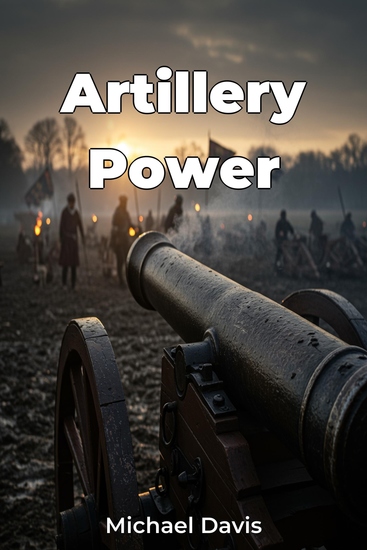
Artillery Power examines the sweeping impact of artillery on military history, arguing its evolution has consistently reshaped battlefield tactics and military strategy from ancient times to modern warfare. The book highlights how artillery redefined the possibilities and limitations of military power, not just through technological advancements but also through its influence on social and economic factors. Readers will discover how crucial the interplay between technology, strategy, and societal forces are to understanding artillery's impact.

 
The book chronologically progresses from ancient siege engines to contemporary precision-guided munitions, detailing tactical adaptations driven by artillery's enhanced capabilities. For instance, the shift from gunpowder artillery to more sophisticated siege guns during the Renaissance significantly altered territorial control strategies. Similarly, the advent of rifled artillery transformed industrial warfare during the American Civil War, making battles deadlier and more complex. This study provides a comprehensive look at how artillery's development forced militaries to adapt.

 
Drawing from military manuals, battle reports, and quantitative data, Artillery Power offers a balanced and objective analysis suitable for both academics and enthusiasts interested in military technology and its historical significance, making it a valuable resource for understanding military planning and defense procurement.
Available since: 03/29/2025.
Print length: 61 pages.
Other books that might interest you

  • All the Rage - Why We Feel Anger and How to Use It - cover

    All the Rage - Why We Feel Anger...

    Josh Cohen

    • 0
    • 0
    • 0
    Anger is all around us, from divisive social media arguments and heightened political divides to road rage and personal spats; from Black Lives Matter and climate justice movements to Trump, incels, and white supremacists. When it materializes, it seems to cry out for recognition and response. It affects our bodies and can transition into violence. It can be inherited through the generations; it can manifest in criminal acts. What should we do with it, and can it ever be put to good use?Drawing on case studies of patients, developments in neuropsychology, literature, philosophy, and recent political events, acclaimed author and psychoanalyst Josh Cohen identifies the different forms of anger, including the most untrammeled and elemental fury, the more cynical anger that works towards political unrest, and the questioning anger of political protest. Rather than an emotion to ignore, he argues that anger is a primary human feeling. It maps itself onto every aspect of our intimate lives while politically and culturally shaping our world.In a time of intense dissatisfactions and spiraling divisions, and with anger a dominating force, All the Rage offers a new and original understanding of anger, so we may better handle the rage within us.
    Show book
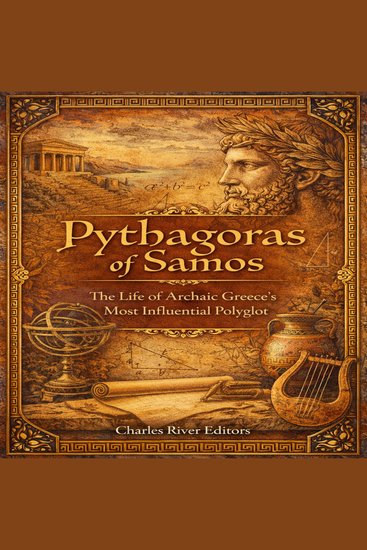
  • Pythagoras of Samos: The Life of Archaic Greece’s Most Influential Polyglot - cover

    Pythagoras of Samos: The Life of...

    Charles River Editors

    • 0
    • 0
    • 0
    Ionia was one of the most important Greek settlements in Anatolia, and it was the home of Thales (626–548 BCE), an enterprising Greek philosopher, mathematician, and astronomer who is best known for predicting the 585 BCE solar eclipse, which brought an immediate halt to the fighting between the Lydians and Medes in modern-day Turkey. Anaximander of Miletus (610–546 BCE), an Ionian philosopher and student of Thales, pioneered a rational, non-mythological approach to astronomy by proposing a mechanical model of the cosmos. He introduced the Apeiron (the Limitless) as the fundamental, eternal source of all matter, from which all worlds are created and to which they return.  
    Pythagoras studied cosmology, geometry, and astronomy under Thales and his successor Anaximander, and by building on the legacies of their brilliant minds, Pythagoras refined and expanded upon their foundational concepts. However, he also went in a different direction, focusing on mysticism and numbers more than material principles. Known for his profound influence on Plato, Pythagoras defined himself as a lover of wisdom and a seeker of knowledge. As a key figure in the evolution of Western intellectual thought, his ideas have endured for millennia, impacting fields ranging from mathematics to philosophy. Alongside other influential Greek thinkers, Pythagoras helped shift focus toward self-examination, deeply influencing how we understand purpose and the universe.  
    Pythagoras’s most lasting legacy was in the field of mathematics, but mathematics was not merely a tool for measurement to him - it was the underlying language of the universe. One of his most famous statements, “Panta arithmos” (“All is Number”), is indicative of his belief that numbers were the essence, structure, and governing principle of the universe. He thought ratios and proportions of integers could explain all reality, including musical harmony, physical objects, and abstract concepts like justice.
    Show book
  • Is Shakespeare Dead? - cover

    Is Shakespeare Dead?

    Mark Twain

    • 0
    • 0
    • 0
    "Is Shakespeare Dead?" by Mark Twain is a sharp, witty, and provocative literary essay in which the famed American author turns his trademark humor and skepticism toward one of literature's greatest mysteries: the true authorship of William Shakespeare's works. Published in 1909, this short but powerful book blends satire, literary criticism, and intellectual inquiry into a highly entertaining challenge to long-held assumptions.
    
    With playful irreverence and relentless logic, Twain questions whether the man known as William Shakespeare of Stratford-upon-Avon could realistically have written the masterpieces attributed to him. He examines gaps in historical records, inconsistencies in biographical details, and the lack of direct evidence connecting Shakespeare's life to the depth of knowledge found in the plays. Twain does not claim to provide a definitive answer; instead, he exposes how tradition, reputation, and academic authority often replace critical thinking.
    
    As the argument unfolds, Twain champions alternative theories, particularly the idea that Sir Francis Bacon may have been the true author, while simultaneously mocking the seriousness with which scholars defend orthodox views. His true target, however, is not Shakespeare himself but intellectual complacency—the tendency to accept inherited opinions without scrutiny.
    
    Beyond the authorship debate, Is Shakespeare Dead? serves as a broader meditation on genius, fame, and how history constructs legends. Twain's humor, sharp reasoning, and fearless questioning make the essay both accessible and thought-provoking, even for readers with little background in literary studies.
    
    Clever, controversial, and endlessly engaging, Is Shakespeare Dead? remains a fascinating work that invites readers to reconsider literary authority, question accepted truths, and enjoy Mark Twain at his most incisive and mischievous.
    Show book
  • Before Their Crimes - What We're Misunderstanding about Childhood Trauma Youth Crime and the Path to Healing - cover

    Before Their Crimes - What We're...

    Wendy Smith

    • 0
    • 0
    • 0
    Juvenile crime doesn’t just happen—there is always a story behind it. 
    Before Their Crimes: What We’re Misunderstanding about Childhood Trauma, Youth Crime, and the Path to Healing is a ground-breaking audiobook that sheds new light on the relationship of childhood trauma and juvenile crime. Wendy Smith uses the framework of Adverse Childhood Experiences (ACEs) to explain how the toxic stress of early childhood trauma can make children vulnerable to committing criminal acts. Smith draws from interviews with twenty men and women from across the racial and social divide who spent years in prison after committing serious crimes as children. Smith not only reveals the pernicious mechanisms that link early trauma to later crime, but also illuminates the potential for healing among even the most egregious offenders. 
    Winner of the 2026 Los Angeles Book Festival Wild Card CategoryRunner-up in the 2026 Los Angeles Book Festival General Nonfiction CategoryWinner of the 2026 New England Book Festival Wild Card CategoryRunner-up in the 2026 New England Book Festival General Nonfiction CategoryWinner of the 2026 Southern California Book Festival Wild Card CategoryWinner of the 2026 Southern California Book Festival General Nonfiction CategoryRunner-up of 2026 New York Book Festival General Nonfiction CategoryRunner-up of 2026 New York Book Festival Wild Card Category
    Show book
  • Soldiers in Merchants’ Clothing: The Threat Winners Miss - cover

    Soldiers in Merchants’ Clothing:...

    Andrew Lin

    • 0
    • 0
    • 0
    This audiobook is narrated by an AI Voice. 
    Soldiers in Merchants’ Clothing: The Threat Winners Miss 
    When is a leader most likely to fall? Not when things are going badly, but when everything is going right. 
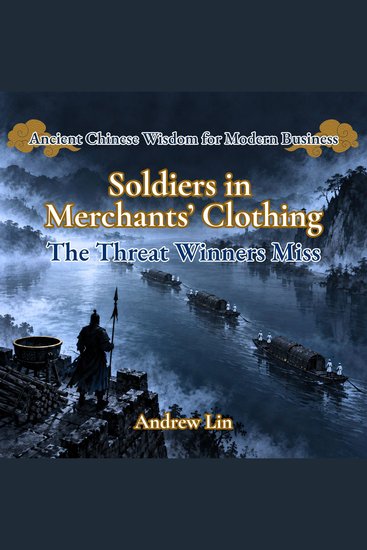
    In 219 AD, the legendary general Guan Yu won the greatest victory of his life. His enemies talked of abandoning their capital. Behind him, he had left a garrison and a chain of beacon towers along the Yangtze River. He was not careless. He was winning. 
    Across the river, Lü Meng knew he could never beat Guan Yu in open battle. So he made Guan Yu feel safe. He faked an illness, sent a letter full of praise, then hid his best soldiers inside cargo boats with the rowers dressed as merchants. They sailed straight past the beacon towers. Not one fire was lit. 
    In this 22-minute audiobook, you will learn why success is the moment your flank is most exposed, how to spot threats that do not look like threats, and why the gate that opens first is often guarded by your own people. Through vivid modern business scenarios, you will see how market leaders lose ground at their peak, and what you can do before it happens to you.
    Show book
  • Uniting the States - Six Crucial Moments That Forged the American Miracle - cover

    Uniting the States - Six Crucial...

    Brian Kilmeade

    • 0
    • 0
    • 0
    INSTANT NEW YORK TIMES BESTSELLER 
    #1 New York Times bestselling author and FOX & Friends cohost takes us through the crucible of the early defining days of America with six extraordinary men who helped to define what freedom would mean for our fledgling nation: John Adams, George Washington, Captain Daniel Shays, Thomas Jefferson, James Madison, and John Quincy Adams. 
    Brian Kilmeade’s page-turning and riveting storytelling transports us to 1770 and the unshakeable John Adams as he does the unthinkable and defends the British soldiers accused at the Boston Massacre—but he is willing to risk his life and reputation to establish the rule of law as an essential American value. Then there is George Washing­ton, who, outnumbered and outgunned against the most powerful military force in the world, innovates a new way of warfare and an improbable road to victory in the Rev­olutionary War. Captain Daniel Shays follows, a man who loses everything to stand up for the little man while help­ing to inspire the Constitutional Convention. 
    The visionary Thomas Jefferson remakes the country in 1803, doubling its boundaries by masterminding the Lou­isiana Purchase from none other than Napoleon Bona­parte. James Madison challenges the British Goliath again, declaring the War of 1812 and rallying the United States in its first foray into making America a respected world power. Finally, John Quincy Adams, the conscience of the country, launches the nation’s hardest-ever conversation, attempting to erase America’s original sin. 
    When the colonists threw off British rule, they launched a great experiment in democracy. Self-government by the people, with a sworn commitment to equality and liberty for all, had never been tried. In the pages of this book, Brian Kilmeade tells us how the six heroes united the fledgling United States of America in its early decades, setting our nation on a trajectory unlike any other. 
    Supplemental enhancement PDF accompanies the audiobook.
    Show book