Junte-se a nós em uma viagem ao mundo dos livros!
Adicionar este livro à prateleira
Grey
Deixe um novo comentário Default profile 50px
Grey
Assine para ler o livro completo ou leia as primeiras páginas de graça!
All characters reduced
History of the World: A Journey Through Time and Civilization - cover
LER

History of the World: A Journey Through Time and Civilization

Michael Adams

Editora: Cheryl Eyes; PublishDrive edition

  • 0
  • 0
  • 0

Sinopse

History of the World - A Journey Through Time and Civilization takes readers on an epic exploration of humanity's greatest triumphs, challenges, and transformations across the ages. From the dawn of ancient civilizations to the modern era, this comprehensive guide delves into the key events, figures, and innovations that have shaped the world as we know it. Spanning continents and cultures, History of the World brings to life the rise and fall of empires, the evolution of societies, and the groundbreaking ideas that have driven human progress. With a focus on both well-known milestones and lesser-explored historical moments, this book provides a broad yet nuanced understanding of the interconnectedness of global history. Perfect for history enthusiasts and curious readers alike, History of the World - A Journey Through Time and Civilization offers a sweeping, engaging narrative that illuminates the rich tapestry of human experience and the forces that continue to influence the present day.
Disponível desde: 06/09/2024.

Outros livros que poderiam interessá-lo

  • A Hundred Reasons Why - You Should NOT Vote for Donald Trump in 2024 - cover

    A Hundred Reasons Why - You...

    Science-Based Language Learning Lab

    • 0
    • 0
    • 0
    Reasons You Can't Ignore: The Urgent Case Against Donald Trump 
     
    A Hundred Reasons Why... You Should NOT Vote for Donald Trump in 2024 takes you on an essential journey to understand why another Trump term could be detrimental to America. This book provides an unfiltered examination of the controversies, failures, and polarizing decisions that marked his presidency. It's more than a critique; it's a roadmap to inform and protect our nation's future. 
     
    Are you worried about democratic institutions, economic policies, or the global standing of the United States? This book addresses these concerns with 100 detailed reasons, each concise enough for a quick read but impactful enough to inspire critical thought. 
     
    Every chapter, from Trump's controversial leadership style to his handling of the COVID-19 pandemic, dissects an aspect of his presidency, providing context and insights you won't find in mainstream media. Topics include his failure to condemn white supremacy and promotion of division and hate, painting a thorough picture of his time in office. 
     
    Imagine being able to hold crucial conversations about America's future with confidence. This book empowers you to become a well-informed citizen, ready to advocate for change. 
     
    Don't wait until it's too late. Every vote counts, and every informed citizen can make a difference. Dive into A Hundred Reasons Why... You Should NOT Vote for Donald Trump in 2024 and arm yourself with the facts. It's more than a book; it's your guide to safeguarding the future of American democracy.
    Ver livro
  • The Next Economy MBA - Redesigning Business for the Benefit of All Life - cover

    The Next Economy MBA -...

    Kevin Bayuk, LIFT Economy, Erin...

    • 0
    • 0
    • 0
    This radical and rigorous rethinking of the traditional MBA program combines solid business principles with a commitment to environmental and social justice. 
     
    Many current and aspiring entrepreneurs are looking for a solid business education that also deeply aligns with their progressive values. Based on a course field-tested with over 500 students, this book fills that gap. It covers traditional topics such as business strategy and structure, finance, marketing, recruiting, and branding from a socially just and environmentally regenerative perspective. And it also touches on topics such as strategies to reverse climate change, nonviolent communication, self-managing organizations, locally self-reliant economies, racial justice, and more.  
     
    Traditional MBA programs are based on outdated principles that were developed during the Industrial Revolution-and they can be hugely expensive. Sustainable MBA programs, while laudable, are too incremental to make a sufficient impact. The Next Economy MBA is for entrepreneurs seeking to make business an active force for good. It draws on the authors' experience of working with over 300 social enterprises, from small organizations like Winona's Hemp and Heritage Farm to household names like Ben & Jerry's and Patagonia. 
     
    Our current economy, what the authors call the "Business as Usual Economy," has created a massive wealth gap, a climate crisis, racial division, and needless housing, food, and healthcare shortages. This book shows how businesses can pave the way to a Next Economy that meets the basic needs of all people and restores and protects the planetary ecosystem.
    Ver livro
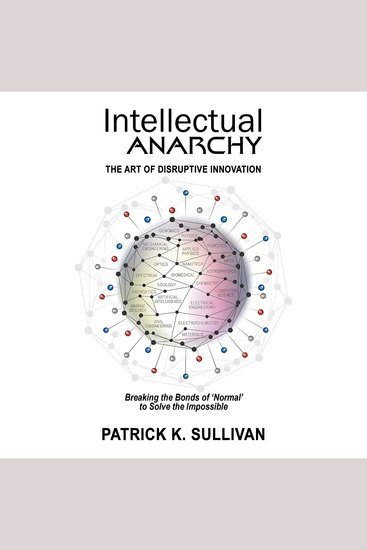
  • Intellectual Anarchy - The Art of Disruptive Innovation - cover

    Intellectual Anarchy - The Art...

    Patrick K Sullivan

    • 0
    • 0
    • 0
    So how do we move the future from the distant horizon to the present day? We need Intellectual Anarchy. 
    The accelerating challenges facing our planet—such as climate change, food scarcity, sustainable energy, overpopulation, nuclear proliferation, income inequality, and rising healthcare costs—are solvable. The question is not if, but when. 
    All these challenges directly impact our lives and our unwritten future. They have enormous economic consequences for humans and society. They also provide incredible opportunities for investors and innovators. This is a book about how we can find disruptive solutions to hard problems, problems so difficult that they can seem impossible. Problems of that magnitude demand radical new ideas—an incremental approach won’t work. Their solutions seemingly come out of left field, defying conventional wisdom, and overturning existing industries, practices, and business models. 
    This book details the Intellectual Anarchy methodology followed at Oceanit for generating disruptive solutions to these problems and taking them from the idea stage all the way to market—Mind-to-Market, including financing innovations to overcome the scarcity of venture capital anywhere away from the conventional tech hubs. 
    Oceanit operates from Hawai‘i, the most remote location in the world. Yet today Oceanit works across the world with just about everybody—the US government, Fortune 100 companies, and more than sixty universities—partnering and collaborating as we research, invent, and produce technology in energy, aerospace, life sciences, information technology, sustainability, and resiliency. 
    If Oceanit’s Intellectual Anarchy model works in Hawai‘i, it can work anywhere. 
    BOOK PDF FILE: drive.google.com/file/d/1_P9l1y5khTaO6bxavPnEzri-3ZByADNP/view
    Ver livro
  • The Unreachable Riches - Exploring the Eternal Elusiveness of a Legendary Cache - cover

    The Unreachable Riches -...

    John Harpoon

    • 0
    • 0
    • 0
    Throughout history, the allure of hidden treasure has captured the human imagination like few other pursuits. Tales of vast riches buried beneath shifting sands, concealed within uncharted jungles, or locked away in remote mountain fortresses have been passed down through generations. These stories, often shrouded in mystery, promise more than mere material wealth; they offer the thrill of discovery, the romance of adventure, and the tantalizing possibility of rewriting history. 
    What makes the pursuit of treasure so compelling is its intersection of myth and reality. While some caches are purely the stuff of legend—stories crafted to entertain or to warn—others are firmly rooted in historical fact. The line between these two realms is often blurred, with legends growing over time as details are exaggerated, misunderstood, or simply lost to the passage of years. Yet, the faint possibility that a hoard of gold, jewels, or ancient artifacts could be lying undiscovered somewhere in the world continues to ignite the spark of curiosity in countless individuals. 
    The search for hidden riches is not just a quest for monetary gain. It is an expression of humanity's enduring desire to explore the unknown, to solve mysteries, and to leave a mark on history. Treasure hunters are often driven by a profound sense of purpose, believing that their discoveries might unveil truths about the past or provide new insights into forgotten cultures. Some searches span decades, even lifetimes, as these seekers devote themselves wholly to their pursuits, undeterred by failure or skepticism.
    Ver livro
  • The Problem of Democracy - America the Middle East and the Rise and Fall of an Idea - cover

    The Problem of Democracy -...

    Shadi Hamid

    • 0
    • 0
    • 0
    What happens when democracy produces "bad" outcomes? Is democracy good because of its outcomes or despite them? This "democratic dilemma" is one of the most persistent, vexing problems for America abroad, particularly in the Middle East—we want democracy in theory but not necessarily in practice. 


    When Islamist parties rise to power through free elections, the United States has too often been ambivalent or opposed, preferring instead pliable dictators. With this legacy of democratic disrespect in mind, and drawing on new interviews with top American officials, Shadi Hamid explores universal questions of morality, power, and hypocrisy. Why has the United States failed so completely to live up to its own stated ideals in the Arab world? And is it possible for it to change? 


    In The Problem of Democracy, Hamid offers an ambitious reimagining of this ongoing debate and argues for "democratic minimalism" as a path to resolving democratic dilemmas in the Middle East and beyond. In the seemingly eternal tension between democracy and liberalism, recognized by the ancient Greeks and the American founders alike, it may be time to prioritize one over the other, rather than acting as if the two are intertwined when increasingly they are not.
    Ver livro
  • To Learn About Oneself One Has to Learn Anew Each Minute - Four Public Talks Bombay (Mumbai) India 1971 - cover

    To Learn About Oneself One Has...

    Jiddu Krishnamurti

    • 0
    • 0
    • 0
    "To perceive 'what is' is the basis of truth," 7 February 1971. Duration: 86 minutes.
    Where there is division, there must be conflict. A mind in conflict must inevitably be distorted, and therefore it cannot possibly see clearly what is truth.
    
    We need a total change, a deep revolution, psychological revolution, the inward revolution, without which you cannot possibly create a new society. Is it possible to observe, to perceive without the observer?
    
    How are images formed? Can the image building come to an end? Knowledge is absolutely necessary. Is it possible that knowledge, which the brain has accumulated through centuries, does not interfere with relationships?
    
    "Direct perception is freedom," 10 February 1971. Duration: 80 minutes.
    Can the mind living in this world ever be free, not only superficially but profoundly, at the very root of its existence? 'Freedom from' is an abstraction, but freedom in observing 'what is' and going beyond it is actual freedom.
    
    How do I observe greed? Do I observe it as an outsider looking in, or do I observe it without the observer? Without the mind being free, you cannot live in order. Three years have passed; I have no energy to be aware of my reactions. Can we seek God through observation?
    
    "Love is that quality of mind in which there is no division," 14 February 1971. Duration: 89 minutes.
    To live in this world with intelligence, in spite of all the complications. Is it possible to be free of fear, not only the superficial fear in relationship but the deep-rooted fear? Thought nourishes, sustains and gives continuity to fear and pleasure.
    
    When you are learning, your mind is awake. Truth isn't second-hand; you can't get it through a guru, a book; you have to learn about it. The beauty of learning is that you don't know what truth is.
    
    What is love? A man who has not love in his heart but the things made by thought will make a monstrous world, will construct a society that is totally immoral. To find out, you must undo everything that you have done.
    
    What does it mean to die?
    
    "A mind in meditation is concerned only with meditation, not with the meditator," 17 February 1971. Duration: 87 minutes.
    If you can put aside your favourite systems, if you can understand that concentration is merely a resistance and therefore constant conflict and wastage of energy, then we can find out for ourselves what is necessary for a mind that is in a state of meditation. To learn about oneself, a living thing, you have to watch, learn anew each minute.
    
    What is will? Consciousness is heritage, the result of time. Consciousness is the content of itself, which is time, sorrow, confusion, misery. Intelligence has no heritage.
    
    What is a mind that is completely silent? How does one cope with the extraordinary energy that human beings have?
    Ver livro