¡Acompáñanos a viajar por el mundo de los libros!
Añadir este libro a la estantería
Grey
Escribe un nuevo comentario Default profile 50px
Grey
Suscríbete para leer el libro completo o lee las primeras páginas gratis.
All characters reduced
Political Works Usage - cover

Political Works Usage

Michael A. Johnson

Traductor A AI

Editorial: Publifye

  • 0
  • 0
  • 0

Sinopsis

Political Works Usage examines how political books influence public opinion, policy preferences, and electoral outcomes beyond mere sales figures. It investigates the role of political literature in shaping discourse, the motivations behind readership, and the tangible effects on voting behavior, providing a data-driven analysis of the impact of political books on civic engagement.The book uniquely combines quantitative data, such as Nielsen BookScan data and LexisNexis searches, with qualitative insights derived from social media analysis using natural language processing. One intriguing finding explores how book sales fluctuate around significant political events, indicating a direct engagement with political ideas during key moments. Another insight delves into how media coverage and social media trends amplify or diminish the impact of these books.The book progresses by first introducing theoretical frameworks like agenda-setting and framing theory to understand the role of political literature. It then presents case studies of influential political books, analyzing sales data, media mentions, and public opinion shifts. Finally, it explores practical implications for political actors and publishers.By focusing on fact-based, non-fiction works, the book offers a rigorous analysis valuable for political scientists, communication scholars, and anyone interested in understanding the dynamics of public opinion and political engagement in current events.
Disponible desde: 19/02/2025.
Longitud de impresión: 67 páginas.
Otros libros que te pueden interesar

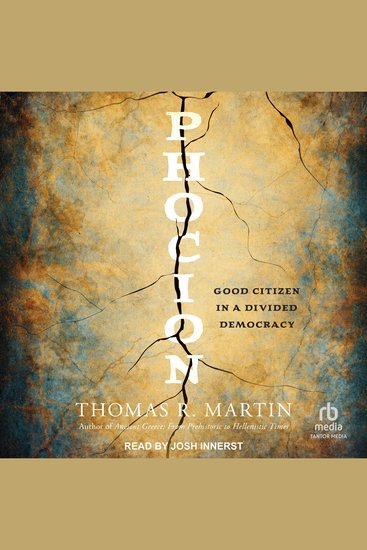
  • Phocion - Good Citizen in a Divided Democracy - cover

    Phocion - Good Citizen in a...

    Thomas R. Martin

    • 0
    • 0
    • 0
    "Elegant and enlightening." —Dominic Green, Wall Street Journal 


    Phocion (402–318 BCE) won Athens's highest public office by direct democratic election an unmatched forty-five times and was officially honored as a "Useful Citizen." A student at Plato's Academy, Phocion gained influence and power during a time when Athens faced multiple crises stemming from Macedonia's emergence as an international power under Philip II and his son Alexander the Great. Following Athens's defeat by Macedonia, Phocion unsuccessfully sought mild terms of surrender. Oligarchy was imposed on democratic Athens, and more than twelve thousand "undesirable" Athenians were exiled. When the oligarchic regime was overthrown and the exiles returned, dispossessed Athenians took out their volcanic anger on Phocion, who throughout his career had often been a harsh critic of the citizens' political decisions. His inflammatory rhetoric contributed to the popular conclusion that he lacked a genuine sense of belonging to the community he wished so desperately to preserve. When he was eighty-four, the Athenians convicted him of treason and condemned him to die by hemlock. In this fresh biography, Thomas R. Martin explores how and why Phocion ultimately failed as a citizen and as a leader. His story offers unsettling lessons for citizens in democracies today.
    Ver libro
  • Generative Artificial Intelligence - What Everyone Needs to Know ® - cover

    Generative Artificial...

    Jerry Kaplan

    • 0
    • 0
    • 0
    Advances in Generative Artificial Intelligence (GAI) have created a new class of computer systems that exhibit astonishing proficiency on a wide variety of tasks with superhuman performance, producing novel text, images, music, and software by analyzing enormous collections of digitized information. Soon, these systems will provide expert medical care; offer legal advice; draft documents; write computer programs; tutor our children; and generate music and art. These advances will accelerate progress in science, art, and human knowledge, but they will also bring new dangers. 


    Have we finally discovered the holy grail of AI—machines that match or exceed human intelligence? Which industries and professions will thrive, and which will wither? What risks and dangers will it pose? How can we ensure that these systems respect our ethical principles? Will the benefits be broadly distributed or accrue to a lucky few? How will GAI alter our political systems and international conflicts? Are we merely a stepping stone to a new form of non-biological life, or are we just getting better at building useful gadgets? 


    Generative Artificial Intelligence: What Everyone Needs to Know® equips listeners with the knowledge to answer these pressing questions.
    Ver libro
  • The Civic Bargain - How Democracy Survives - cover

    The Civic Bargain - How...

    Josiah Ober, Brook Manville

    • 0
    • 0
    • 0
    A powerful case for democracy and how it can adapt and survive—if we want it to 


    Is democracy in trouble, perhaps even dying? Pundits say so, and polls show that most Americans believe that their country's system of governance is being "tested" or is "under attack." But is the future of democracy necessarily so dire? In The Civic Bargain, Brook Manville and Josiah Ober push back against the prevailing pessimism about the fate of democracy around the world. Instead of an epitaph for democracy, they offer a guide for democratic renewal, calling on citizens to recommit to a "civic bargain" with one another to guarantee civic rights of freedom, equality, and dignity. That bargain also requires them to fulfill the duties of democratic citizenship: governing themselves with no "boss" except one another, embracing compromise, treating each other as civic friends, and investing in civic education for each rising generation. 


    Manville and Ober trace the long progression toward self-government through four key moments in democracy's history: Classical Athens, Republican Rome, Great Britain's constitutional monarchy, and America's founding. Comparing what worked and what failed in each case, they draw out lessons for how modern democracies can survive and thrive.
    Ver libro
  • Populism - What Everyone Needs to Know - cover

    Populism - What Everyone Needs...

    Paul D. Kenny

    • 0
    • 0
    • 0
    Why do populists come to power? Are they a threat to democracy? Has the rise of global populism reached its peak, or is it just beginning? This book provides answers to these questions and many more, by summarizing in non-technical language the vast research literature on populism that extends across political science, economics, sociology, psychology, and history. Going well beyond the usual cases of Trump and Brexit, Paul D. Kenny provides evidence both of the recurrent global appeal of populism, and of its often deleterious consequences.Populism: What Everyone Needs to Know® advances a new approach to defining populism that helps to make sense of the most robust research findings to date, and that sets up an exciting and dynamic approach in research for the years to come. Populism is, at heart, a political movement that challenges the institutional status quo. The great paradox of populism is that while people are often justifiably resentful of a system they feel is rigged against them, their reliance on charismatic leaders to channel their frustrations usually harms rather than helps democracy.
    Ver libro
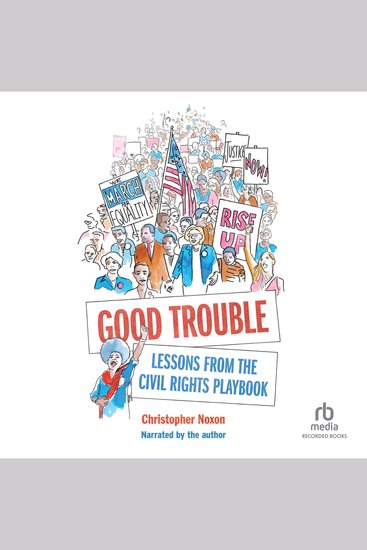
  • Good Trouble - Lessons from the Civil Rights Playbook - cover

    Good Trouble - Lessons from the...

    Christopher Noxon

    • 0
    • 0
    • 0
    Good Trouble is the helpful antidote to all the pessimism and name-calling that is permeating today’s political and social dialogues. Revisiting episodes from the civil rights movement of the 1950s and ’60s, it highlights the essential lessons that modern-day activists and the civically minded can extract and embrace in order to move forward and create change. Journalist Christopher Noxon dives into the real stories behind the front lines of the Montgomery bus boycott and the Greensboro lunch counter sit-ins and notable figures such as Rosa Parks and Bayard Rustin, all while exploring the parallels between the civil rights movement era and the present moment. This thoughtful, fresh approach is sure to inspire conversation, action, and, most importantly, hope.
    Ver libro
  • The Secrets of the Cold War – Spies Propaganda and Power - Covert Operations Espionage and the Battle for Global Influence - cover

    The Secrets of the Cold War –...

    Logan Powell

    • 0
    • 1
    • 0
    The Cold War was more than just a standoff between the United States and the Soviet Union—it was a battle fought in the shadows. From top-secret spy missions to global propaganda campaigns, the struggle for power shaped the modern world in ways still felt today. 
    This audiobook uncovers the hidden world of espionage, double agents, nuclear threats, and psychological warfare. Learn about the CIA vs. KGB, the Berlin Wall, the Cuban Missile Crisis, and the secret operations that defined an era of fear and suspicion. 
    The Secrets of the Cold War – Spies, Propaganda, and Power is a must-listen for history lovers, intelligence enthusiasts, and those fascinated by the real-life intrigue of global power struggles.
    Ver libro