Rejoignez-nous pour un voyage dans le monde des livres!
Ajouter ce livre à l'électronique
Grey
Ecrivez un nouveau commentaire Default profile 50px
Grey
Abonnez-vous pour lire le livre complet ou lisez les premières pages gratuitement!
All characters reduced
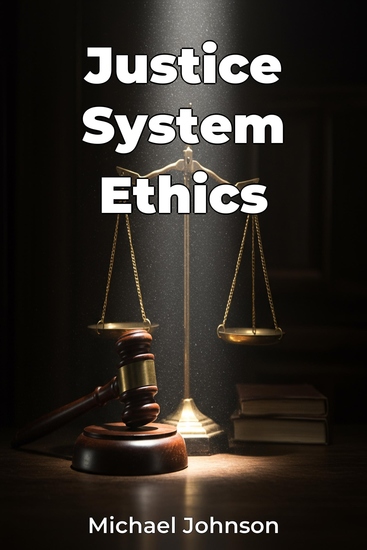
Justice System Ethics - cover

Justice System Ethics

Michael A Johnson

Traducteur A AI

Maison d'édition: Publifye

  • 0
  • 0
  • 0

Synopsis

Justice System Ethics explores the multifaceted nature of justice across global legal systems, highlighting the ethical dilemmas inherent in its pursuit. It examines how different societies define fairness, punishment, and rehabilitation, revealing that while the desire for justice is universal, its interpretation varies widely. For example, Scandinavian countries often embrace restorative justice, while other nations favor more punitive approaches. This comparative analysis stresses the importance of understanding diverse justice paradigms in an interconnected world, where legal reform and international relations are increasingly intertwined.

 
The book delves into the ethical foundations of law, punishment philosophies, and rehabilitative justice, examining historical, cultural, and philosophical influences on legal principles. It contrasts retributive, deterrent, and restorative justice models, considering the ethical implications of each.

 
By presenting case studies and statistical analyses from organizations like the United Nations, the book provides empirical evidence supporting its arguments. This approach moves beyond simplistic judgments, fostering critical thinking about underlying assumptions in legal practices.

 
Beginning with core concepts of legal ethics, the book progresses through the development of legal systems and culminates in strategies for cross-cultural dialogue and ethical reform. It connects to political science, sociology, and philosophy, reflecting the interdisciplinary nature of justice. This makes Justice System Ethics a valuable resource for students, legal professionals, policymakers, and anyone interested in social justice, offering a framework for informed decision-making and promoting constructive dialogue about criminal justice reform and legal ethics.
Disponible depuis: 04/03/2025.
Longueur d'impression: 77 pages.

D'autres livres qui pourraient vous intéresser

  • The Psychopath Exposed - Understanding and Dealing with an Emotional Predator - cover

    The Psychopath Exposed -...

    Jonas Warstad

    • 0
    • 0
    • 0
    The Psychopath Exposed: Understanding and Dealing with an Emotional Predator is not just another book about psychopaths/sociopaths; it saves you time! You can listen to it in about one hour and get all the information you need to understand and deal with a psychopath or sociopath.Yes it also teaches you how to deal with a psychopath/sociopath! Dealing with psychopaths will naturally cause controversy, with some claiming that it's dangerous, or impossible. I never liked the word "impossible". While I designed the methods in my book to be as safe as possible, dealing with a psychopath/sociopath is always potentially risky, regardless of whether you do nothing or something. But I don't underestimate the intelligence of you, the listener, so I list all my methods, whether some consider them "dangerous" or not. Naturally it is up to you to decide which method you should use.Yes I also write about the usual: how to understand a psychopath/sociopathWhat is the typical psychopath behavior?Are all psychopaths the same?Do psychopaths have any "normal" feelings and needs?Do psychopaths have any "normal" relations with other people?Why does a psychopath care so little about other people and their feelings?Why and how does a psychopath manipulate you?Why and how does a psychopath enter a "romantic relationship"?Is psychopathy curable?Are psychopaths evil?How do you deal with a psychopath?How do you discontinue a relationship with a psychopath?Who is this book for? This book was created first and foremost for regular people and will, in a quick and easy way, explain all you need to know about psychopaths for practical purposes. It will teach you what a psychopath is and how they "think", with practical tips on what you can do to prevent being emotionally and psychologically compromised.
    Voir livre
  • The Kurds - History of a Forgotten Ethnic Minority - cover

    The Kurds - History of a...

    Kelly Mass

    • 0
    • 0
    • 0
    The Kurds are a distinct ethnic group native to the Middle East, primarily inhabiting the region known as Kurdistan, which stretches across parts of modern-day Turkey, Syria, Iraq, and Iran. They are an Iranian ethnic group with a history that spans thousands of years. The geographical area traditionally inhabited by the Kurds is marked by hilly terrain, particularly south of Lake Van and Lake Urmia. The majority of Kurds speak dialects of the Kurdish language, with Northern Kurdish (Kurmanji) and Sorani being the most widely spoken. 
    The origins of the Kurdish people are the subject of various speculations, one of the most prominent being that they are descendants of the ancient Carduchoi, a people mentioned in classical antiquity. Over the centuries, the Kurds have maintained a distinct cultural and linguistic identity, despite the multiple empires that have ruled over their lands. Notably, the Kurdish dynasties that governed parts of the region from the 10th to the 12th century—such as the Hasanwayhids, Marwanids, Rawadids, and Shaddadids—serve as the earliest recorded examples of Kurdish political power under Islamic rule. Following these dynasties, the Ayyubid dynasty, founded by the legendary Saladin, further entrenched Kurdish influence in the region, especially in the wider Islamic world.
    Voir livre
  • Could Jo Starting A School For Boys Be A Feminist Act - Little Women Podcast - cover

    Could Jo Starting A School For...

    Niina Niskanen

    • 0
    • 0
    • 0
    Many people wonder why Jo starts a school for boys..even though Little Women mentions how much Jo loves boys many times. In Little Men, we can see how Jo and Friedrich wish that their boys grow to respect women, so could Jo starting a school for boys actually be a feminist act? 
    There are lots of people who say that Friedrich forced Jo to start a school or Friedrich forced Jo to become a teacher. None of that happens in the novel. So have these people even read Little Women? In the book, Jo is the one who says that she wants to start a school. Her exact words are Quote "even before I met my Fritz, I used to think how when I made my fortune and no one needed me at home, I'd hire a big house and pick up some poor fore-long little lads who hadn't any mothers and take care of them and make life jolly for them before it was too late. 
    I see so many of them going to ruin for want of help, and at the right minute. I love them, so to do anything for them, I seem to feel their wants and sympathize with their troubles. I know I should so like to be a mother to them". End quote. In the scene in the book where Jo explains her plans on starting school, she clearly says that what she wants to do is to have a flock of boys that she can nurture, she can take care of them and can be a mother to them and love them. A lot of people erase the maternal elements from Jo's character.
    Voir livre
  • The Vision of Aridaeus - cover

    The Vision of Aridaeus

    G. R. S. Mead

    • 0
    • 0
    • 0
    The Vision of Aridaeus, is a philosophical and spiritual treatise that offers an in-depth exploration of the nature of reality as it relates to the concept of self-consciousness. Through his use of dialogic discourse, Mead illuminates the complexity and depth of this subject matter, examining the notions of egoism and its potential to transcend both physical and mental boundaries. Read in English, unabridged.
    Voir livre
  • Ultimate 48 Hour Author - The First Time Author Success System - cover

    Ultimate 48 Hour Author - The...

    Natasa Denman

    • 0
    • 0
    • 0
    * Have you been sitting on a book idea for many years?  
    * Do you have piles and piles of notes and content taking up space on your desk, computer and in your head?  
    * Do friends, family and strangers you meet constantly tell you that you should write a book?  
    * Would you like an exact guide to do it quickly, easily and most importantly make money from it?  
    This must-read book is the ultimate guide to not only writing and publishing your first book but the ultimate vehicle to business growth through leveraging the opportunities that becoming a published author brings. This book has the answers for you. It is the proven system that will take you step-by-step through the process of navigating your structure, content and all those infinite details needed to publish. Hundreds of men and women in business are following this exact system, The Ultimate 48 Hour Author Blueprint, to create transformation in their own, and their client’s lives.  
    Natasa Denman is 15 times published author and one of Australia’s leading book mentors and has been working with first-time authors for many years. She is passionate about fast-tracking the writing process, so you don't have time to let your fears and self-doubt get in the way. Natasa runs a multi seven-figure home based business and has now helped over 1000 people to date from all walks of life, complete their first books. In this fully revised edition, Natasa shares all the updated systems, strategies and actions that you should be taking to become an author and leverage your message.  
    Ultimate 48 Hour Author will be your guide to business success that is leveraged, rewarding and long lasting. Natasa’s style is very practical filled with real life tips and her own experiences that ensure you can get maximum ROI (return on investment) with your first book. If writing a book is on your ‘to-do’ list, with Ultimate 48 Hour Author, there are NO MORE EXCUSES!
    Voir livre
  • Slavery and the Law: The History of the Legal Systems and Cases that Enabled Slavery in the United States - cover

    Slavery and the Law: The History...

    Editors Charles River

    • 0
    • 0
    • 0
    Ultimately, while the institution of slavery existed, the principle of protecting individual property rights prevailed, alongside a necessary acknowledgment that slaves were property first and sentient human beings second. It also required a great deal of careful drafting and verbal contortions to construct the Constitution for the young republic that supported those principles of freedom and equality while at the same time facilitating the perpetuation of the “peculiar institution.” 
    	It was not until 1865, with the adoption of the Thirteenth Amendment, the instrument that abolished slavery, that any overt mention of slavery found its way into the Constitution. Before that, direct reference was always carefully avoided, although, at the same time, unmistakably alluded to. The document is filled with provisions specific to slavery, protecting and codifying it on a federal level, without anywhere making direct or overt mention of it. By 1788, when the Constitution of the United States was formally adopted, slavery had been a fact of life in the colonies for 169 years, since the first recorded arrival of black Africans in Virginia in 1619. At that time, around the institution, had evolved a system of laws that were derived in the main from English common law. The irony here is that the regime of English common law was at its root hostile to the principle of human bondage, had no tradition of slavery to call upon, and was desirous on the whole to avoid making any overt judgment or pronouncement on the matter. It, therefore, fell to colonial lawmakers to resolve that essential contradiction between treating Africans as either people or property or both. This tension remained in play throughout the era of slavery in English-speaking America until the matter was finally resolved by the outcome of the American Civil War.
    Voir livre