¡Acompáñanos a viajar por el mundo de los libros!
Añadir este libro a la estantería
Grey
Escribe un nuevo comentario Default profile 50px
Grey
Suscríbete para leer el libro completo o lee las primeras páginas gratis.
All characters reduced
Mother - A Revolutionary Russian Classic - cover

Mother - A Revolutionary Russian Classic

Maxim Gorky

Editorial: DigiCat

  • 0
  • 0
  • 0

Sinopsis

In "Mother," Maxim Gorky crafts a poignant narrative that delves into the struggles of the working class in early 20th-century Russia. The novel centers on Pelageya Nilovna, a simple mother whose ardent support of her revolutionary son catalyzes her awakening to social consciousness. Gorky employs a realist style interwoven with lyrical language, effectively portraying the harsh realities of poverty and oppression while also illuminating the transformative power of collective action. Set against the backdrop of revolutionary fervor, the novel is situated within the literary movement that sought to inspire social change through provocative storytelling. Gorky's own tumultuous upbringing in an impoverished family, coupled with his experiences in a politically charged Russia, informs the emotional depth and authenticity in "Mother." As a prominent figure in the Russian literary canon and a champion of the proletarian cause, Gorky's work embodies the ideological struggle of his time, blending personal narrative with broader sociopolitical themes. His intimate understanding of the plight of the oppressed is reflected in the characters he so vividly brings to life. This seminal work is highly recommended for readers interested in social realism, revolutionary literature, and the human capacity for resilience. Gorky's exploration of motherly love and revolutionary zeal creates a compelling narrative that resonates powerfully with contemporary audiences, underscoring the timeless nature of the struggle for justice.
Disponible desde: 08/11/2023.
Longitud de impresión: 311 páginas.

Otros libros que te pueden interesar

  • 12 Days Of Christmas - cover

    12 Days Of Christmas

    Traditional

    • 0
    • 0
    • 0
    ‘12 Days of Christmas’ as interpreted by Emmy-nominated actor Geoffrey Giuliano is a breath of fresh air for this charming Christmas classic. Here is a holiday single that will delight young and old and rekindle the flame of wonder for the beauty of family Christmases’ gone by. A humorous imaginative rendering by one of today's most celebrated actors ‘The 12 Days of Christmas’ promises to become - yet again- a classic part of everyone's holiday.
    Ver libro
  • Wuthering Heights - cover

    Wuthering Heights

    Emily Brontë

    • 0
    • 0
    • 0
    Published in 1847, Wuthering Heights by Emily Brontë, concerns two families of the landed gentry living on the West Yorkshire moors, the Earnshaws and the Lintons, and their turbulent relationships with the Earnshaws' foster son, Heathcliff. Whilst it is now widely considered to be one of the greatest novels ever written in English, contemporaneous reviews were polarised. It was controversial for its depictions of mental and physical cruelty, including domestic abuse, and for its challenges to Victorian morality and religious and societal values.  
    Narrated by Michael Ward.
    Ver libro
  • A Dead Woman's Secret - From their pens to your ears genius in every story - cover

    A Dead Woman's Secret - From...

    Guy de Maupassant

    • 0
    • 0
    • 0
    Henri René Albert Guy de Maupassant was born on August 5th, 1850 near Dieppe in France.  
    Maupassant’s early life was badly torn when at age 11 (his younger brother Hervé was then five) his mother, Laure, a headstrong and independent-minded woman, risked social disgrace in order to obtain a legal separation from her husband. 
    After the separation, Laure kept custody of her two boys. With the father now forcibly absent, Laure became the most influential and important figure in the young boy's life.   
    Maupassant’s education was such that he rebelled against religion and other societal norms but a developing friendship with Gustave Flaubert began to turn his mind towards creativity and writing. 
    After graduation he volunteered for the Franco-Prussian war. With its end he moved to Paris to work as a clerk in the Navy Department.  Gustave Flaubert now took him under his wing.  Acting as a literary guardian to him, he guided the eager Maupassant to debuts in journalism and literature.  For Maupassant these were exciting times and the awakening of his creative talents and ambitions. 
    In 1880 he published what is considered his first great work, ‘Boule de Suif’, (translated as as ‘Dumpling’, ‘Butterball’, ‘Ball of Fat’, or ‘Ball of Lard’) which met with a success that was both instant and overwhelming.  Flaubert at once acknowledged that it was ‘a masterpiece that will endure.’ Maupassant had used his talents and experiences in the war to create something unique.  
    This decade from 1880 to 1891 was to be the most pivotal of his career.  With an audience now made available by the success of ‘Boule de Suif’ Maupassant organised himself to work methodically and relentlessly to produce between two and four volumes of work a year.  The melding of his talents and business sense and the continual hunger of sources for his works made him wealthy. 
    In his later years he developed a desire for solitude, an obsession for self-preservation, and a fear of death as well as a paranoia of persecution caused by the syphilis he had contracted in his youth.  
    On January 2nd, 1892, Maupassant tried to commit suicide by cutting his throat.  Unsuccessful he was committed to the private asylum of Esprit Blanche at Passy, in Paris.  It was here on July 6th, 1893 that Henri René Albert Guy de Maupassant died at the age of only 42.
    Ver libro
  • Cornwall - A Short Story Collection - The beautiful landscape of Cornwall is the setting for happy and horror stories alike in this amazing collection of classic stories - cover

    Cornwall - A Short Story...

    Edgar Allan Poe, F. Marion...

    • 0
    • 0
    • 0
    The far South-West of England, this limb of land that extends away into the ocean, and some would say away from reality, from comfort and safety.  
     
    Upon its beautiful rugged landscape of wild nature and pretty tourist laden villages have been seared some of the darkest stories from our author’s pens.  For them Cornwall is malevolent, it veers towards evil and the dark arts of supernatural and ghostly hell. 
     
    But don’t just take our word, take the words of Edgar Allan Poe, F Marion Crawford, Mary Elizabeth Braddon and many others as they take you on a travel guide that is sure to open your eyes in very unpleasant ways. 
     
    1 - Cornwall - A Short Story Collection - An Introduction 
    2 - Malachi's Cove by Anthony Trollope 
    3 - Ligeia by Edgar Allan Poe 
    4 - The Screaming Skull by F Marion Crawford 
    5 - The Haunted Church by Frederick Cowles 
    6 - The Limping Ghost by Frederick Cowles 
    7 - In the Mist by Mary E Penn 
    8 - The Botathen Ghost from Footprints of Former Men in Far Cornwall by the Reverend R S Hawker 
    9 - Room For One by Frederick Cowles 
    10 - Colonel Benyon's Entanglement by Mary Elizabeth Braddon 
    11 - Christmas Eve at a Cornish Manor House by Clara Venn
    Ver libro
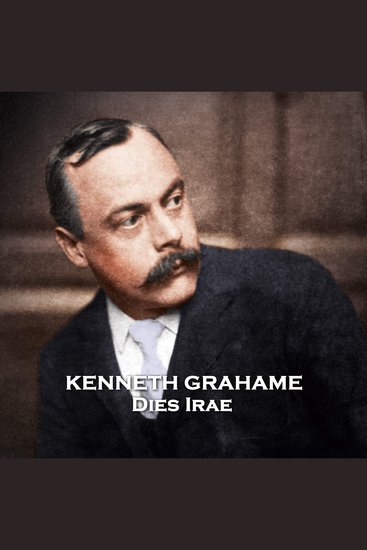
  • Dies Irae - From their pens to your ears genius in every story - cover

    Dies Irae - From their pens to...

    Kenneth Grahame

    • 0
    • 0
    • 0
    Kenneth Grahame was born on 8th March 1859 in Edinburgh. 
    At age 5 his mother succumbed to puerperal fever.  His father, who had a drinking problem, now sent his 4 children to live with their grandmother at her large house in Cookham, Berkshire. Here the children lived in large open grounds next to the river.  These early experiences would in later years, be retold in his writing through a myriad of characters. 
    Grahame loved being a pupil at St Edward's School, Oxford and wanted to enroll at the university there but his guardian demurred on account of the cost. 
    Instead, a banking career was chosen for him, starting in 1879 at the Bank of England, where he rose steadily to the rank of its Secretary until retiring, with a pension, in 1908 due to ill health. 
    Alongside his commercial career Grahame had written and published various stories and essays in several periodicals. Some were anthologized as ‘Pagan Papers’ in 1893, and two years later ‘The Golden Age’ and later still ‘Dream Days’ and its masterpiece ‘The Reluctant Dragon’ became part of many home libraries.  His ability to view life through the lens of a young and curious child was superb, enabling the reader to easily identify with the character.   
    Grahame married Elspeth Thomson in 1899 and they had one child; Alastair, born semi-blind and plagued by health problems.  In a heart-rending tragedy he would later take his own life whilst attending Oxford University in 1920.   
    In 1908 Grahame reworked many of the bedtime stories he had fashioned for his son into the enduring favourite; ‘The Wind in the Willows’, describing the heart-warming adventures of Mr Toad and his friends.   
    Kenneth Grahame died in Pangbourne, Berkshire, on 6th July 1932.
    Ver libro
  • The Thimble - cover

    The Thimble

    D H Lawrence

    • 0
    • 0
    • 0
    In 'The Thimble', Lawrence moves to the world of the affluent middle classes, a world to which he perhaps aspired. The story is a touching one of a disfigured husband returning home from the war to a beautiful new wife. The thimble of the story can be seen to represent purposeless, surface beauty, which has no function. The husband casts the thimble away but can this marriage survive the surface damage and find a deeper meaning?
    Ver libro