


Junte-se a nós em uma viagem ao mundo dos livros!
Adicionar este livro à prateleira
Grey
Deixe um novo comentário Default profile 50px
Grey
Assine para ler o livro completo ou leia as primeiras páginas de graça!
All characters reduced
A Frenchman in America: Recollections of Men and Things - Insights from a Frenchman's American Adventures - cover
LER

A Frenchman in America: Recollections of Men and Things - Insights from a Frenchman's American Adventures

Max O'Rell

Editora: Good Press

  • 0
  • 0
  • 0

Sinopse

In "A Frenchman in America: Recollections of Men and Things," Max O'Rell presents an insightful and humorous reflection on American society through the eyes of a European observer. Blending sharp wit with astute observations, O'Rell offers a unique account of his experiences across the United States at the turn of the 20th century. His literary style is characterized by a conversational tone, vivid descriptions, and a series of engaging anecdotes that illuminate cultural contrasts and societal norms between France and America. This work serves as both memoir and social commentary, providing readers with a rich tapestry of impressions that reveal the charms and peculiarities of American life during this transformative era. O'Rell, a French journalist and lecturer, was deeply influenced by his travels and experiences in America, where he sought to bridge the cultural gap between his homeland and the burgeoning nation. His background in the arts and his engagement with audiences provided him with a unique lens through which to analyze and appreciate the American way of life. The resultant narrative is imbued with his characteristic humor and insightful critique that reflect the broader themes of cultural identity and the immigrant experience. This book is highly recommended for readers interested in cultural studies, travel writing, and the humor of social commentary. O'Rell'Äôs engaging style not only entertains but also invites contemplation of the complexities of identity and cultural exchange, making it an enriching read for anyone seeking to understand the dynamics of America through a foreign perspective.
Disponível desde: 04/10/2023.
Comprimento de impressão: 253 páginas.

Outros livros que poderiam interessá-lo

  • Liao Dynasty - Nomadic Conquerors of Northern China - cover

    Liao Dynasty - Nomadic...

    Rolf Hedger

    • 0
    • 0
    • 0
    The story of the Liao people begins in the vast and harsh steppe regions to the north of China, where they first emerged as a formidable force in the region’s history. The Liao were a nomadic group, characterized by their mastery of horseback riding and combat, which set them apart from the sedentary agricultural societies of the surrounding civilizations. Their origins are not fully understood, but it is widely believed that they came from the Mongolian Plateau, migrating southward and eastward into the northern reaches of China during the early centuries of the Common Era. 
    In their early years, the Liao people were organized into various tribes, each with its own leadership and customs. These tribes were constantly in motion, following the migratory patterns of their livestock and engaging in periodic warfare with one another for dominance and resources. Despite the chaotic nature of their existence, the Liao were bound together by a common identity rooted in their nomadic lifestyle and warrior culture. Over time, they developed a strong sense of unity, driven by their shared need to survive in an unforgiving environment. 
    As the tribes of the Liao people grew in number and influence, they began to organize themselves more systematically under the leadership of powerful chieftains. These chieftains rose to prominence not only through their military prowess but also through their ability to forge alliances and broker peace with neighboring peoples. The Liao were skilled diplomats, and many of their early leaders recognized the value of creating relationships with the settled agricultural societies that dominated China’s northern frontier. This strategic diplomacy allowed them to secure critical resources, such as grain and horses, while maintaining their autonomy and military strength.
    Ver livro
  • Essential Links for Wire Jewelry 3rd Edition - cover

    Essential Links for Wire Jewelry...

    Lora S. Irish

    • 0
    • 0
    • 0
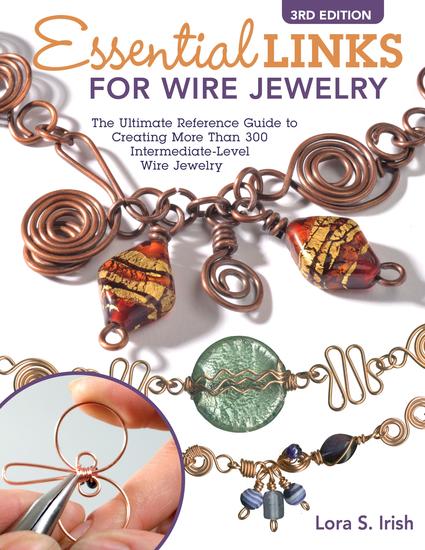
    Learn to make and connect wire links to create stunning jewelry! Use your favorite jewelry wire, from gold and silver to copper and bronze, to create more than 300 different wire links that can be used in countless combinations to form necklaces, earrings, and bracelets. Internationally renowned artist and best-selling author Lora S. Irish shows you how to use a handful of tools and materials to produce fun and elegant pieces simply by learning the basic steps. After you have mastered the art of twisting and coiling jewelry links, you can let your imagination run wild. Experiment with color, new shapes, and combining elements to enhance your wardrobe with pieces that are truly your own. Ten stunning projects are included to get you started and inspire your jewelry making creativity.
    Ver livro
  • The Buck that Buries its Poo - And 101 Other Fascinating Facts About SA's Wildlife - cover

    The Buck that Buries its Poo -...

    Quinton Coetzee

    • 0
    • 0
    • 0
    Is a zebra black with white stripes or white with black stripes? And why do flamingos stand on one leg while bats hang upside down? Did you know that a chameleon's tongue can shoot out at five times the acceleration of a fighter jet?
    In The Buck That Buries its Poo, naturalist Quinton Coetzee answers these and many other intriguing wildlife questions. He also dispels countless myths and elucidates some of the legends that surround creatures in the South African bush we thought we knew all about. For example, bats do not get tangled in people's hair (because they are far too adept at flying) and elephants are not afraid of mice (but they do fear bees!).
    Other tall tales you might hear around the campfire are that lions roll in animal dung, entrails or carcasses to disguise their scent, and that rhinos have a predilection for stamping out fires. What is true, though, is that hyenas are more closely related to cats than to dogs. This handy guide is based on Coetzee's own research and that of others, and his experience gleaned over decades living close to nature and wildlife. It seeks to unravel the mysteries of nature in Africa – from mammals and birds to arthropods and plants – with fascinating information and fun trivia. It is a book that will enlighten and entertain.
    PS: Zebras are black with white stripes!
    Ver livro
  • A Pagan Polemic - Reflections on Nature Consciousness and Anarchism - cover

    A Pagan Polemic - Reflections on...

    Jack Loeffler

    • 0
    • 0
    • 0
    A Pagan Polemic curates the evolving perspective of Jack Loeffler—itinerant wanderer, environmental warrior, storyteller, and story collector—whose true education began when he was marched into the Nevada desert one day at dawn to play "The Stars and Stripes Forever" during an atomic bomb test a scant few miles away. Since that day in 1957, Jack's mission in life has been to record peoples of the borderlands and to bring "indigenous mindedness" to the forefront of the conversation about our precarious environments and our decaying planet. A Pagan Polemic is a sweeping manifesto of Jack's core beliefs and long experience as a fierce (and funny) advocate for Nature and Nature-mindedness and against poisonous politics and policies.
    Ver livro
  • Mughal Empire - The Early Modern Islamic Empire in South Asia - cover

    Mughal Empire - The Early Modern...

    Kelly Mass

    • 0
    • 0
    • 0
    The Mughal Empire, also referred to as the Mogul or Moghul Empire, was one of the most powerful and influential early modern Islamic empires in South Asia. Established in the 16th century, it controlled vast regions for over two centuries, encompassing territories from the peripheries of the Indus basin in the west, extending to northern Afghanistan, Kashmir in the north, present-day Bangladesh in the east, and stretching as far south as the Deccan Plateau's uplands.The origins of the Mughal Empire trace back to 1526 when Babur, a warrior chieftain from what is now Uzbekistan, founded the empire. Babur's military strategy combined traditional cavalry tactics with the latest artillery techniques, using matchlock guns and cast cannons acquired with Ottoman assistance. These advancements, alongside his strategic acumen, led him to a decisive victory against the Sultan of Delhi, Ibrahim Lodhi, at the First Battle of Panipat. This battle marked a turning point, allowing Babur to establish his dominance over northern India and subdue rival Rajput and Afghan forces.While Babur laid the foundation of the empire, the true structure of the Mughal state is often attributed to his grandson, Akbar the Great. By the late 16th century, under Akbar's rule, the empire expanded its reach and established a well-organized imperial administration that laid the groundwork for political stability, cultural integration, and economic prosperity. Akbar's reign is particularly noted for promoting a policy of religious tolerance, encouraging a synthesis of Hindu and Muslim cultures, and setting up an efficient centralized bureaucracy.
    Ver livro
  • The Ultimate Beginner’s Guide to Homestead Gardening - Your Next Step to Self-Sufficiency - cover

    The Ultimate Beginner’s Guide to...

    Mila R.S.

    • 0
    • 0
    • 0
    Sick of the bad quality, high levels of pesticides, and exorbitant prices of the fruits and vegetables sold in your local market? 
    What if there was a way to grow nutritious fruits and vegetables right from your own garden? What if we told you it was much simpler than you expected? It’s time to get started cultivating your very own ecologically sound food garden! 
    The never-ending stream of information that is available online may make the prospect of growing your own food seem overwhelming. So, the author has compiled a simplified, step-by-step guide to establishing a sustainable garden. 
    Even if you’ve never planted a garden before or have no idea what a seed or sapling is, you can still set up your garden like an expert. If your goal is to live a life of total independence and self-sufficiency but don’t know how to get started, this all-encompassing guide on homesteading will offer you all the knowledge you need to cultivate and store a sustainable crop of vegetables. 
    Let’s dig into the details of planning and planting your space. Take the first step toward self-sufficiency and… 
    GET YOUR COPY NOW!
    Ver livro
