


Junte-se a nós em uma viagem ao mundo dos livros!
Adicionar este livro à prateleira
Grey
Deixe um novo comentário Default profile 50px
Grey
Assine para ler o livro completo ou leia as primeiras páginas de graça!
All characters reduced
Wild Freedom - cover
LER

Wild Freedom

Max Brand

Editora: DigiCat

  • 0
  • 0
  • 0

Sinopse

In "Wild Freedom," Max Brand crafts a riveting narrative that explores the themes of individualism, nature, and the quest for autonomy set against the rugged backdrop of the American frontier. The novel is characterized by its vivid and evocative prose, capturing the pristine beauty of the wilderness while simultaneously delving into the moral complexities faced by its characters. Brand's intricate plotting and well-drawn personas reveal the struggle between societal constraints and the yearning for personal liberty, mirroring the larger philosophical debates of the early 20th century American literature, making it a significant work within the genre of Western fiction. Max Brand, born Frederick Schiller Faust, was a prolific writer whose experiences as a ranch hand and an aspiring author in the American West deeply informed his work. His background in journalism and playwriting complements his storytelling abilities, allowing him to craft compelling characters and narratives that resonate with readers. Influenced by the ruggedness of the landscape and the spirit of the frontier, Brand's affinity for themes of freedom and self-discovery is intricately woven throughout "Wild Freedom." This novel is a must-read for enthusiasts of Western literature and those who appreciate themes of solitude, resilience, and the human spirit. Brand's masterful storytelling invites readers to reflect on their own perceptions of freedom and the societal constructs that shape our lives. Whether you are a long-time fan of the genre or are new to Brand's work, "Wild Freedom" promises to be an exhilarating journey through the untamed heart of America.
Disponível desde: 22/11/2022.
Comprimento de impressão: 172 páginas.
Outros livros que poderiam interessá-lo

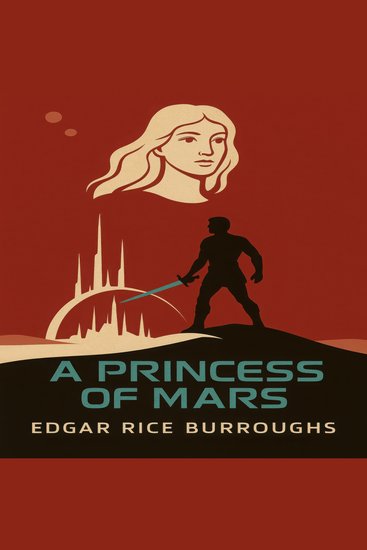
  • A Princess of Mars - cover

    A Princess of Mars

    edgar rice burroughs

    • 0
    • 0
    • 0
    "A Princess of Mars" is a science fantasy novel by American writer Edgar Rice Burroughs. The story follows John Carter, a Confederate veteran of the American Civil War, who goes prospecting in Arizona immediately after the war's end. After striking a rich vein of gold, he runs afoul of the Apaches. While trying to evade capture by hiding in a sacred cave, he is mysteriously transported to Mars, known as "Barsoom" by its inhabitants. 
    On Mars, Carter discovers that he possesses great strength and superhuman agility due to the planet's lower gravity and atmospheric pressure. He soon encounters the Tharks, a nomadic tribe of Green Martians, characterized by their six limbs and green skin. With his strength and martial skills, Carter rises to a prominent position within the tribe and earns the respect and friendship of Tars Tarkas, one of the Thark chieftains. is a science fantasy novel by American writer Edgar Rice Burroughs, the story takes place with John Carter, a Confederate veteran of the American Civil War, goes prospecting in Arizona immediately after the war's end. Having struck a rich vein of gold, he runs afoul of the Apaches. While attempting to evade pursuit by hiding in a sacred cave, he is mysteriously transported to Mars, called "Barsoom" by its inhabitants. Carter finds that he has great strength and superhuman agility in this new environment as a result of its lesser gravity and lower atmospheric pressure. He soon falls in with the Tharks, a nomadic tribe of Green Martians, as the planet's warlike, six-limbed, green-skinned inhabitants are known. Thanks to his strength and martial prowess, Carter rises to a high position in the tribe and earns the respect and eventually the friendship of Tars Tarkas, one of the Thark chieftains.
    Ver livro
  • Haunter of the Dark The (Unabridged) - cover

    Haunter of the Dark The...

    H. P. Lovecraft

    • 0
    • 0
    • 0
    The Haunter of the Dark" is a horror short story by American author H. P. Lovecraft, written between 5-9 November 1935 and published in the December 1936 edition of Weird Tales. It was the last written of the author's known works, and is part of the Cthulhu Mythos. The epigraph to the story is the second stanza of Lovecraft's 1917 poem "Nemesis".
    Ver livro
  • First and Last Things (Unabridged) - cover

    First and Last Things (Unabridged)

    H. G. Wells

    • 0
    • 0
    • 0
    First and Last Things is a 1908 work of philosophy by H. G. Wells setting forth his beliefs in four "books" entitled "Metaphysics," "Of Belief," "Of General Conduct," and "Some Personal Things." Parts of the book were published in the Independent Magazine in July and August 1908. Wells revised the book extensively in 1917, in response to his religious conversion, but later published a further revision in 1929 that restored much of the book to its earlier form. Its main intellectual influences are Darwinism and certain German thinkers Wells had read, such as August Weismann. The pragmatism of William James, who had become a friend of Wells, was also an influence.
    Ver livro
  • The Alchemist - cover

    The Alchemist

    Ben Jonson

    • 0
    • 0
    • 0
    An outbreak of plague in London forces a gentleman, Lovewit, to flee temporarily to the country, leaving his house under the sole charge of his butler, Jeremy. Jeremy uses the opportunity given to him to use the house as the headquarters for fraudulent acts. He transforms himself into 'Captain Face', and enlists the aid of Subtle, a fellow conman and Dol Common, a prostitute. In The Alchemist, Jonson unashamedly satirizes the follies, vanities and vices of mankind, most notably greed-induced credulity. People of all social classes are subject to Jonson's ruthless, satirical wit. He mocks human weakness and gullibility to advertising and to "miracle cures" with the character of Sir Epicure Mammon, who dreams of drinking the elixir of youth and enjoying fantastic sexual conquests. The Alchemist focuses on what happens when one human being seeks advantage over another. In a big city like London, this process of advantage-seeking is rife. The trio of con-artists - Subtle, Face and Dol - are self-deluding small-timers, ultimately undone by the same human weaknesses they exploit in their victims.Benjamin Jonson was an English playwright and poet. Jonson's artistry exerted a lasting influence upon English poetry and stage comedy.
    Ver livro
  • The Witch a la Mode - cover

    The Witch a la Mode

    D H Lawrence

    • 0
    • 0
    • 0
    The hero of this story returns to England to undertake a 'respectable' marriage but is drawn to see the passionate love of his life once more. Their mutual passion attracts and repels the couple in equal measure but the young man pulls away in a literal fire of passion. He escapes from the witch of his desires to the respectability he craves but we wonder if he can be truly happy without the sensual side of his life being satisfied.
    Ver livro
  • The Theogony - cover

    The Theogony

    Hesiod

    • 0
    • 0
    • 0
    The Theogony "the genealogy or birth of the gods" is a poem by Hesiod (8th – 7th century BC) describing the origins and genealogies of the Greek gods, composed c. 730–700 BC. It is written in the Epic dialect of Ancient Greek and contains 1022 lines. 
    Hesiod's Theogony is a large-scale synthesis of a vast variety of local Greek traditions concerning the gods, organized as a narrative that tells how they came to be and how they established permanent control over the cosmos. It is the first known Greek mythical cosmogony. The initial state of the universe is chaos, a dark indefinite void considered a divine primordial condition from which everything else appeared. Theogonies are a part of Greek mythology which embodies the desire to articulate reality as a whole; this universalizing impulse was fundamental for the first later projects of speculative theorizing.
    Hesiod appropriates to himself the authority usually reserved to sacred kingship. The poet declares that it is he, where we might have expected some king instead, upon whom the Muses have bestowed the two gifts of a scepter and an authoritative voice (Hesiod, Theogony 30–3), which are the visible signs of kingship. It is not that this gesture is meant to make Hesiod a king. Rather, the point is that the authority of kingship now belongs to the poetic voice, the voice that is declaiming the Theogony.
    Ver livro
