
Junte-se a nós em uma viagem ao mundo dos livros!
Adicionar este livro à prateleira
Grey
Deixe um novo comentário Default profile 50px
Grey
Assine para ler o livro completo ou leia as primeiras páginas de graça!
All characters reduced
Our Eternity - Exploring the Mysteries of Eternity and Life - cover
LER

Our Eternity - Exploring the Mysteries of Eternity and Life

Maurice Maeterlinck

Tradutor Alexander Teixeira de Mattos

Editora: Good Press

  • 0
  • 0
  • 0

Sinopse

In "Our Eternity," Maurice Maeterlinck delves into the profound themes of existence, mortality, and the human experience, employing a rich, contemplative prose that intertwines philosophical inquiry with poetic expression. The book reflects Maeterlinck's mastery of symbolist literature, inviting readers to ponder the enduring questions of life and the nature of the soul. Through a series of meditative essays, he articulates a vision of eternity that transcends physical death, offering insights rooted in both spirituality and existential thought, an exploration that resonates deeply within the context of the early 20th century's philosophical movements. Maurice Maeterlinck, a Belgian playwright and essayist who received the Nobel Prize in Literature in 1911, was deeply influenced by his fascination with the metaphysical aspects of life. His earlier works, often steeped in mysticism and nature, laid the groundwork for the contemplative and introspective tone of "Our Eternity." Maeterlinck's own philosophical musings and experiences shaped his exploration of the delicate balance between life and death, compelling him to articulate a cohesive vision of existence that goes beyond temporal boundaries. This book is recommended for readers who seek to engage with profound philosophical reflections on life and immortality. It offers a thought-provoking perspective that challenges conventional understandings of existence, making it a significant contribution to the discourse on eternity. Maeterlinck's lyrical style and his deep probing of the human condition make this work not only a literary achievement but also a source of spiritual insight.
Disponível desde: 25/10/2023.
Comprimento de impressão: 89 páginas.

Outros livros que poderiam interessá-lo

  • How the New Deal Built Florida Tourism - The Civilian Conservation Corps and State Parks - cover

    How the New Deal Built Florida...

    David J. Nelson

    • 0
    • 0
    • 0
    Countering the conventional narrative that Florida's tourism industry suffered during the Great Depression, this book shows that the 1930s were the starting point for much that characterizes modern Florida's tourism. David Nelson argues that state and federal government programs designed to reboot the economy during this decade are crucial to understanding the state today. 


    Nelson examines the impact of three connected initiatives—the federal New Deal, its Civilian Conservation Corps program (CCC), and the CCC's creation of the Florida Park Service. He reveals that the CCC designed state parks to reinforce the popular image of Florida as a tropical, exotic, and safe paradise. The CCC often removed native flora and fauna, introduced exotic species, and created artificial landscapes that were then presented as natural. Nelson discusses how Florida business leaders benefitted from federally funded development and the ways residents and business owners rejected or supported the commercialization and shifting cultural identity of their state. 


    A detailed look at a unique era in which the state government sponsored the tourism industry, helped commodify natural resources, and boosted mythical ideas of the "Real Florida" that endure today, this book makes the case that the creation of the Florida Park Service is the story of modern Florida.
    Ver livro
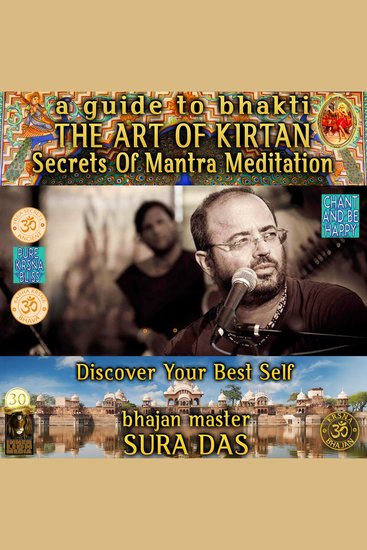
  • The Art Of Kirtan A Guide To Bhakti Secret Of Mantra Meditation - cover

    The Art Of Kirtan A Guide To...

    Bhajan Master Sura Das

    • 0
    • 0
    • 0
    For most of his life Sura Das was a dedicated devotee of Sri Krishna and his eternal consort Radharani. An early and distinguished disciple of His Divine Grace A.C. Bhaktivedanta Swami Prabhupada Sura lived a life of selfless service to humanity through the distribution of his master's transcendental books and his own heartfelt self-realized kirtan. A fixture at ISKCON Los Angeles for many years Sura Das was a friend and inspiration to everyone he met. By entering into the purport and flow of these eternal songs to the Supreme one can easily transverse the shackles of time and space to their take shelter in our original sweet home in the self-effulgent spiritual sky. This rare audiobook treasury is an offering in sacred words and timeless by this great, unmatched devotee who lives now eternally with the Supreme Lord in his transcendental abode. His Grace Sura Das Maharaj Ki Jai! 
    A must for all yogis, seekers, devotees and lovers of truth and light.
    Ver livro
  • Arawak Empire - The Seafarers and Early Inhabitants of the Caribbean - cover

    Arawak Empire - The Seafarers...

    Rolf Hedger

    • 0
    • 0
    • 0
    The Arawak people trace their origins to the vast and resource-rich region of the Orinoco River basin in present-day Venezuela. As part of the larger Arawakan language family, they were one of the many groups that gradually expanded across South America and into the Caribbean. Their migration was driven by a combination of environmental factors, population growth, and the search for fertile land and abundant resources. Over generations, they navigated rivers, coastlines, and open waters, eventually settling in the islands of the Greater and Lesser Antilles, where they established thriving communities. 
    Archaeological evidence suggests that the Arawak migration into the Caribbean began around 2000 BCE, with the earliest settlements appearing in the Guianas and Trinidad before spreading to islands such as Hispaniola, Cuba, and Puerto Rico. The seafaring skills of the Arawak were instrumental in their expansion, allowing them to cross large distances using well-crafted dugout canoes. These vessels, some of which could carry dozens of people, enabled them to transport goods, establish trade networks, and maintain cultural connections between islands. 
    The Arawak developed a rich cultural identity deeply connected to their environment. They were skilled agriculturalists, cultivating staple crops such as cassava, maize, sweet potatoes, and fruits like guava and pineapple. Their farming methods, including slash-and-burn techniques and mound cultivation, allowed them to sustain large populations and support the growth of permanent villages. In addition to agriculture, they engaged in fishing and hunting, making use of the diverse ecosystems found throughout the Caribbean.
    Ver livro
  • The Inspection House - An Impertinent Field Guide to Modern Surveillance - cover

    The Inspection House - An...

    Emily Horne, Tim Maly

    • 0
    • 0
    • 0
    In 1787, British philosopher and social reformer Jeremy Bentham conceived of the panopticon, a ring of cells observed by a central watchtower, as a labor-saving device for those in authority. While Bentham's design was ostensibly for a prison, he believed that any number of places that require supervision—factories, poorhouses, hospitals, and schools—would benefit from such a design. The French philosopher Michel Foucault took Bentham at his word. In his groundbreaking 1975 study, Discipline and Punish, the panopticon became a metaphor to describe the creeping effects of personalized surveillance as a means for ever-finer mechanisms of control.
       
    Forty years later, the available tools of scrutiny, supervision, and discipline are far more capable and insidious than Foucault dreamed, and yet less effective than Bentham hoped. Shopping malls, container ports, terrorist holding cells, and social networks all bristle with cameras, sensors, and trackers. But, crucially, they are also rife with resistance and prime opportunities for revolution. The Inspection House is a tour through several of these sites—from Guantánamo Bay to the Occupy Oakland camp and the authors' own mobile devices – providing a stark, vivid portrait of our contemporary surveillance state and its opponents.
    Ver livro
  • Summary: Psycho-Cybernetics - by Maxwell Maltz: Key Takeaways Summary & Analysis - cover

    Summary: Psycho-Cybernetics - by...

    Brooks Bryant

    • 0
    • 0
    • 0
    Disclaimer: This is NOT the official book. This is a Summary & it does NOT Accompany the official book. 
    Maltz was the pioneer in understanding how our self-image (a term he popularized) significantly governs our ability to reach—or fail to reach—our goals. He formulated techniques to refine and control our self-image—including visualization, mental rehearsal, relaxation—inspiring countless motivational experts, sports psychologists, and self-help practitioners over the past five decades. 
    Our summary of "Psycho-Cybernetics" streamlines Maltz's timeless wisdom—rooted in solid science—into an accessible format. It presents actionable strategies for thinking and acting that yield measurable results. This isn't just a book—it's a life compass steering you towards the port of personal fulfillment and peace of mind.
    Ver livro
  • The Politics of Obedience - A Discourse on Voluntary Servitude - cover

    The Politics of Obedience - A...

    Etienne de la Botie

    • 0
    • 0
    • 0
    In this seminal work of political philosophy, Boetie asks one of the most obvious questions of political theory: why is it that a minority of rulers can remain in power over a majority of subjects who pay all the taxes? 
    The answer might be quite surprising to us all. The conclusion is that the people tend to enslave themselves, to let themselves be governed by tyrants. 
    Liberty is the natural condition of the people. Servitude, however, is fostered when people are raised in subjection. People are trained to adore rulers. While freedom is forgotten by many, there are always some who will never submit. 
    What is the answer then? 
    The author brilliantly and obviously outlines these points in the pages that follow in a way that is illuminating and also simple. It is we who enslave ourselves at the beck and call of 'authority'. Enjoy this classic work that roots sovereignty into philosophy and demonstrates how simply the tides can change.
    Ver livro