¡Acompáñanos a viajar por el mundo de los libros!
Añadir este libro a la estantería
Grey
Escribe un nuevo comentario Default profile 50px
Grey
Suscríbete para leer el libro completo o lee las primeras páginas gratis.
All characters reduced
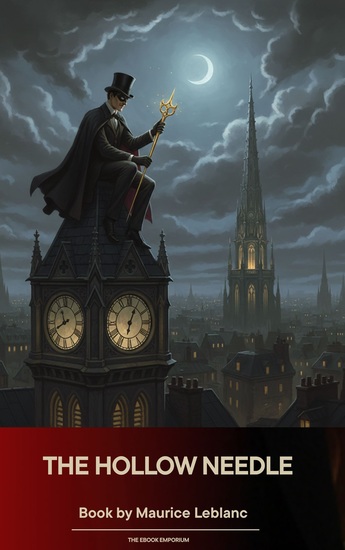
The Hollow Needle - cover

The Hollow Needle

Maurice Leblanc

Traductor Teixeira Mattos de Alexander

Editorial: The Ebook Emporium

  • 1
  • 0
  • 0

Sinopsis

"A secret so powerful it could change the fate of a nation—and only one man can find it."

The story begins with a daring robbery at the Château d'Ambrumésy, but the real mystery starts when a young, brilliant student named Isidore Beautrelet challenges the great Arsène Lupin. While the police are baffled, Beautrelet discovers a cryptic document mentioning "The Hollow Needle." This leads to an epic intellectual duel across France, culminating at the breathtaking cliffs of Étretat. Here, Lupin isn't just seeking gold; he has found the legendary hiding place of the French Monarchy's vast treasures—a secret fortress hidden inside a natural wonder.

A Rivalry for the Ages: In Beautrelet, Lupin finally finds a youthful mirror of himself. The boy's relentless logic forces Lupin to play his most sophisticated game yet. This novel transitions from a standard "whodunit" into a grand historical adventure, blending myth, architecture, and high-stakes deduction.

The Legend of the French Crown: Leblanc weaves real French history into the narrative, suggesting that figures like Caesar, Charlemagne, and Louis XIV all knew the secret of the Needle. Lupin becomes more than a burglar here; he becomes the "King of the World," the custodian of a legacy that dates back over a thousand years.

A Heartbreaking Climax: While filled with Lupin's trademark wit and daring escapes, The Hollow Needle is also known for its emotional depth. It features one of the most poignant moments in the series, revealing a rare glimpse into Lupin's heart and the price he pays for his life of shadows.

Unlock the greatest secret in history. Purchase "The Hollow Needle" today.
Disponible desde: 15/01/2026.
Longitud de impresión: 240 páginas.
Otros libros que te pueden interesar

  • A Lost Lady of Old Years - cover

    A Lost Lady of Old Years

    John Buchan

    • 0
    • 0
    • 0
    A Lost Lady of Old Years by John Buchan is a historical novel blending romance, adventure, and moral introspection. Set in 17th-century Scotland, it follows Francis Birkenshaw, a young fugitive fleeing unjust accusations, who encounters the enigmatic Lady Marjorie Dalkeith. Once a celebrated beauty now fallen into obscurity, she becomes both ally and mentor as Francis navigates intrigue and danger during the Covenanters’ rebellion. Buchan explores themes of loyalty, redemption, and the passage of time, contrasting youthful idealism with the wisdom of age. The “lost lady” symbolizes a fading era, her story interwoven with Francis’s quest for justice and self-discovery. Rich in period detail and suspense, the novel captures the tension of a divided Scotland while reflecting on human resilience and the enduring power of dignity. A timeless tale of courage and transformation.
    Ver libro
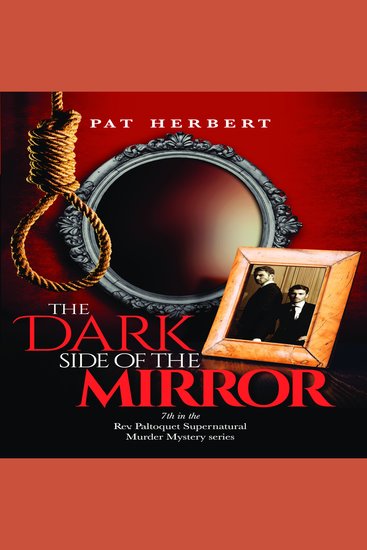
  • Dark Side of the Mirror The (Book 7 in the Reverend Paltoquet supernatural mystery series) The Dark Side of the Mirror (Book 7 in the Reverend Paltoquet supernatural mystery series) - cover

    Dark Side of the Mirror The...

    Pat Herbert

    • 0
    • 0
    • 0
    Twins sometimes run in families; in the Fentimans’ case, they positively stampede.In 1937, Robert Fentiman is hanged for the murder of a barmaid. Twenty years later his ghost claims his innocence, and Rev Bernard Paltoquet is called on to help clear his name by the dead man’s son, Carl.As Bernard and his pal Robbie begin their investigations, by a cruel twist of fate, another barmaid is murdered, who turns out to be the daughter of the first barmaid. And, by another twist of fate, Carl Fentiman is the main suspect.A professional medium, with an unconventional use for a crystal ball, is called in to help solve both crimes, but she is as baffled as Bernard and Robbie. Meanwhile Bernard’s housekeeper, Mrs Aitch, has deserted the vicarage for a mysterious suitor….
    Ver libro
  • Her Private War - cover

    Her Private War

    David Laws

    • 0
    • 0
    • 0
    “I just loved this book. Full of surprises and twists and turns!” —Amazon reviewer, five starsA woman of humble origins fights to overcome every obstacle to pilot a plane in World War I Britain, in a novel by the author of The Fuhrer’s Orphans . . . Being female means that Charlotte Dovedale’s dreams are likely out of reach. Her mother is eager to support Charlotte’s brother in his quest to join the newly formed Royal Flying Corps, but Charlotte is left to channel her energy into the suffragette movement. When she meets upper-class Scott Fanshawe, though, he opens a door for her: teaching her to fly. It soon becomes clear that Charlotte has not only the skill, but the bravery required for aviation. However, when she finally earns her pilot’s license, the Great War breaks out and threatens to keep her grounded. It will take all of Charlotte’s daring and determination to succeed and soar—in a risky adventure that will put her face-to-face with the enemy . . .
    Ver libro
  • The Valley of Fear - A Sherlock Holmes Novel - cover

    The Valley of Fear - A Sherlock...

    Sir Arthur Conan Doyle

    • 0
    • 0
    • 0
    The Valley of Fear is the fourth and final Sherlock Holmes novel by Sir Arthur Conan Doyle. It is loosely based on the Molly Maguires and Pinkerton agent James McParland. The story was first published in the Strand Magazine between September 1914 and May 1915. The first book edition was copyrighted in 1914, and it was first published by George H. Doran Company in New York on 27 February 1915, and illustrated by Arthur I. Keller.
    The novel starts with Sherlock Holmes receiving a cipher message from Fred Porlock, a pseudonymous agent of Professor Moriarty. After Porlock sends the message, however, he changes his mind for fear of Moriarty's discovering that he is a traitor. He decides not to send the key to the cipher, but he sends Holmes a note telling of this decision.
    Ver libro
  • The Final Problem - Sherlock Holmes - cover

    The Final Problem - Sherlock Holmes

    Sir Arthur Conan Doyle

    • 0
    • 0
    • 0
    "The Final Problem" is a short story by Sir Arthur Conan Doyle featuring his detective character Sherlock Holmes. It was first published in Strand Magazine under the title "The Adventure of the Final Problem" in December 1893. It appears in book form as part of the collection The Memoirs of Sherlock Holmes. This story, set in 1891, introduced Holmes's archenemy, the criminal mastermind Professor James Moriarty. Conan Doyle later ranked "The Final Problem" fourth on his personal list of the twelve best Holmes stories.
    Holmes arrives at Dr. John Watson's residence one evening in a somewhat agitated state and with grazed and bleeding knuckles. Much to Watson's surprise, he had apparently escaped three separate murder attempts that day after a visit from Professor Moriarty, who warned Holmes to withdraw from his pursuit of justice against him to avoid any regrettable outcome. First, just as he was turning a street corner, a cab suddenly rushed towards him and Holmes just managed to leap out of the way in time. Second, while Holmes was walking along the street, a brick fell from the roof of a house, just missing the detective. He then called the police to search the whole area but could not prove that it was anything other than an accident. Finally, on his way to Watson's house, he was attacked by a thug armed with a cosh. Holmes managed to overcome his assailant and handed him to the police but admitted that there was virtually no hope of proving that the man was in the employ of the criminal mastermind.
    Ver libro
  • The Bundle of Letters - A man discovers something in his wifes closet driving him beyond the edge - cover

    The Bundle of Letters - A man...

    Mór Jókai

    • 0
    • 0
    • 0
    Móric Jókay de Ásva was born on the 18th February 1825 in Komárom, then in the Kingdom of Hungary but now part of Slovakia.  
     
    Due to his timid and delicate constitution he was educated at home until the age of 10 and then sent away to complete his studies at the Calvinist college at Pápa. 
     
    At 12 his father died, and he was pushed to honour him by replicating his career as a lawyer.  He studied hard and completed the curriculum at Kecskemét and Pest.  He won his first case as a newly graduated lawyer. 
     
    But he found a career in law to be dull and, encouraged by the positive reaction to his first play, he moved to Pest in 1845.  There he published, first in a newspaper, and then as a novel ‘Hétköznapok’ (‘Working Days’).  It was acclaimed as a masterpiece.  To add to his promise he was appointed as the editor of Életképek, the leading Hungarian journal. 
     
    In 1848 he married the actress, Róza Laborfalvi.  That same year Europe was awash with revolutions and Jókai, a moderate Liberal, enthusiastically supported the nationalist cause and its decision to depose the Habsburg dynasty.  The attempt failed. 
     
    He was now classed as a political suspect and threw himself into his literary career, writing dozens of novels, many of them masterpieces, stories, essays and the like.  In total he wrote several hundred volumes, many of them in the local Magyar language which helped arrest its declining relevance in society.  
     
    By 1867 the political temperature had cooled, and he entered parliament as well as becoming the editor a government journal he had founded.   His skills were much admired and helped the government navigate through several difficult matters.   
     
    His wife died in 1886 but although grief-stricken he continued to work and to write.  
     
    In 1897 the king appointed him a member of the upper house.  Two years later he caused a minor scandal by marrying the young 20-year-old actress, Bella Nagy.  At the time he was 74. 
     
    Mór Jókai died in Budapest on the 5th May 1904.  He was 79.
    Ver libro