Junte-se a nós em uma viagem ao mundo dos livros!
Adicionar este livro à prateleira
Grey
Deixe um novo comentário Default profile 50px
Grey
Assine para ler o livro completo ou leia as primeiras páginas de graça!
All characters reduced
The Frontier - cover
LER

The Frontier

Maurice Leblanc

Editora: Pharos Books

  • 0
  • 0
  • 0

Sinopse

The Frontier by Maurice Leblanc is an adventure and mystery story exploring danger, exploration, secrets, and unexpected encounters. Leblanc creates a narrative in which characters must navigate uncertain circumstances while attempting to uncover hidden truths. The story combines suspense with action and imaginative elements, keeping readers engaged through discoveries and dramatic developments. Themes of courage, curiosity, identity, and survival influence the characters as they face challenges. It is a suitable choice for readers who enjoy classic mystery fiction, adventure, suspense, and stories set against unfamiliar or dangerous surroundings. Leblanc's distinctive style provides an entertaining combination of intrigue, action, and mystery.
Disponível desde: 01/11/2026.
Comprimento de impressão: 207 páginas.

Outros livros que poderiam interessá-lo

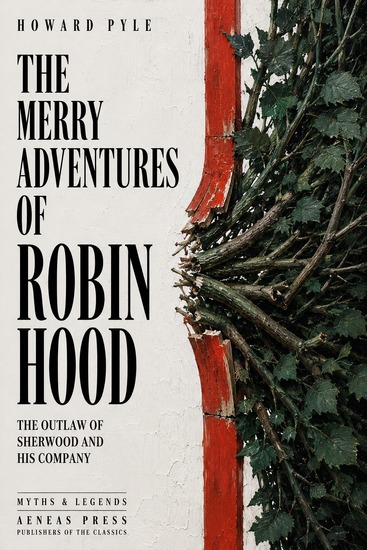
  • The Merry Adventures of Robin Hood - The Outlaw of Sherwood and His Company - cover

    The Merry Adventures of Robin...

    Howard Pyle

    • 0
    • 0
    • 0
    Complete and unabridged, with 54 full-page plates by Richard Ansdell, John Gilbert and Edwin Landseer. Sherwood as a place where the year is always early summer and the worst that happens to anybody is a broken head and a fine dinner. Pyle wrote and illustrated it at twenty-nine, going back to the old ballads and stitching them into one story; every later Robin Hood, on the page or the screen, is working from his version rather than the originals. Fifty-four plates by painters including Henry Bright and Alfred Vickers carry the greenwood's open-air world into the book, from Windsor Castle to the banks of Arrochar.
    Ver livro
  • Karl Ludwig Sand - cover

    Karl Ludwig Sand

    Alexandre Dumas

    • 0
    • 0
    • 0
    "Karl Ludwig Sand" by Alexandre Dumas is a gripping tale based on the true story of a young idealist entangled in political conspiracy. Karl, a fervent nationalist and student, becomes consumed by his desire to rid Germany of perceived tyranny. His obsession leads him to assassinate August von Kotzebue, a conservative writer, believing it will spark revolutionary change. Dumas delves into Karl’s ideological fervor, moral dilemmas, and the consequences of his actions, exploring themes of justice, fanaticism, and societal upheaval. Set against the backdrop of early 19th-century Europe, the novel captures the tension between youthful idealism and harsh reality. A thought-provoking blend of history and drama, it reflects on the cost of extremism and the complexities of human conviction.
    Ver livro
  • Philomenia or Love in a Maze - From their pens to your ears genius in every story - cover

    Philomenia or Love in a Maze -...

    Eliza Heywoode

    • 0
    • 0
    • 0
    The bookshelves of British literature are incredible collections that have gathered together centuries of very talented authors.  From these Isles their fame spread and whilst among their number many are now forgotten or neglected their talents endure.  Among them is Eliza Heywoode, a provocative talent who was decades, even centuries ahead of other talents.
    Ver livro
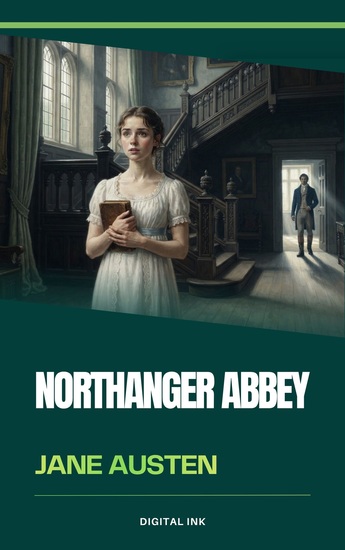
  • Northanger Abbey - cover

    Northanger Abbey

    Jane Austen

    • 0
    • 0
    • 0
    Sometimes the greatest mysteries begin in the imagination.
    
    In Northanger Abbey, Jane Austen introduces Catherine Morland, a young woman whose love of Gothic novels shapes the way she interprets the world around her. When she enters the fascinating social circles of Bath and later visits the mysterious Northanger Abbey, her imagination leads her into amusing misunderstandings and unexpected discoveries.
    
    Blending romance, humor, and sharp social observation, Austen playfully explores the influence of popular fiction, the challenges of growing up, and the difference between fantasy and reality.
    
    With memorable characters, witty dialogue, and an affectionate parody of Gothic storytelling, this charming novel offers a delightful reading experience.
    
    Perfect for fans of classic romance, English literature, and intelligent social comedy. Discover Jane Austen's entertaining masterpiece today!
    Ver livro
  • The Theogony - cover

    The Theogony

    Hesiod

    • 0
    • 0
    • 0
    The Theogony "the genealogy or birth of the gods" is a poem by Hesiod (8th – 7th century BC) describing the origins and genealogies of the Greek gods, composed c. 730–700 BC. It is written in the Epic dialect of Ancient Greek and contains 1022 lines. 
    Hesiod's Theogony is a large-scale synthesis of a vast variety of local Greek traditions concerning the gods, organized as a narrative that tells how they came to be and how they established permanent control over the cosmos. It is the first known Greek mythical cosmogony. The initial state of the universe is chaos, a dark indefinite void considered a divine primordial condition from which everything else appeared. Theogonies are a part of Greek mythology which embodies the desire to articulate reality as a whole; this universalizing impulse was fundamental for the first later projects of speculative theorizing.
    Hesiod appropriates to himself the authority usually reserved to sacred kingship. The poet declares that it is he, where we might have expected some king instead, upon whom the Muses have bestowed the two gifts of a scepter and an authoritative voice (Hesiod, Theogony 30–3), which are the visible signs of kingship. It is not that this gesture is meant to make Hesiod a king. Rather, the point is that the authority of kingship now belongs to the poetic voice, the voice that is declaiming the Theogony.
    Ver livro
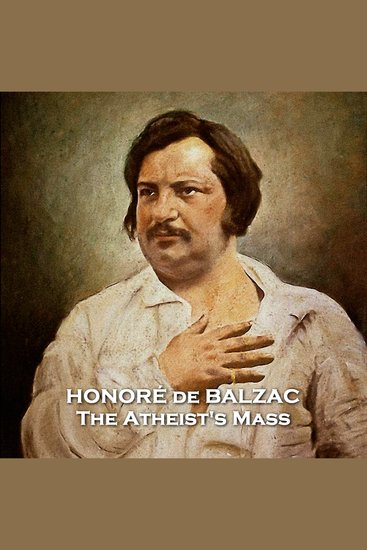
  • The Athiest's Mass - From their pens to your ears genius in every story - cover

    The Athiest's Mass - From their...

    Honoré de Balzac

    • 0
    • 0
    • 0
    Honoré de Balzac was born on the 20th May, 1799 in the French city of Tours into an upper middle class family.  
    At birth Balzac was wet-nursed and often then schooled away from home by parents who seemed remote.  So difficult was life that at 15 he attempted suicide. The family’s intention was for him to have a career in law but Balzac preferred literature.  An avid reader, he began writing but his early attempts showed little promise.  
    He thereafter settled in Paris and began to publish anonymously across political, philosophical, and historical novels. 
    In 1825, Balzac purchased a printing house.  He was soon bankrupt and forced to return to writing in order to reduce his debts.  But his literary fortunes had changed, and his writing was now to achieve considerable success.  He was accepted among the city’s literary élites and its salons and would play an important role in establishing the copyright law in France.  
    Balzac often worked on more than one project at a time and in his magnus opus ‘The Human Comedy’ all types of texts were collected to offer a rare narrative of different classes and social stereotypes of society.  For many Balzac is considered the father of French realism, yet his works also cover philosophical and psychological questions.  His writing was a fundamental source of inspiration for many distinguished and later writers such as Flaubert, Zola and Proust.  
    Balzac also tried his hand at magazine publication with ‘La Chronique de Paris’ and ‘La Revue Parisienne.’  Although he was partnered with others such as Victor Hugo, it was another complete financial failure.  
    As a committed Catholic, Balzac’s stories also dealt with themes of mysticism, esotericism and spirituality, as well as universality and humanism.  
    In politics, he was a staunch defender of the French Crown but unlike his contemporaries he was not an implacable enemy of the republicans.  He often presented disagreements between royalists and republicans as a tolerable difference in political opinion.  
    Despite many relationships Balzac married only towards the end of his life and it was in 1833 that he met the Polish Countess Hanska, who only became his wife 17 years later after an extensive relationship by correspondence and, by then, his health was ruinously bad.  
    Honoré de Balzac died on 18th August 1850 in Paris.  He was 51.
    Ver livro