¡Acompáñanos a viajar por el mundo de los libros!
Añadir este libro a la estantería
Grey
Escribe un nuevo comentario Default profile 50px
Grey
Suscríbete para leer el libro completo o lee las primeras páginas gratis.
All characters reduced
Lupin Collection - Enriched edition The Adventures of Gentleman Thief (8 Novels & 20 Novellas in One Edition) - cover

Lupin Collection - Enriched edition The Adventures of Gentleman Thief (8 Novels & 20 Novellas in One Edition)

Maurice Leblanc

Traductor Alexander Teixeira de Mattos, Edgar Jepson

Editorial: DigiCat

  • 0
  • 0
  • 0

Sinopsis

The "Lupin Collection" by Maurice Leblanc is a masterful anthology of tales featuring the iconic gentleman thief, Arsène Lupin, who debuts in a world of charm, wit, and intrigue. Leblanc's literary style weaves elements of the fantastique with sharp dialogue and clever plot twists that define the early 20th-century French detective genre. This collection showcases Lupin's escapades, embodying the spirit of adventure and intellectual challenge, while also reflecting contemporary societal themes of class disparity and moral ambiguity, making it a crucial text in understanding the evolution of detective fiction. Maurice Leblanc, a prolific writer influenced by the fin-de-siècle Parisian milieu, created Lupin as a foil to Conan Doyle's Sherlock Holmes. His experiences as a journalist and his keen observation of the societal shifts in post-Edwardian France greatly shaped his narratives. The character of Lupin is not only a captivating rogue but also an embodiment of libertarian ideals, counteracting the rigid norms of society, which were particularly evocative during Leblanc's lifetime. Readers who relish thrilling mysteries laced with humor and complexity will find the "Lupin Collection" a delightful exploration of criminal genius and cunning. The stories invite both intrigue and reflection on justice, making them relevant well into the modern era.

In this enriched edition, we have carefully created added value for your reading experience:
- A comprehensive Introduction outlines these selected works' unifying features, themes, or stylistic evolutions.
- The Author Biography highlights personal milestones and literary influences that shape the entire body of writing.
- A Historical Context section situates the works in their broader era—social currents, cultural trends, and key events that underpin their creation.
- A concise Synopsis (Selection) offers an accessible overview of the included texts, helping readers navigate plotlines and main ideas without revealing critical twists.
- A unified Analysis examines recurring motifs and stylistic hallmarks across the collection, tying the stories together while spotlighting the different work's strengths.
- Reflection questions inspire deeper contemplation of the author's overarching message, inviting readers to draw connections among different texts and relate them to modern contexts.
- Lastly, our hand‐picked Memorable Quotes distill pivotal lines and turning points, serving as touchstones for the collection's central themes.
Disponible desde: 17/05/2022.
Longitud de impresión: 2223 páginas.
Otros libros que te pueden interesar

  • The Happy Prince and other Tales - cover

    The Happy Prince and other Tales

    Oscar Wilde

    • 0
    • 0
    • 0
    A collection of short stories by Oscar Wilde first published in May 1888. It contains the five stories: "The Happy Prince," "The Nightingale and the Rose," "The Selfish Giant," "The Devoted Friend," and "The Remarkable Rocket."  
    Narrated by Michael Ward
    Ver libro
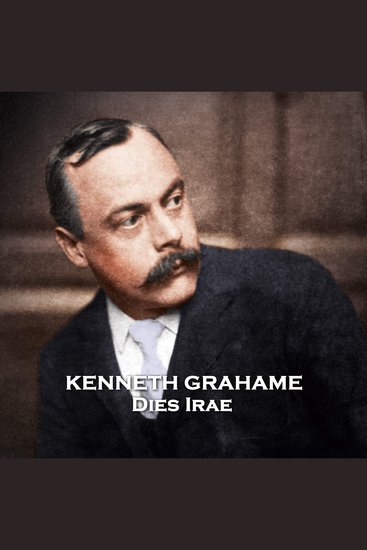
  • Dies Irae - From their pens to your ears genius in every story - cover

    Dies Irae - From their pens to...

    Kenneth Grahame

    • 0
    • 0
    • 0
    Kenneth Grahame was born on 8th March 1859 in Edinburgh. 
    At age 5 his mother succumbed to puerperal fever.  His father, who had a drinking problem, now sent his 4 children to live with their grandmother at her large house in Cookham, Berkshire. Here the children lived in large open grounds next to the river.  These early experiences would in later years, be retold in his writing through a myriad of characters. 
    Grahame loved being a pupil at St Edward's School, Oxford and wanted to enroll at the university there but his guardian demurred on account of the cost. 
    Instead, a banking career was chosen for him, starting in 1879 at the Bank of England, where he rose steadily to the rank of its Secretary until retiring, with a pension, in 1908 due to ill health. 
    Alongside his commercial career Grahame had written and published various stories and essays in several periodicals. Some were anthologized as ‘Pagan Papers’ in 1893, and two years later ‘The Golden Age’ and later still ‘Dream Days’ and its masterpiece ‘The Reluctant Dragon’ became part of many home libraries.  His ability to view life through the lens of a young and curious child was superb, enabling the reader to easily identify with the character.   
    Grahame married Elspeth Thomson in 1899 and they had one child; Alastair, born semi-blind and plagued by health problems.  In a heart-rending tragedy he would later take his own life whilst attending Oxford University in 1920.   
    In 1908 Grahame reworked many of the bedtime stories he had fashioned for his son into the enduring favourite; ‘The Wind in the Willows’, describing the heart-warming adventures of Mr Toad and his friends.   
    Kenneth Grahame died in Pangbourne, Berkshire, on 6th July 1932.
    Ver libro
  • What the Goodman Does is Always Right - cover

    What the Goodman Does is Always...

    H. C. Andersen

    • 0
    • 0
    • 0
    Short story by H. Ch. Andersen about a charming couple. As with most of the works by the author, it is fit for both children and adults.
    Ver libro
  • Northanger Abbey - cover

    Northanger Abbey

    Jane Austen

    • 0
    • 0
    • 0
    "Northanger Abbey" is a satirical novel that tells the story of Catherine Morland, a young, naïve girl who is taken to Bath by family friends for a season of socializing and romance. Catherine is a great reader of gothic novels, which often lead her to imagine plots and intrigues where there are none. At Bath, Catherine meets the charming Henry Tilney and his sister Eleanor, who introduce her to their family estate, Northanger Abbey. Catherine becomes infatuated with Henry and begins to imagine that his family is hiding secrets and mysteries, much like the gothic novels she loves to read. She begins to explore the Abbey with this in mind, but her fantasies soon come crashing down when she discovers that there is no hidden intrigue at Northanger Abbey. Read in English, unabridged.
    Ver libro
  • Tiger! Tiger! - The First Jungle Book - cover

    Tiger! Tiger! - The First Jungle...

    Rudyard Kipling

    • 0
    • 0
    • 0
    "Tiger! Tiger!" - a story by Rudyard Kipling. A direct sequel to Mowgli's Brothers, it was published in magazines in 1893–1894 and then appeared as the third story in The First Jungle Book after "Kaa's Hunting." 
    Tiger! Tiger! - Shere Khan hunt Mowgli. Mowgli returns to the human village and is adopted by Messua and her husband, who believe him to be their long-lost son. Mowgli leads the village boys who herd the village's buffaloes. Shere Khan comes to hunt Mowgli, but he is warned by Gray Brother wolf, and with Akela they find Shere Khan asleep, and stampede the buffaloes to trample Shere Khan to death. Mowgli leaves the village, and goes back to hunt with the wolves until he becomes a man.
    Ver libro
  • Alice in Blunderland - cover

    Alice in Blunderland

    John Kendrick Bangs

    • 0
    • 0
    • 0
    ""Alice in Blunderland: An Iridescent Dream" is a novel by John Kendrick Bangs, first published in 1907 by Doubleday, Page & Co. of New York. Illustrated by Albert Levering, this work serves as a political parody of Lewis Carroll's famous Alice books: "Alice's Adventures in Wonderland" (1865) and "Through the Looking-Glass" (1871).    In this whimsical tale, Alice finds herself in "Blunderland", also humorously referred to as "Municipal Ownership Country". Here, she encounters familiar characters from Wonderland, including the dormouse, the Mad Hatter, and the Cheshire Cat. However, instead of whimsical adventures, Alice grapples with issues critical of collectivism, taxation, corporate greed, and corruption.    The novel playfully transports readers to a satirical realm where absurdity meets political commentary. "
    Ver libro