Junte-se a nós em uma viagem ao mundo dos livros!
Adicionar este livro à prateleira
Grey
Deixe um novo comentário Default profile 50px
Grey
Assine para ler o livro completo ou leia as primeiras páginas de graça!
All characters reduced
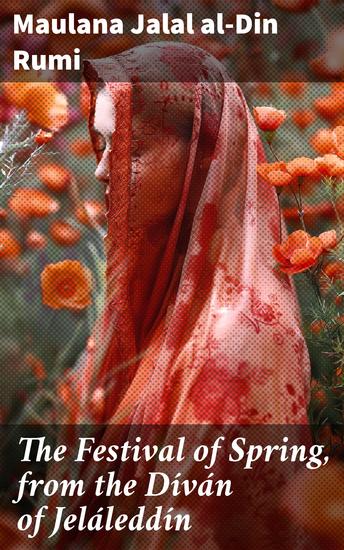
The Festival of Spring from the Díván of Jeláleddín - Celebrating Nature Renewal and Spiritual Growth through Rumi's Divine Poetry - cover
LER

The Festival of Spring from the Díván of Jeláleddín - Celebrating Nature Renewal and Spiritual Growth through Rumi's Divine Poetry

Maulana Jalal al-Din Rumi

Editora: Good Press

  • 0
  • 0
  • 0

Sinopse

In "The Festival of Spring, from the D√≠v√°n of Jel√°ledd√≠n," Maulana Jalal al-Din Rumi invites readers into a vibrant tapestry of poetic expression, celebrating the rebirth of nature and the spiritual awakening that accompanies it. This collection, infused with exquisite lyrical beauty, exemplifies Rumi'Äôs unique ability to intertwine the mystical with the earthly, presenting themes of love, divine union, and existential reflection. Written in Persian during the 13th century, Rumi'Äôs work reveals the influence of Sufism and the Persian literary tradition, as it employs rich metaphors and rhythmic cadences that resonate across cultures and time periods. Rumi, a 13th-century Persian poet and Sufi mystic, penned these verses during a transformative period in his life, marked by profound spiritual exploration and a deep yearning for connection with the divine. His encounters with various philosophical currents and his personal experiences of love and loss shaped his literary voice, allowing him to resonate with both the seekers of truth and lovers of beauty. His teachings emphasize the universality of the human experience, bridging gaps between cultural and religious divides. "The Festival of Spring" is an essential read for both scholars and casual readers alike, offering profound insights into the nature of love and the importance of spiritual awakening. Rumi'Äôs timeless wisdom invites us to embrace life and its cyclical rhythms, making this collection a source of inspiration and reflection. Delve into Rumi'Äôs enchanting world, and let his words stir your soul towards the beauty of existence.
Disponível desde: 09/11/2023.
Comprimento de impressão: 55 páginas.

Outros livros que poderiam interessá-lo

  • Selected Poems for Children by Robert Louis Stevenson Lewis Caroll Edward Lear and others - cover

    Selected Poems for Children by...

    Robert Louis Stevenson, Edward...

    • 0
    • 0
    • 0
    Delight in the whimsical world of childhood through the writing of some of the most beloved poets in English literature. Selected Poems for Children brings together works by Robert Louis Stevenson, Lewis Carroll, Edward Lear, Hilaire Belloc, and Robert Browning—poems that brim with imagination, humour, and unforgettable characters. 
    In this charming collection, Simon Hester's warm, engaging narration and evocative music bring to life timeless classics such as Stevenson's A Child's Garden of Verse, Lear's eccentric Nonsense Poems, Carroll's fantastical Jabberwocky, and the misadventures of The Hunting of the Snark. You’ll also enjoy Belloc's somewhat macabre Cautionary Tales and the tragic story of The Pied Piper of Hamelin—all narrated with the perfect blend of joy and intrigue that children (and the young at heart) will treasure.
    Ver livro
  • The Poetry of Dante Gabriel Rossetti - Renowned poet and painter who founded the Pre-Raphaelite Brotherhood and influenced the Aesthetic movement - cover

    The Poetry of Dante Gabriel...

    Dante Gabriel Rossetti

    • 0
    • 0
    • 0
    Dante Gabriel Rossetti was born on May 12th 1828 in London, England. 
    As a youth he was "self-possessed, articulate, passionate and charismatic" but also "ardent, poetic and feckless". Like his siblings, including famed poet Christina Georgina Rossetti, he most wished to be a poet but had a keen eye as a painter, having shown a great interest in Medieval Italian art.  
    Together with William Holman Hunt and John Everett Millais they developed and founded the Pre-Raphaelite Brotherhood. It’s mission; to reform English art and return to the detail, intense colours, and complex compositions of Quattrocento Italian and Flemish art.  
    The brotherhood's magazine, The Germ, was first published in 1850 with Rossetti contributing a poem, "The Blessed Damozel", and a story about a fictional Italian artist inspired by a vision of a woman who bids him combine the human and the divine in his art. 
    Rossetti first met his future wife, Elizabeth Siddal, a model, in 1849 who was later sitting for him and involved in an intense relationship.  By 1852 they withdrew from society; totally absorbed in each other. The lovers nicknamed each other; "Guggums" and "Dove".   
    In 1861, Rossetti, together with William Morris, became a founding partner in the decorative arts firm, Morris, Marshall, Faulkner & Co. Rossetti contributed designs for stained glass and other decorative objects. 
    Meanwhile his marriage to Lizzie was troubled.  The terrible hurt of Rossetti’s affairs with other women had caused her stress leading to depression and other illnesses. She now began to take, and become addicted to, laudanum. In 1861, Lizzie became pregnant but the resultant birth was a stillborn daughter.  Lizzie’s post-partum depression was followed by an overdose of laudanum the following year.  Rossetti was devastated and, at her funeral in Highgate Cemetery, he buried the bulk of his unpublished poems with her body. 
    Poetry and painting are closely entwined in Rossetti's work. He frequently wrote sonnets to accompany his pictures, while also creating art to illustrate poems such as "Goblin Market" by his sister. 
    His personal life was closely woven into his work, especially his relationships with his models and muses.  William Morris’s wife, Jane, regularly sat for him during the next few years, and it was said she "consumed and obsessed him in paint, poetry, and life".  
    During these years, Rossetti was prevailed upon by friends to exhume his poems from his wife's grave which he eventually did, collating and publishing them in 1870.  Their eroticism and sensuality caused much offence. One, "Nuptial Sleep", described a couple falling asleep after sex. It was part of the sonnet sequence The House of Life, a complex series tracing the physical and spiritual development of an intimate relationship.  Rossetti described the sonnet form as a "moment's monument" and these were his crowning literary achievement.  
    Toward the end of his life, he sank into a morbid state, shadowed by addiction to chloral hydrate and increasing mental instability. He spent his last years as a recluse at Cheyne Walk and died on Easter Sunday, April 9th, 1882. 
     This volume comes to you from Portable Poetry, a specialized imprint from Deadtree Publishing.  Our range is large and growing and covers single poets, themes, and many compilations.
    Ver livro
  • The Top 10 Poets – Born in New York City - Five poems each from some of the New York born poets ever - cover

    The Top 10 Poets – Born in New...

    Philip Freneau, Emma Lazarus,...

    • 0
    • 0
    • 0
    The language of Poetry is an art that most of us attempt at some point in our lives.  Although its commonplace exposure has been somewhat marginalised in today’s often fast-paced lives we all recognise good verse that can empathise with our thoughts or open us up to experience new things in new ways, to better understand and to enjoy the many strands of our lives. 
    But finding a starting point can be overwhelming, even off-putting, so in this series we offer up our Top 10 classic poets, who brim with talent and verse, on a range of subjects and themes that we can all enjoy. 
    In this volume we bring together those poets who began life in New York City.  This thriving, fast-paced and energetic city that is a creative hub for some of the most talented poets of the ages.
    Ver livro
  • The Usefulness of Hippopotamus - A Humorous Chapbook for Trying Times - cover

    The Usefulness of Hippopotamus -...

    Vincent J. Tomeo

    • 0
    • 0
    • 0
    I am staring at a blank piece of paper, wondering what to write. Where do I begin? My mind begins to wander—pleasant thoughts of Disney's Fantasia dance in my head. The dancing hippopotamus comes to mind, and this made me laugh. The result: I penned a poem on the hippopotamus from which a chapbook was born: The Usefulness of Hippopotamus: A Humorous Chapbook for Trying Times. 
    One cannot imagine a world without humor. Without humor, the world will be dark, cold, and a sad place, tragically lacking joy, cheerfulness, and laughter. 
    Humor is medicine. During rough times, humor will help lighten and lessen physical and mental anxiety. 
    In challenging times, I chose humor. During the Pandemic, I had to deal with my bladder cancer. In my struggle not to get depressed or dwell in negativity, to find solace, contentment, and peace, I chose to seek out beauty and laugh. 
    In search of happiness, the humor worked its charm, resulting in a treasure chest of joy. So, I wrote my chapbook, The Usefulness of Hippopotamus: A Humorous Chapbook for Trying Times, and discovered humor even among the hippopotami! 
    You can, too. 
    Peace & flowers. 
    Love & light. 
    Vincent J. Tomeo, Author/Poet
    Ver livro
  • George Bernard Shaw: CANDIDA - cover

    George Bernard Shaw: CANDIDA

    George Bernard Shaw

    • 0
    • 0
    • 0
    Morell is a Christian Socialist, popular in the Church of England, but Candida is responsible for much of his success. Candida returns home briefly from a trip to London with Eugene Marchbanks, a young poet who wants to rescue her from what he presumes to be her dull family life. Marchbanks is in love with Candida and believes she deserves something more than just complacency from her husband. He considers her divine, and his love eternal. In his view, it is quite improper and humiliating for Candida to have to attend to petty household chores. Morell believes Candida needs his care and protection, but the truth is quite the contrary. Ultimately, Candida must choose between the two gentlemen. She reasserts her preference for the "weaker of the two" who, after a momentary uncertainty, turns out to be her husband Morell. Note that the pronunciation of Candida is how Shaw himself preferred it be pronounced.
    Ver livro
  • The Big Smoke - cover

    The Big Smoke

    Adrian Matejka

    • 0
    • 0
    • 0
    Winner of the Anisfield-Wolf Award and finalist for the Pulitzer Prize in Poetry, the Hurston/Wright Legacy Award, and the National Book Award in Poetry—a collection that examines the myth and history of the prizefighter Jack Johnson 


    The legendary Jack Johnson (1878–1946) was a true American creation. The child of emancipated slaves, he overcame the violent segregationism of Jim Crow, challenging white boxers—and white America—to become the first African-American heavyweight world champion. The Big Smoke, Adrian Matejka's third work of poetry, follows the fighter's journey from poverty to the most coveted title in sports through the multi-layered voices of Johnson and the white women he brazenly loved. Matejka's book is part historic reclamation and part interrogation of Johnson's complicated legacy, one that often misremembers the magnetic man behind the myth.
    Ver livro