Junte-se a nós em uma viagem ao mundo dos livros!
Adicionar este livro à prateleira
Grey
Deixe um novo comentário Default profile 50px
Grey
Assine para ler o livro completo ou leia as primeiras páginas de graça!
All characters reduced
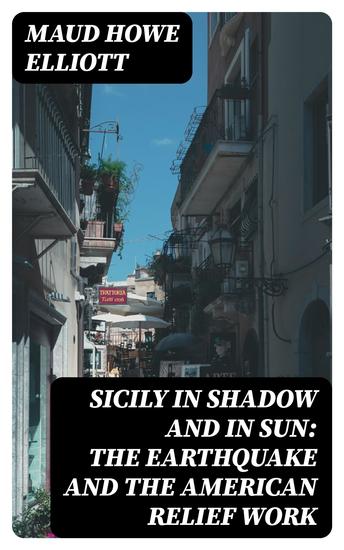
Sicily in Shadow and in Sun: The Earthquake and the American Relief Work - cover
LER

Sicily in Shadow and in Sun: The Earthquake and the American Relief Work

Maud Howe Elliott

Editora: DigiCat

  • 0
  • 0
  • 0

Sinopse

In "Sicily in Shadow and in Sun: The Earthquake and the American Relief Work," Maud Howe Elliott presents a poignant narrative detailing the devastating 1908 Messina earthquake and the subsequent American response to the catastrophe. Through her rich and descriptive literary style, Elliott vividly captures the duality of Sicily's beauty and tragedy, exploring themes of resilience, humanitarianism, and cultural identity. Her firsthand observations and thoughtful reflections are interwoven with historical context, offering readers a compelling account that highlights both the local suffering and the international solidarity that emerged in the wake of disaster. Maud Howe Elliott, an esteemed American writer and social activist, was profoundly influenced by her experiences as a member of a prominent New England family. Her activism, particularly in women's suffrage and relief efforts, imbued her with a sense of duty to illuminate the plight of marginalized communities. Elliott's deep empathy and commitment to social justice are palpably reflected in her detailed documentation of relief efforts, showcasing her capacity to bridge personal narrative with broader social themes. This book is a must-read for those interested in disaster response, social change, and the intricate interplay between culture and adversity. Elliott's nuanced perspective not only enriches our understanding of Sicilian history but also serves as a timeless reminder of our shared humanity in times of crisis.
Disponível desde: 16/09/2022.
Comprimento de impressão: 292 páginas.

Outros livros que poderiam interessá-lo

  • The Heart of Therapy - Developing Compassion Understanding and Boundaries - cover

    The Heart of Therapy -...

    Laura Barnett

    • 0
    • 0
    • 0
    This thoughtful and heartfelt book develops two main themes: the healing power of a compassionate understanding towards ourselves and others, and the ways boundaries are set within and around various areas of our lives. 


    It examines how we live these boundaries, how they impact us, and what it takes to live these with deeper satisfaction. This book also addresses shame and rage; the impact of trauma; the power of parental messages, spoken and unspoken; and transgenerational burdens. A theoretical chapter summarizes the author's integrative, phenomenological approach: it brings the insights of a body-focused trauma therapy and a systemic lens to an overarching existential perspective. Numerous vignettes, case studies, and client-therapist dialogues illustrate reflections on life, philosophy, and therapeutic modalities and practice. 


    This book will be a thought-provoking listen for trainee and practicing counselors and psychotherapists, or anyone looking for self-reflection on their own practices, life, and ultimately, what it means to be human.
    Ver livro
  • The Architecture of Disability - Buildings Cities and Landscapes beyond Access - cover

    The Architecture of Disability -...

    David Gissen

    • 0
    • 0
    • 0
    Disability critiques of architecture usually emphasize the need for modification and increased access, but The Architecture of Disability calls for a radical reorientation of this perspective by situating experiences of impairment as a new foundation for the built environment. With its provocative proposal for "the construction of disability," this book fundamentally reconsiders how we conceive of and experience disability in our world. 


    Stressing the connection between architectural form and the capacities of the human body, David Gissen demonstrates how disability haunts the history and practice of architecture. Examining various historic sites, landscape designs, and urban spaces, he deconstructs the prevailing functionalist approach to accommodating disabled people in architecture and instead asserts that physical capacity is essential to the conception of all designed space. 


    By recontextualizing the history of architecture through the discourse of disability, Gissen presents a unique challenge to current modes of architectural practice, theory, and education. Envisioning an architectural design that fully integrates disabled persons into its production, it advocates for looking beyond traditional notions of accessibility and shows how certain incapacities can offer us the means to positively reimagine the roots of architecture.
    Ver livro
  • Worldmask - cover

    Worldmask

    Rabbi Akiva Tatz

    • 0
    • 0
    • 0
    Do you ever wonder what lies behind the mask of this physical world? Do you ever feel that there is more to reality than what meets the eye? Do you ever want to explore the spiritual dimension of existence and discover its secrets? 
    If so, then you will enjoy listening to Worldmask, a bestselling work by Rabbi Akiva Tatz, a renowned expert in Jewish thought and philosophy. In this book, Rabbi Tatz traces some of the Torah themes that express the duality of the world: the outer layer and the inner root. He deals with perplexing philosophical paradoxes, such as the relationship between God and nature, predestination and freewill, and suffering and joy. He shows how the Torah provides us with the keys to unlock the hidden world that exists behind the mask of the physical. 
    Worldmask is a book that will exhilarate and enlighten you, as you journey through the depths of Torah wisdom and uncover the mysteries of creation. It is a book that will challenge and inspire you, as you learn how to apply the Torah’s teachings to your own life and become closer to your Creator. 
    Don’t miss this opportunity to listen to Worldmask, a book that will transform your perspective on reality and reveal the true purpose of your existence.
    Ver livro
  • Archaic Humans: The History of the Different Prehistoric Species in the Genus Homo - cover

    Archaic Humans: The History of...

    Editors Charles River

    • 0
    • 0
    • 0
    The evolutionary path from the original primates to modern man is a long one and has taken many twists and turns, but naturally, as the fossil record grows, scientists gain a more complete understanding of our own mental and physical history in terms of genetics and anatomy. However, the correct order and relationships of the various specimen types are difficult to pin down. Many representative samples have been found in such minute amounts as to not preclude anomalies. They have been discovered in various stages of wear. Modern features did not occur simultaneously or uniformly, taking millions of years to become manifest in later types. Up to the present day’s Homo sapiens, examples of the main types have been hybrids of older and more modern features. 
    	One of the earliest species of the genus Homo to be discovered is Homo habilis, which basically means “handy man.” The name comes from the belief at the time of its discovery that this species was the first to start using stone tools. The first fossils to be uncovered in Olduvai Gorge were from the same stratigraphic layer as simple stone tools. Fossils of the crania and postcranial skeleton for this species have been found in both eastern and southern Africa and date to around 2.5–1.6 million years ago.  
    	Features of Homo erectus suggest an evolution toward modern humans, and the features which separate Homo erectus from the other Homo species are found in the skull. The size of the brain was approximately 900 cc, making it larger than the brain size of Homo habilis. Homo erectus would not have the largest brain capacity of the Homo genus during its existence, with the emergence of Homo heidelbergensis approximately 800,000 years ago. The larger brain size may not matter much when the size of the brain is considered with the size of the body, which also increased. 
    Ver livro
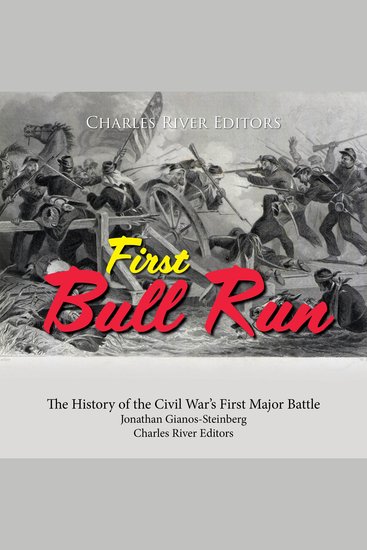
  • First Bull Run: The History of the Civil War’s First Major Battle - cover

    First Bull Run: The History of...

    Jonathan Gianos-Steinberg

    • 0
    • 0
    • 0
    After the Battle of Fort Sumter in April 1861 ignited the Civil War, many in the North expected a relatively quick victory, including President Abraham Lincoln. While that seems naïve in hindsight, given the knowledge that the war lasted over four years, these expectations seemed entirely realistic at the time due to the Union’s overwhelming economic advantages over the South. At the start of the war, the Union had a population of over 22 million, whereas the South had a population of 9 million, nearly 4 million of whom were slaves. Union states contained 90% of the manufacturing capacity of the country and 97% of the weapon manufacturing capacity. Union states also possessed over 70% of the total railroads in the pre-war United States at the start of the war, and the Union also controlled 80% of the shipbuilding capacity of the pre-war United States. 
    McDowell’s strategy during the First Battle of Bull Run was grand, and in many ways it was the forerunner of a tactic Robert E. Lee, Stonewall Jackson and James Longstreet executed brilliantly on nearly the same field during the Second Battle of Bull Run in August 1862. McDowell’s plan called for parts of his army to pin down General P.G.T. Beauregard’s Confederate soldiers in front while marching another wing of his army around the flank and into the enemy’s rear, rolling up the line. McDowell assumed the Confederates would be forced to abandon Manassas Junction and fall back to the next defensible line, the Rappahannock River. In July 1861, however, this proved far too difficult for his inexperienced troops to carry out effectively. 
    As the first major land battle of the Civil War, the First Battle of Bull Run made history in several ways. The two sides fought near the railroad junction at Manassas on July 21, 1861, just 25 miles away from Washington, which was close enough for many civilians from the nation’s capital to come and watch what they expected to be a rout of Confederate forces.
    Ver livro
  • Sand and Foam - cover

    Sand and Foam

    Kahlil Gibran

    • 0
    • 0
    • 0
    Kahlil Gibran is the third best-selling poet of all time, behind Shakespeare and Lao-Tzu.
    Sand and Foam is a book of aphorisms, poems, and parables by the author of "The Prophet" - a philosopher at his window commenting on the scene passing below.
    In the Arab world, Gibran is regarded as a literary and political rebel. His romantic style was at the heart of a renaissance in modern Arabic literature, especially prose poetry, breaking away from the classical school. In modern Lebanon, he is still celebrated as a literary hero.
    Ver livro