¡Acompáñanos a viajar por el mundo de los libros!
Añadir este libro a la estantería
Grey
Escribe un nuevo comentario Default profile 50px
Grey
Suscríbete para leer el libro completo o lee las primeras páginas gratis.
All characters reduced
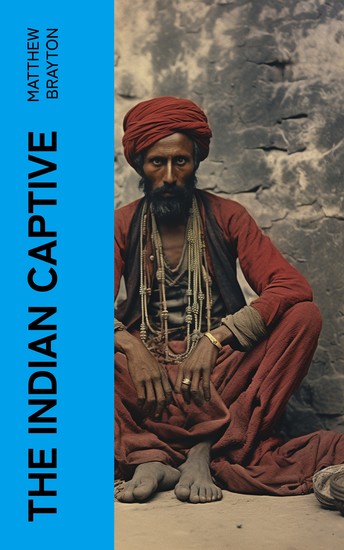
The Indian Captive - A narrative of the adventures and sufferings of Matthew Brayton in his thirty-four years of captivity among the Indians of north-western America - cover

The Indian Captive - A narrative of the adventures and sufferings of Matthew Brayton in his thirty-four years of captivity among the Indians of north-western America

Matthew Brayton

Editorial: e-artnow

  • 0
  • 0
  • 0

Sinopsis

"The Indian Captive" by Matthew Brayton. Published by e-artnow. e-artnow publishes a wide range of titles that encompasses every genre. From well-known classics & literary fiction and non-fiction to forgotten−or yet undiscovered gems−of world literature, we issue the books that need to be read. Each e-artnow edition has been meticulously edited and formatted to boost readability for all e-readers and devices. Our goal is to produce eBooks that are user-friendly and accessible to everyone in a high-quality digital format.
Disponible desde: 01/12/2023.
Longitud de impresión: 135 páginas.

Otros libros que te pueden interesar

  • Life Skills For A Broken World - cover

    Life Skills For A Broken World

    Dr. Ahona Guha

    • 0
    • 0
    • 0
    A revolutionary framework for living well in a broken world, from acclaimed author and psychologist. 


    How can I manage heartbreak? How do I cope with death? How can I learn to tolerate anxiety and have hope? 


    In this helpful, practical, and realistic guide to good psychological health, Dr. Ahona Guha shows us how to cope, thrive, and still feel hopeful for the future. Combining techniques from a range of therapeutic modalities, she demonstrates how we can build a range of essential psychological skills, and apply them to live a more tranquil and joyful life. 


    Life Skills for a Broken World is a breath of fresh air, cutting through the confusion to provide solid, practical, and evidence-based answers to existential questions, big and small.
    Ver libro
  • Unsung Hero of Gettysburg - The Story of Union General David McMurtrie Gregg - cover

    Unsung Hero of Gettysburg - The...

    Edward G. Longacre

    • 0
    • 0
    • 0
    Gen. David McMurtrie Gregg (1833–1917) was one of the ablest and most successful commanders of cavalry in any Civil War army. Pennsylvania-born, West Point–educated, and deeply experienced in cavalry operations prior to the conflict, his career personified that of the typical cavalry officer in the mid-nineteenth-century American army. Gregg achieved distinction on many battlefields, ultimately gaining the rank of brevet major general as leader of the Second Division, Cavalry Corps, Army of the Potomac. 


    The highlight of his service occurred on July 3, 1863, the climactic third day at Gettysburg, when he led his own command as well as the brigade of Brig. Gen. George Armstrong Custer in repulsing an attempt by thousands of Confederate cavalries under the legendary J. E. B. Stuart in attacking the right flank and rear of the Union Army while Pickett's charge struck its front and center. 


    Historians credit Gregg with helping preserve the security of his army at a critical point, making Union victory inevitable. Unlike glory-hunters such as Custer and Stuart, Gregg was a quietly competent veteran who never promoted himself or sought personal recognition for his service. Rarely has a military commander of such distinction been denied a biographer's tribute. Gregg's time is long overdue.
    Ver libro
  • The Lost Veda Sri Brama Samhita - Lord Brama's Prayers To Govindaji - cover

    The Lost Veda Sri Brama Samhita...

    Sripad Jagannatha Dasa

    • 0
    • 0
    • 0
    Lord Brahma saw Krsna directly and composed a prayer based on his realizations – a striking prayer by one who has seen the truth. 
      
    Krsna revealed himself to Brama, along with his spiritual planets. Overwhelmed by this transcendental revelation, Brama spoke these words glorifying Krsna. Brama’s awe and love permeate the text and reveal the workings of the cosmic creation. 
      
    The Brama Samhita teaches that transcendence, truth, and ultimate reality can be apprehended only by the mercy of the supreme transcendent entity, the Absolute Truth Himself, and that perception of ultimate reality is a function not of speculative reason but of direct spiritual cognition through divine revelation. This collection is taken from the fifth chapter of the Hymns of Brama, and includes verses 1 to 29.. There were 100 chapters in the Brama Samhita. This 5th chapter of the Brama Samhita was discovered by Lord Chaitanya. The other chapters have not yet been revealed. 
     
    The Brama-samhita clearly describes Brahman. Kṛṣṇa is the Supreme Brahman because of His unlimited knowledge, unlimited potencies, unlimited strength, unlimited influence, unlimited beauty, and unlimited renunciation. Ultimately, therefore, the word Brahman can be applied to Kṛṣṇa only.  
      
    Because the impersonal Brahman is the effulgence emanating as rays of Kṛṣṇa’s transcendental body, Kṛṣṇa is the Parabrahman. Everything rests on Brahman, but Brahman rests upon Kṛṣṇa. The material elements are accepted as the inferior energy of Kṛṣṇa. By their interaction, the cosmic manifestation takes place, rests on Kṛṣṇa, and after dissolution again enters into the body of Kṛṣṇa as His subtle energy. Kṛṣṇa is therefore the cause of both manifestation and dissolution. 
     
    Translator and commentator Bhaktisiddhanta Sarasvati was a Gaudīya Vaisnava Hindu guru, ācārya, and revivalist in early 20th century India. 
    Ver libro

  • No Lessons Learned - Vietnam The Fighting The Dying A Legacy Replayed in the Middle East - cover

    No Lessons Learned - Vietnam The...

    Alfredo Bonadeo

    • 0
    • 0
    • 0
    While the book rests on the backbone of the Vietnam experience, it aspires to go beyond the confines of that particular war and lead the reader to question an American foreign policy that has, especially since 2001, been militarily driven. The harm done to American and allied soldiers and to the indigent peoples and societies of the countries the U.S. has so thoughtlessly invaded has secured no advantage to the U.S. or any other country. The author delves into the human physical and psychological cost of war and implicitly makes the case for diplomacy over force, restraint, and modesty over hubris. He establishes the importance of cause to the combatant's ability to fight winningly and to remain psychologically sound in battle and afterward. It is especially relevant today because it connects the human and societal consequences of the decisions made in and around that war with the recent squandered ventures in the Middle East.
    Ver libro
  • First Lesbian Experience Explicit Sex Stories - Older Woman Younger Woman Cougar Coming Out Girl On Girl First Time Lesbian - cover

    First Lesbian Experience...

    Laura Vixen

    • 0
    • 0
    • 0
    This 3 short story lesbian coming out collection includes:Coming Out to the Cougar Next DoorDreams of Puppy LoveComing Out to the Older Farm Volunteer 
    This book will give you all that you need to know to heat things up with your partner or yourself. So, what are you waiting for? Get ready to have your breath taken away and explore your deepest fantasies!
    Ver libro
  • We Refuse - A Forceful History of Black Resistance - cover

    We Refuse - A Forceful History...

    Kellie Carter Jackson

    • 0
    • 0
    • 0
    Black resistance to white supremacy is often reduced to a simple binary, between Dr. Martin Luther King Jr.'s nonviolence and Malcolm X's "by any means necessary." In We Refuse, historian Kellie Carter Jackson urges us to move past this false choice, offering an unflinching examination of the breadth of Black responses to white oppression, particularly those pioneered by Black women. 


    The dismissal of "Black violence" as an illegitimate form of resistance is itself a manifestation of white supremacy, a distraction from the insidious, unrelenting violence of structural racism. Force—from work stoppages and property destruction to armed revolt—has played a pivotal part in securing freedom and justice for Black people since the days of the American and Haitian Revolutions. But violence is only one tool among many. Carter Jackson examines other, no less vital tactics that have shaped the Black struggle, from the restorative power of finding joy in the face of suffering to the quiet strength of simply walking away. 


    Clear-eyed, impassioned, and ultimately hopeful, We Refuse offers a fundamental corrective to the historical record, a love letter to Black resilience, and a path toward liberation.
    Ver libro