Join us on a literary world trip!
Add this book to bookshelf
Grey
Write a new comment Default profile 50px
Grey
Subscribe to read the full book or read the first pages for free!
All characters reduced
Dancing in Silence - cover

Dancing in Silence

Mason Scott

Translator A AI

Publisher: Publifye

  • 0
  • 0
  • 0

Summary

Dancing in Silence explores the captivating world of deaf dancers, revealing their unique approaches to music and movement. It challenges traditional ideas about dance by showcasing how deaf individuals experience rhythm through vibration and tactile senses. For instance, dancers may perceive music through vibrations felt in the floor or by using haptic perception, deepening their kinesthetic awareness. The book also highlights the development of innovative choreographic techniques tailored for deaf dancers, emphasizing visual cues and spatial arrangements. 

 
The book delves into the sensory adaptations and creative strategies employed by deaf dancers and the social impact of deaf dance communities. It progresses by first introducing central concepts like haptic perception. It then examines how deaf dancers interpret music through vibrations, explores choreographic processes using visual cues, and delves into the cultural impact of deaf dance, promoting inclusivity in dance education and accessibility. 

 
By focusing on lived experiences and creative processes, Dancing in Silence celebrates the ingenuity and artistic contributions of deaf dancers. This exploration emphasizes that deafness doesn't preclude a nuanced understanding of music, but rather fosters alternative pathways to rhythm, making it a valuable resource for dance students, educators, and anyone interested in the intersection of art and sensory perception.
Available since: 02/24/2025.
Print length: 70 pages.
Other books that might interest you

  • Wild Dances - My Queer and Curious Journey to Eurovision - cover

    Wild Dances - My Queer and...

    William Lee Adams

    • 0
    • 0
    • 0
    As a boy, William Lee Adams spent his days taking care of his quadriplegic brother, while worrying about his undiagnosed bipolar Vietnamese mother, and steering clear of his openly racist and homophobic father. Too shy and anxious to even speak until he was six years old, it seemed unlikely William would ever leave small-town Georgia. 


    In time, William discovered that learning was both a refuge and a ticket out. So even as he struggled to understand and to get others to accept both his sexuality and his biracial identity, William focused on his schoolwork, his extracurricular activities, and building community with the students and teachers who embraced him for who he truly was. Though his scholarship to Harvard parachuted him into a whole new world, he still carried a lifetime of secrets and unanswered questions that would haunt him no matter how far he traveled. 


    Years later, as a journalist in London, William discovered the Eurovision Song Contest—an annual competition known for its extravagant performers and cutthroat politics. Initially just a fan, he started blogging about the contest, ultimately becoming the most sought-after expert on the subject. William was soon jetting across the continent to meet divas, drag queens, and aspiring singers, who welcomed him to their beautiful, if dysfunctional, family of choice.
    Show book
  • Radiohead's OK Computer - cover

    Radiohead's OK Computer

    Dai Griffiths

    • 0
    • 0
    • 0
    Seemingly granted ‘classic album’ status within days of its release in 1997, OK Computer transformed Radiohead from a highly promising rock act into The Most Important Band in the World – a label the band has been burdened by (and has fooled around with) ever since. Through close musical analysis of each song, Dai Griffiths explores the themes and ideas that have made this album resonate so deeply with its audience, and argues that OK Computer is one of the most successfully realized CD albums so far created.
    Show book
  • Nature’s Symphony of Serene Forest Cricket Sounds Mixed With Piano Rhythms For Deep Calm & Relaxation - Experience Soothing Nights for Restful Sleep & Mindfulness Using Enhanced BGM 8D Audio - cover

    Nature’s Symphony of Serene...

    Cedar Skye

    • 0
    • 0
    • 0
    Immerse yourself in a world of tranquility with Nature’s Symphony of Serene Forest Cricket Sounds Mixed With Piano Rhythms for Deep Calm & Relaxation. This audiobook is meticulously crafted to bring you unparalleled peace and deep relaxation through a harmonious blend of nature’s melodies and soothing piano compositions. Perfectly tuned to enhance your mindfulness practices, these serene soundscapes are designed to help you unwind and experience restful sleep. 
    Discover the calming power of relaxing soundscapes for sleep as you drift into a peaceful slumber, surrounded by the gentle chirping of crickets and the soft rhythm of piano music. This unique audio experience is ideal for those seeking to alleviate stress, find inner peace, and achieve a state of Zen. 
    Whether you’re looking to enhance your meditative routines, create a serene atmosphere for wellness, or enjoy a moment of serenity, this audiobook offers the perfect auditory escape. The ambient sleep sounds, piano, and nature harmony provide a soothing backdrop for your day or night, making it an essential addition to your relaxation toolkit. 
    Feel the stress melt away as the calming audio for meditation guides you to a place of complete relaxation. Peace, harmony, and serenity are just a play button away. Allow this audiobook to transform your environment into a sanctuary of wellness and tranquility, helping you to unwind and recharge your mind and body. 
    Embrace the therapeutic benefits of this ambient audio journey, perfect for anyone looking to improve their sleep.
    Show book
  • Mastering The Russian Accent - A Guide for Actors - cover

    Mastering The Russian Accent - A...

    Oscar Stanley

    • 0
    • 0
    • 0
    Mastering the Russian Accent: A Guide for Actors is the essential resource for performers looking to convincingly portray Russian characters. This comprehensive audiobook breaks down the core differences between Russian and English phonetics, building a strong foundation for authentic accent work. It thoroughly covers the key sounds of a Russian accent, including consonant variations, pure vowels, and the distinctive rolled "r," along with techniques for developing appropriate vocal placement, resonance, and breath control for a natural delivery. Listeners will learn how stress, rhythm, and intonation contribute to a believable accent.
     
    Importantly, the audiobook goes beyond technical drills to explore the historical, cultural, and psychological influences shaping how Russian speakers use English. This includes insights into communication styles, formality, and the impact of cultural identity on speech. Understanding these nuances allows actors to create richer, more believable portrayals that resonate with audiences.
     
    Practical exercises reinforce the technical lessons, while analyses of professional actors' performances provide real-world examples of successful accent work. A dedicated media study guide offers valuable tools for continuous improvement and ongoing practice.
     
    This audiobook is invaluable for actors preparing for auditions, film and television roles, and stage productions requiring a Russian accent. By mastering the techniques and cultural insights provided, actors can bring depth, authenticity, and cultural nuance to their performances, significantly increasing their chances of successful casting and creating truly memorable characters.
    Show book
  • Odyssey of a Street - The Discovery of the Cardo in Jerusalem - cover

    Odyssey of a Street - The...

    Peter Bugod

    • 0
    • 0
    • 0
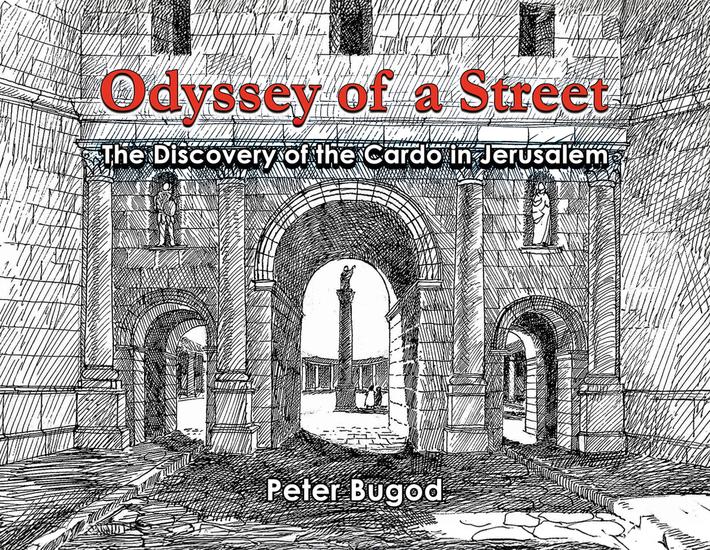
    The Cardo book is a thriller intended for the lecture of students passionate about architecture, archaeology, and history that challenges and teaches. It is a provocation to confront riddles of town planning and history that lie in front of us, but one didn't dare to "lift the glove'. When an ancient game was discovered chiseled on one of the Cardo pavement stones, it was only the start of a whodunit. Only more archaeological diggings (11 pits on the 180-meter length of the street) brought up the solution three years later. But why didn't the archaeologists find any Roman remnants? Here we direct the stage limelight on Justinianus, emperor of Byzantium, an ebullient personality and passionate builder. The mistrust of the archaeologists in the vision of the architects dissipated, and it turned out to be a fruitful collaboration that went on for 12 years: a real odyssey of a discovery. The book, which is richly illustrated and narrated by the leader of a team of architects that won the first prize in a national competition for the renewal of a part of the Jewish Quarter in 1971, teaches not only historical periods of the developments of Jerusalem through the ages but also touches on the architectural dilemmas of how to rebuild and integrate into part of the historical city of Jerusalem after the Six-Day War period.
    Show book
  • Painter Rembrandt Harmenszoon van Rijn The - Superstar during the Golden Age of the Netherlands - Life and Works of the Baroque Painter - Global Basics 101 - Your Series for Modern Knowledge Folge 2 (unabridged) - cover

    Painter Rembrandt Harmenszoon...

    Bert Alexander Petzold

    • 0
    • 0
    • 0
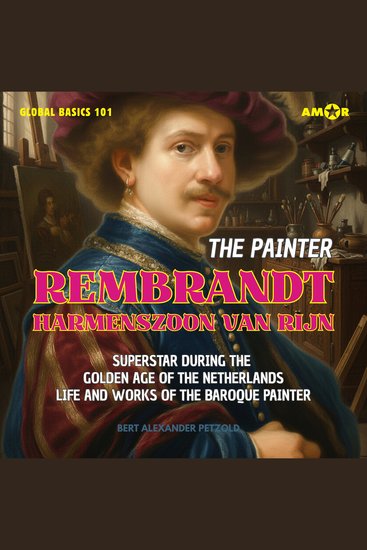
    Anyone who looks at Rembrandt van Rijn sees more than Baroque painting: light rising out of darkness, faces charged with inner life, pictures that still feel like a conversation. What is it about him that makes works in the Rembrandt House Museum and in the world's great collections hold viewers spellbound - from school lessons to university seminars, in Amsterdam and far beyond?
    This non-fiction book invites you on a fact-rich cultural journey through the Dutch Golden Age. In clear, vivid prose it turns biography and key works into a 'school of seeing'. You learn how Rembrandt steers light and composition, how he builds psychological presence, and how to recognise self-portrait, history painting, portraiture and etching as distinct ways of thinking with images. Even if 'Die Nachtwache' is familiar, its artistic logic becomes newly intelligible.
    Born in Leiden on 15 July 1606, Rembrandt grew up in a respectable middle-class household that valued education and ambition. After Latin school he trained with Jacob Isaacsz. van Swanenburgh and then with the Amsterdam history painter Pieter Lastman. Back in Leiden he shared a studio with Jan Lievens and soon taught his first pupil, Gerrit Dou.
    Moving to Amsterdam in 1632, he achieved rapid fame, commissions and prosperity. His marriage to Saskia van Uylenburgh coincided with masterpieces such as 'Die Anatomie des Dr. Nicolaes Tulp', 'Belshazzars Gastmahl' and the world-famous 'Die Nachtwache'. Later, Saskia's death, his partnership with Hendrickje Stoffels and mounting debts led to bankruptcy in the 1650s. Out of crisis came works of fierce intensity: 'Christus heilend die Kranken' (the 'Hundertguldenblatt'), 'Die drei Kreuze', 'Ecce Homo' and 'Aristoteles mit der Büste des Homer'. Here, shadows do not conceal; they reveal.
    In his final years he painted with a new warmth and dignity - 'Die Staalmeesters' and 'Die Judenbraut' - while modern research continues to revise attributions as new works surface and others return to his pupils. 
    Written by Bert Alexander Petzold, the book is ideal for GCSE and A-level revision as well as university study. It uses Rembrandt's life and greatest works as a practical guide to looking, so you can not only recognise his paintings but truly understand them. Secure your copy and let Rembrandt 's pictures become a lasting guide to how images work.
    Show book