¡Acompáñanos a viajar por el mundo de los libros!
Añadir este libro a la estantería
Grey
Escribe un nuevo comentario Default profile 50px
Grey
Suscríbete para leer el libro completo o lee las primeras páginas gratis.
All characters reduced
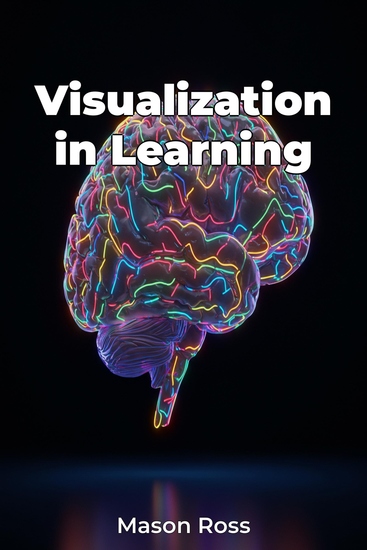
Visualization in Learning - cover

Visualization in Learning

Mason Ross

Traductor A AI

Editorial: Publifye

  • 0
  • 0
  • 0

Sinopsis

"Visualization in Learning" explores the powerful role of mental imagery in enhancing memory and learning. The book examines how visualization techniques can transform cognitive processing, leading to more effective knowledge acquisition. Intriguingly, the use of imagery as a mnemonic device dates back to ancient Greece; modern cognitive psychology and neuroscience now offer empirical support, revealing neural pathways involved in visual processing. 

 
This book uniquely integrates theory and practice, providing an evidence-based analysis of how visualization can be effectively implemented across various learning contexts, moving beyond simple advocacy. The book delves into the cognitive mechanisms underlying mental imagery and the practical applications of visualization strategies. Specific techniques, such as mind mapping and the method of loci, are explored, showing their application in diverse areas like language learning and mathematics. 

 
By understanding the brain's capacity for visual information processing, readers can leverage visualization techniques to optimize cognitive performance. The book progresses from fundamental principles of mental imagery to specific techniques and culminates in a discussion of practical implications for educators and students, providing guidance on integrating these techniques into teaching and study habits.
Disponible desde: 22/02/2025.
Longitud de impresión: 91 páginas.

Otros libros que te pueden interesar

  • Where the South Lost the War - An Analysis of the Fort Henry-Fort Donelson Campaign February 1862 - cover

    Where the South Lost the War -...

    Kendall D Gott

    • 0
    • 0
    • 0
    This in-depth Civil War study examines two early Union victories that were instrumental in deciding the conflict’s ultimate outcome. Some historians argue that the Civil War was decided in February 1862 with the collapse of the Confederate defenses of Forts Henry and Donelson on the Tennessee and Cumberland Rivers. This ambitious offensive opened the whole Tennessee Valley to Union invasion and control, effectively cutting the Confederacy in two.  In domino fashion, the Confederates lost Nashville and central and western Tennessee. Memphis eventually fell, and the upper stretch of the Mississippi itself was brought under Union control. During this period, General Ulysses S. Grant came to prominence, putting him in place to lead the Union to victory. Where the South Lost the War is a major contribution to Civil war literature. Shedding light on an overlooked campaign and revising conventional judgments on key players and events, author Kendall D. Gott provides a detailed, incisive, and even controversial study of the operation’s events.
    Ver libro
  • Art of Connection: Speak and Be Heard - Revolutionize your interactions! Access engaging audio lessons for mastering the Art of Connection - cover

    Art of Connection: Speak and Be...

    Tristan Everhart

    • 0
    • 0
    • 0
    **Art of Connection: Speak and Be Heard**   
    ⭐⭐ Simplified Guide & Explanations Included ⭐⭐ 
    Are you eager to advance in your career and amplify your ability to forge meaningful connections by mastering the art of communication? 
    Looking for an all-encompassing guide that provides everything you need to excel in communication for 2024-2025? 
    Your search ends here! 
    This guide is your ultimate resource for deepening your understanding, honing your skills, and engaging in practical exercises. With this, you're set for success. 
    Updated for the 2024-2025 communication landscape. 
    Key features of this enriching guide: 
    - Profound insights into powerful communication techniques 
    - Detailed explanation of how to foster genuine connections 
    - Practical strategies for transforming conversations 
    Our guide stands out by offering comprehensive coverage essential for your communication success. Concepts aren’t just glossed over; they are explored in depth with precision. 
    Please note that this guide is not affiliated with any official communication entities and is purely an independent resource for your benefit. 
    Designed with a clear structure and easy-to-understand language, our "Unlock Powerful Communication, Foster Genuine Connections, Transform Conversations" guide for 2024-2025 ensures smooth transitions between topics. Say goodbye to complex jargon and welcome clear, precise, and technically accurate content. 
    So, why wait? Click the BUY NOW button, secure your guide, and begin your journey to communication success for 2024-2025!
    Ver libro
  • Portuguese Empire and Asia The: The History and Legacy of Portugal’s Exploration and Colonization in Asia - cover

    Portuguese Empire and Asia The:...

    Editors Charles River

    • 0
    • 0
    • 0
    By the mid-15th century, the Byzantine Empire had collapsed and the various Crusades that had taken place in the region had largely disrupted the overland routes of the Silk Road and trade. Compounding the difficulties of trade was the rise of the Ottoman Empire in place of the Byzantines and the outbreak of the Black Death in Europe.  
    It was roughly around this time that a period of European exploration began, and major factors that contributed to this period of exploration were introduced by the Chinese, albeit indirectly. The magnetic compass had already been developed and used by the Chinese sailors since the 12th century, although it had first been created in the 3rd century BCE as a divination device. The Portuguese started exploring the west coast of Africa and the Atlantic under orders from Prince Henry the Navigator. At this point, Europeans had not yet been capable of navigating completely around Africa since the ships being built were not yet fully capable of being able to sail very far from the coast and navigation in open waters was difficult, but the Portuguese continued pushing down the western African coast looking for ways to bypass the Ottomans and Muslims of Africa who had been making overland trade routes difficult.  
    	In 1488, Bartholomew Diaz rounded the southern tip of Africa, named the Cape of Good Hope by King John of Portugal, and entered the Indian Ocean from the Atlantic. 	The Portuguese had found access to the trade regions that they had been searching for, but sailing from Portugal to India and beyond would require too many resources to travel with at once. To remedy this problem, Portugal began establishing a number of forts and trading posts along the route. The Portuguese were able to establish a fort on the west coast of India, Fort Manuel, in 1500, and in 1505 a fort was erected off the coast of Tanzania. 
    Ver libro
  • The illegality of Lying and Forbidden Fiction - cover

    The illegality of Lying and...

    Gregory Heary

    • 0
    • 0
    • 0
    What if the stories you love are secretly destroying your moral compass? Is your entertainment choice leading you away from divine truth? Discover the shocking reality behind fiction's spiritual warfare. 
    This book presents a compelling case against lying and the consumption of fictional narratives, drawing from divine revelation and prophetic teachings. Through careful analysis, the author exposes how fiction serves as a trojan horse for moral corruption, subtly reshaping perspectives, values and beliefs. From seemingly innocent children's tales to complex literary works, learn how fictional narratives systematically undermine religious principles and divine guidance. This extensive research reveals the dangerous psychological manipulation inherent in storytelling, showing how it leads people away from truth and righteousness, causing corruption throughout society. 
    This meticulous analysis exposes the hidden spiritual battle being waged through fictional narratives. By reading 'The illegality of Lying and Forbidden Fiction, ' you'll gain the knowledge and insight needed to protect yourself and your loved ones from lies and fiction's corrupting influence. This work stands as a crucial guide for anyone seeking to protect their spiritual well-being in today's fiction-dominated world. 
    Get your copy now and arm yourself with the truth about the harms of lying and the spiritual dangers of fiction.
    Ver libro
  • uTOpia - Towards a New Toronto - cover

    uTOpia - Towards a New Toronto

    Alana Wilcox, Jason McBride

    • 0
    • 0
    • 0
    Since the election of Mayor David Miller in November 2003, Toronto has experienced a wave of civic pride and enthusiasm not felt in decades. At long last, Torontonians see their city as a place of possibility and potential. Visions of a truly workable, liveable and world-class city are once again dancing in citizens’ heads. In the past two years, this spirit has, directly or indirectly, manifested itself in multifarious forms: in writer Sheila Heti’s sui generis lecture series, Trampoline Hall; in the transformation of derelict hotels such as the Drake and the Gladstone into cultural hotspots; in renewed interest in waterfront revitalization and public transportation; in exciting, controversial architectural developments such as the OCAD building, the expansion of the ROM and the AGO; in the [murmur] project, which catalogues stories about Toronto neighbourhoods and broadcasts them to people’s cell phones; in the explosion of the local independent music scene.
       
    uTOpia aims to capture and chronicle that spirit, collecting writing by many of the people inspired by and involved in these projects. Featuring passionate, visionary essays by thirty-four different journalists, artists, thinkers, architects and activists, uTOpia is a compendium of ideas, opinions and strategies. The anthology explores plans to redevelop the Island airport into a Ward’s Island-style community; how the Zeidlerfamily is energizing artist-run centres; what a car-free Kensington Market might mean; the necessity and beauty of laneway housing; the way past efforts to combat devastating developments like the Spadina Expressway have shaped current activism; what a utopian Toronto might look like mapped out; and much, much more. Playful, erudite and accessible, uTOpia writes Toronto as it is shared and created by the people who live here. Though it is by no means a complete picture of what is happening in the city right now, it will hopefully show that what was once just a T-shirt slogan – I Heart T.O. – is now genuine, heartfelt sentiment.
       
    Contributors include Howard Akler, Andrew Alfred-Duggan, Jacob Allderdice, Bert Archer, James Bow, Nicole Cohen, Jonny Dovercourt, Dale Duncan, Philip Evans, Mark Fram, Misha Glouberman, Chris Hardwicke, Sheila Heti, Alfred Holden, Luis Jacob, Lorraine Johnson, Edward Keenan, Mark Kingwell, John Lorinc, Sally McKay, Heather McLean, Dave Meslin, Shawn Micallef, Derek Murr, Ninjalicious, Darren O’Donnell, Planning Action, Barbara Rahder, Dylan Reid, Erik Rutherford, Jeffrey Stinson, Deanne Taylor, Conan Tobias, Stéphanie Verge, Adam Vaughan and Marlena Zuber.
    Ver libro
  • A Rare Recording of Mother Teresa’s Nobel Prize Acceptance Speech - cover

    A Rare Recording of Mother...

    Mother Teresa

    • 0
    • 0
    • 0
    Mary Teresa Bojaxhiu (August 26, 1910 to September 5, 1997), better known as Mother Teresa or Saint Mother Teresa, born in Skopje, North Macedonia, then part of the Ottoman Empire, was a Catholic nun and founder of the Missionaries of Charity. In 1979, Mother Teresa received the Nobel Peace Prize for her humanitarian work. She died in September 1997 and was beatified in October 2003. In December 2015, Pope Francis recognized a second miracle attributed to Mother Teresa, clearing the way for her to be canonized on September 4, 2016.
    Ver libro