

¡Acompáñanos a viajar por el mundo de los libros!
Añadir este libro a la estantería
Grey
Escribe un nuevo comentario Default profile 50px
Grey
Suscríbete para leer el libro completo o lee las primeras páginas gratis.
All characters reduced
School Performance Trends - cover

School Performance Trends

Mason Ross

Traductor A AI

Editorial: Publifye

  • 0
  • 0
  • 0

Sinopsis

School Performance Trends investigates the crucial question of whether educational systems worldwide are improving, stagnating, or declining. By examining longitudinal data and international assessments like PISA and TIMSS, the book analyzes academic achievement trends across various national systems. Interestingly, simplistic interpretations of test scores can be misleading; a nuanced understanding requires considering contextual factors and methodological limitations. The book emphasizes that educational policies based on inaccurate interpretations of these scores may lead to ineffective interventions.

 
The book unfolds systematically, beginning with methodological challenges in comparing academic achievement across nations. It then examines trends in reading, mathematics, and science literacy. For example, the book explores how changes in curricula correlate with observed performance trends. A key focus is the relationship between educational equity and overall performance, highlighting how disparities impact student subgroups. 

 
Ultimately, School Performance Trends synthesizes findings to offer practical recommendations for improving educational systems and promoting equitable outcomes. This interdisciplinary approach connects educational research with sociology, economics, and public policy, making it valuable for researchers, policymakers, and educators interested in understanding and addressing educational trends and social inequalities.
Disponible desde: 21/02/2025.
Longitud de impresión: 81 páginas.

Otros libros que te pueden interesar

  • Raising Confident Kids - How to Raise Happy Kind Responsible and Emotionally Intelligent Children - cover

    Raising Confident Kids - How to...

    Chloe Morgan

    • 0
    • 0
    • 0
    Do you find yourself constantly worried about your child's future?Are you struggling to instill values like kindness and responsibility in your kids?Do you wish your children could manage their emotions better?Are you tired of the daily battles and want a more peaceful household?Do you feel overwhelmed by parenting advice and don't know where to start?Are you concerned about your child's happiness and self-esteem?Do you want your kids to grow up as compassionate and emotionally intelligent individuals? 
    I understand how overwhelming and challenging parenting can be. You want the best for your children but sometimes it feels like you're swimming against the tide. It's time to change that. 
    Imagine for a second, what if you could...Enjoy a harmonious and loving household every day.See your child face challenges with confidence and resilience.Foster a deep, trusting bond with your children.Watch your child thrive in social settings and build strong friendships.Have stress-free mornings and peaceful bedtimes.Raise a child who is empathetic and kind-hearted. 
    Here’s a little sneak preview of what you’ll get:Understanding how children think and perceive the worldExploring the root causes of insecurity in kidsLearning strategies to encourage perseveranceDiscovering the impacts of negative environmentsIdentifying key influences on a child’s self-esteemAvoiding common pitfalls that undermine self-esteemPractical activities to help your child develop social skillsTeaching essential life skills from a young ageReady to transform your parenting journey? Take the first step towards a brighter, more fulfilling family life!
    Ver libro
  • Bad Girls of Ancient Greece: Myths and Legends from the Baddies that Started it all - cover

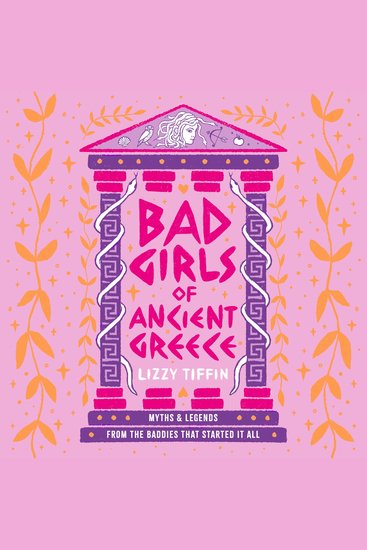
    Bad Girls of Ancient Greece:...

    Lizzy Tiffin

    • 0
    • 0
    • 0
    You’ve heard all about the ‘brilliant men’ of ancient myth, but what about the scheming and scandalous women who were so often lost in their shadow? 
    Bad Girls of Ancient Greece contains profiles of wayward wives, mad mothers, scandalous sisters and damsels, that quite frankly, caused others A LOT of stress in the ancient world. 
    With the ever-growing popularity of mythological retellings, Lizzy Tiffin has written THE guide to all of the baddies of ancient Greece. This book stands as a reminder that us women really have been bad – in the best way possible – from the start. 
    Written with humour and sass, Lizzy profiles the women in Greek myth and legend covering: mortals, goddesses, titans, nymphs (you name it, she’s done it). Here you’ll find the weird and wonderful escapades of the women we’re often lead to believe were minor characters. 
    Bad Girls of Ancient Greece is an accessible, intelligent, hilarious (sometimes spicy) guide to the women we love and know – Athena, Medusa, Aphrodite – and also those we may not, like Polyphonte, who was cursed with burning hot lust for a wild bear … imagine! 
    So dive into the stories you thought you knew with Bad Girls of Ancient Greece as your illuminating guide… 
    Lizzy Tiffin's Bad Girls of Ancient Greece is a non-fiction collection that brings a feminist perspective to the history of classical Greece. Through a series of humorous essays, she explores the stories of these women, making it a must-read for anyone interested in feminist theory and social history. 
    For fans of Billy Wellman (The Ottoman Empire), and Nikita Gill (Fierce Fairytales). 
    HarperCollins 2024
    Ver libro
  • Mesoamerican Astronomy: The History of Celestial Observations Made by the Maya Aztec and Inca - cover

    Mesoamerican Astronomy: The...

    Editors Charles River

    • 0
    • 0
    • 0
    For the Maya, astronomy was not a purely scientific pursuit but intimately linked to religious, mythological, and ideological elements that were of the highest importance. The celestial realm held a sacred nature, as did the many gods and goddesses that dwelt there, so for all Mesoamerican cultures, astronomy was a fundamental part of their everyday lives. Thus, astronomy was present in their calendars, religion, and even agriculture, and in close relation to astronomy, the concept of time was also an essential part of their worldview.  
    The Aztec recorded many of the astronomical events they observed in codices and hieroglyphic inscriptions, but the main evidence of their deep astronomical knowledge comes from their calendar system. This information was then used to plan the orientation of buildings and ceremonial centers, which were aligned to sunrises or sunsets corresponding to special dates, such as solstices or equinoxes. Observational calendars were also used to schedule agricultural activities, as well as rituals, festivals, and celebrations. 
    Though the Spanish physically conquered them in quick fashion, the culture and legacy of the Inca Empire has continued to endure throughout the centuries in both Europe and South America, due in no small part to the fact they were one of the most advanced and sophisticated cultures on the continent. The sun was the main element present in the Inca worldview, so Inti, the sun god, was worshipped above all others and, even though the different parts of the empire were allowed to practice their individual beliefs, they were encouraged to venerate the sun. The connection with the sun even extended to their kings since they were considered to be the sons of the sun. Naturally, this meant astronomy was a key component of the Incas’ beliefs, and in addition to the sun, the Inca observed the moon, stars, constellations, and some planets, all of which became integral parts of their cosmology.
    Ver libro
  • Moral Letters to Lucilius - cover

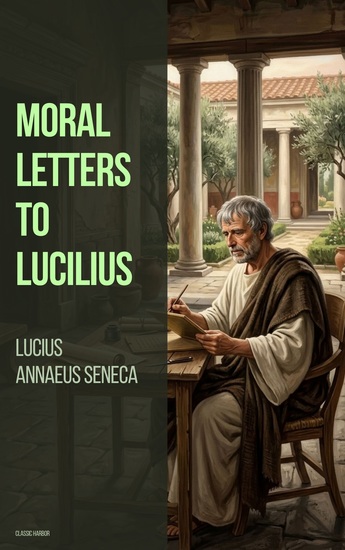
    Moral Letters to Lucilius

    Lucius Annaeus Seneca

    • 0
    • 0
    • 0
    Discover timeless Stoic wisdom on how to live with greater purpose, self-control, and inner peace.
    
    Seneca's Moral Letters to Lucilius brings together a collection of philosophical letters addressing some of life's most enduring questions.
    
    Writing to his friend Lucilius, Seneca reflects on time, wealth, friendship, anger, adversity, death, happiness, self-discipline, and the pursuit of virtue. His practical approach to philosophy transforms abstract ideas into reflections that can be applied to everyday life.
    
    As one of the major works of Stoic philosophy, these letters continue to offer readers an accessible introduction to Seneca's thoughts on living thoughtfully and responding wisely to life's challenges.
    
    Explore Seneca's enduring Stoic wisdom and discover reflections on how to live a more deliberate, resilient, and meaningful life.
    Ver libro
  • The Elements of Style - cover

    The Elements of Style

    William Strunk Jr.

    • 0
    • 0
    • 0
    Learn the timeless principles that make writing clearer, stronger, more direct, and easier to understand.
    
    William Strunk Jr.'s The Elements of Style is a concise and influential guide to effective English writing.
    
    The book focuses on practical principles of composition, grammar, usage, punctuation, sentence structure, and style. Its central emphasis is simple: remove unnecessary words, communicate ideas clearly, and make every sentence work.
    
    Whether you are a student, writer, professional, or simply someone who wants to communicate more effectively, this classic guide offers practical lessons that remain useful in modern writing.
    
    Keep this enduring writing classic close and strengthen your ability to write with clarity, precision, and confidence.
    Ver libro
  • Women in Ancient Egypt: The History of the Lives and Social Roles of Egyptian Women - cover

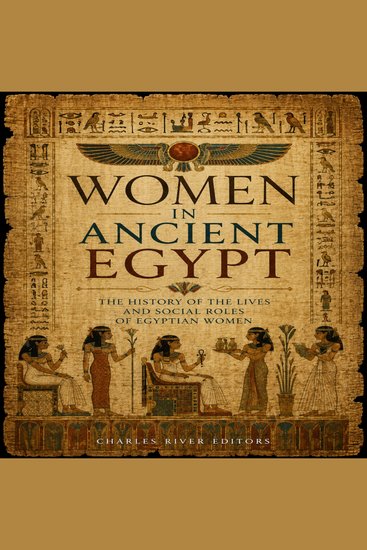
    Women in Ancient Egypt: The...

    Charles River Editors

    • 0
    • 0
    • 0
    From the unification of the Two Lands around 3100 B.C. to the death of Cleopatra in 30 B.C., more than three thousand years elapsed, and across that immense span the Egyptians wrote, painted, carved, and buried more about themselves than any other early people. A great deal of what they left behind concerns women. Wives appear beside their husbands on tomb walls. Mothers receive offerings from their sons. Daughters inherit estates. Queens rule. Widows go to court. Goddesses preside over the dead. The Egyptian woman is, by the standards of the ancient world, unusually visible, and the modern reader who looks for her finds a great deal to see. 
    	What that record shows has surprised observers for thousands of years, including some of the ancient writers themselves. When Herodotus traveled in Egypt in the middle of the 5th century B.C., he came from a world in which respectable women stayed indoors, did not transact business, and were represented in law by a male guardian, so what he found along the Nile struck him as a near-total inversion of the natural order. Egyptian women, he reported, went out to the markets and carried on trade while their husbands sat at home and wove, and they carried loads on their shoulders while men carried them on their heads. The reversal was so complete, in his telling, that it became one of the organizing themes of his entire account of Egypt. 
    	Herodotus was not a careful witness in every respect, and some of what he wrote about Egypt was wrong or exaggerated. The reversal of the sexes was as much a literary device as an observation, a way of telling his Greek readers that Egypt was an unusual land at the edge of the world. But the device worked because it rested on something real, because Egyptian women did go to market, did own and trade property, and did appear in their own names in legal documents, without a male guardian standing between them and the law. A Greek woman of the same period could do almost none of this.
    Ver libro