¡Acompáñanos a viajar por el mundo de los libros!
Añadir este libro a la estantería
Grey
Escribe un nuevo comentario Default profile 50px
Grey
Suscríbete para leer el libro completo o lee las primeras páginas gratis.
All characters reduced
Romantic Things - A Tree A Rock A Cloud - cover

Romantic Things - A Tree A Rock A Cloud

Mary Jacobus

Editorial: The University of Chicago Press

  • 1
  • 1
  • 0

Sinopsis

Our thoughts are shaped as much by what things make of us as by what we make of them. Lyric poetry is especially concerned with things and their relationship to thought, sense, and understanding. In Romantic Things, Mary Jacobus explores the world of objects and phenomena in nature as expressed in Romantic poetry alongside the theme of sentience and sensory deprivation in literature and art. Jacobus discusses objects and attributes that test our perceptions and preoccupy both Romantic poetry and modern philosophy. John Clare, John Constable, Rainer Maria Rilke, W. G. Sebald, and Gerhard Richter make appearances around the central figure of William Wordsworth as Jacobus explores trees, rocks, clouds, breath, sleep, deafness, and blindness in their work. While she thinks through these things, she is assisted by the writings of Maurice Merleau-Ponty, Jacques Derrida, and Jean-Luc Nancy. Helping us think more deeply about things that are at once visible and invisible, seen and unseen, felt and unfeeling, Romantic Things opens our eyes to what has been previously overlooked in lyric and Romantic poetry.
Disponible desde: 01/09/2012.
Longitud de impresión: 232 páginas.
Otros libros que te pueden interesar

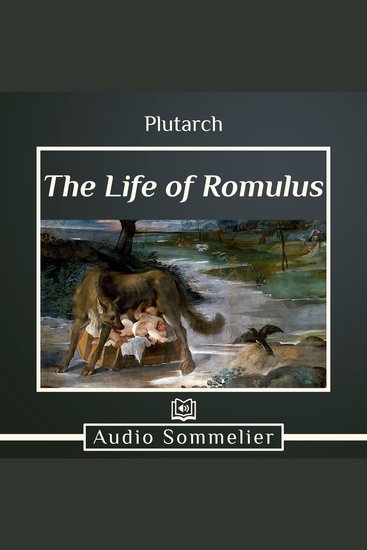
  • The Life of Romulus - cover

    The Life of Romulus

    Plutarch, Bernadotte Perrin

    • 0
    • 0
    • 0
    The story of Romulus is perhaps the most noteworthy entry in Plutarch’s Parallel Lives. According to legend, Romulus and his brother Remus founded Rome after being raised by a “she-wolf,” though Plutarch notes that this word was also used to describe sexually immoral women. “The Life of Romulus” shows how it is impossible to separate the man from the myth. For this reason, Plutarch’s portrait of Romulus argues that legends often have as great an influence on culture as the truth.  
    Ver libro
  • The Jews - 5000 Years and Counting - cover

    The Jews - 5000 Years and Counting

    Rob Kutner

    • 0
    • 0
    • 0
    "A delightful companion to the Torah, the Talmud, and every history book ever written about the Jewish people . . . a perfect book for anyone who has ever wondered how the heck the Jews got here and where the heck are we going and is it okay to laugh about it all? I'll follow Kutner to the answer." —Mayim Bialik, Actor, Author, Neuroscientist 


    A hilarious book for those with even the most basic level of Jewish knowledge, and perfect for those who want to know more. 


    The Jews: 5,000 Years and Counting is packed with Jew-facts, Jew-figures, and the original, never-before-seen documents from those who lived through Jewish history. Read the transcript of the Biblical Patriarchs' and Matriarchs' Group Therapy Session! Sneak a peek at Moses's Secret Diary, or check out the awkward "I'm dumping you" text chain from Spain to the Jews in 1492! Collect and trade Rabbi Action Cards! 


    Covering every major moment in Jewish history from the literal "Beginning" to Tuesday's rerun of Seinfeld, this book will make you laugh. It might inadvertently make you learn. If you're Jewish, it will unquestionably give you something to kvetch about.
    Ver libro
  • Living in the Moment - A Guide to Overcoming Challenges and Finding Moments of Joy in Alzheimer’s Disease and Other Dementias - cover

    Living in the Moment - A Guide...

    MD Elizabeth Landsverk, Heather...

    • 0
    • 0
    • 0
    A loved one's dementia diagnosis can leave you feeling scared and overwhelmed. Now a renowned geriatrician who has helped thousands of families live happy, engaged lives—after a dementia diagnosis—shares her expertise in this easy-to-follow guide. 


    Filled with must-have information, practical advice, and unique and comforting insights, here is everything you need to know about caring for your loved one and making his or her life the best possible—starting now, even as the disease progresses. In this book, you'll find: how to create a plan of action for today—and tomorrow—that will help all involved cope with this new normal; how to keep your vulnerable loved one safe and secure—both physically and financially; lifestyle changes, innovative new activities, and holistic interventions that can slow the progression of dementia; comprehensive information on both prescription and OTC medications that can help or hurt dementia patients; and much more. 


    In addition to all the essential advice, Dr. Landsverk demystifies the ins and outs of dementia, explaining what it is and what it's not, making sure you and your loved one will be ready to address whatever develops and maintain quality of life. Uniquely, Living in the Moment will transform how you think about dementia, providing comfort and support for the best life possible—at any stage.
    Ver libro
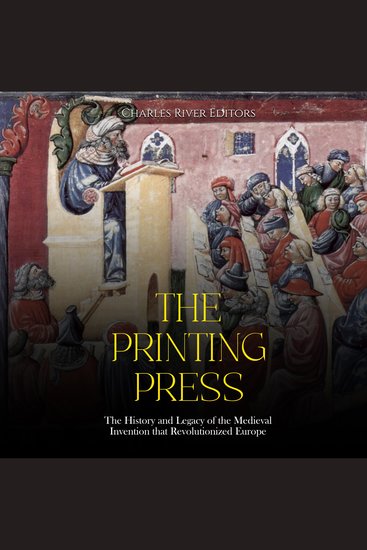
  • Printing Press The: The History and Legacy of the Medieval Invention that Revolutionized Europe - cover

    Printing Press The: The History...

    Editors Charles River

    • 0
    • 0
    • 0
    The history of printing was for ancient Asia an advancement in culture and communication, but for Europe in the 15th century, it was much more, plunging the continent into a new paradigm and aligning it for the modern world. Its importance is often overlooked, but the timeliness of the printing machine was equivalent to the invention of alphabets in antiquity and ranks up there with the digital revolution and the introduction of the internet. Put simply, it made the Renaissance possible and led to the modernization of Europe. 
    Long before the emergence of the modern world, paper was unknown in the West, and all documents were transcribed by hand onto clay, papyrus, and parchment. More importantly, few were allowed to express themselves through written media. Writing was for the most part theological in nature, reserved for scribes mostly living and working in monasteries. Books in the Middle Ages were owned almost exclusively by monasteries and educational institutions, and with reading material being such a rarity, content remained narrow and difficult to access. 
    	Based on earlier Asian principles, Johannes Gutenberg’s movable type printing press propelled an industry that led to the education of the West and ultimately removed the tight grip of the Vatican from daily European life. Within less than a century of Gutenberg’s device appearing on the scene, printing presses had churned out tens of millions of copies of books of all types, and as more people became educated, lower classes became wealthier while revolutionary principles spread across borders like wildfire. In addition to ushering in the Renaissance, the printing press also made the Reformation possible, and just as gunpowder was revolutionizing medieval warfare, the printing press led to battles over ideas and the rise of nationalism. For better and worse, after Gutenberg’s printing press became available, the world would never be the same.
    Ver libro
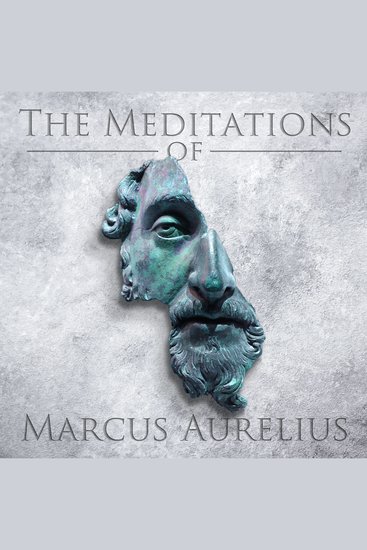
  • The Meditations of Marcus Aurelius - An Emperor's Advice on Crafting a Life of Virtue Honor Harmony and Happiness - cover

    The Meditations of Marcus...

    Marcus Aurelius

    • 0
    • 0
    • 0
    Roman Emperor Marcus Aurelius Antoninus Augustus never intended his collection of personal writings to be published, but it has become the foremost work of Stoic philosophy and advice to survive from ancient times.
     
    Described by President Bill Clinton as his favorite book and carried by Secretary of Defense and Marine Corps General James Mattis on deployments throughout his career, the Meditations provides a unique insight on life and leadership from the most powerful man in the world, written in plain language without condescension.
     
    Drawn from his own life and experience, and the teachings of philosophers and mentors he valued, Marcus intended his writings to serve him privately in his earnest attempt to thoughtfully and deliberately craft a life of virtue, honor, and harmony, and thus to attain true happiness: to carve off the rough and imperfect parts of his character and to become, as far as possible, a man perfectly fitted for his purpose in the universe. This was a task which contemporary and later reports suggest he accomplished admirably and elegantly: his reputation as a truly good man endures to this day.
     
    Having lost none of its relevance in the intervening centuries, his wisdom can help any reader achieve the same goal: to think, live, and act in complete agreement with nature.
     
    This edition is translated by Sir George William Chrystal KCB. His translation is not only modern, being accessible to and easily understood by the contemporary listener, but also classical, the words and sentences flowing with a dignified poetry that constantly reminds the reader of the author's august life. This new, American audiobook recording is a joy to listen to, and can itself become a source of meditative calm.
     
    Proudly published in the USA by Carlile Media.
    Ver libro
  • How to Lose Yourself - An Ancient Guide to Letting Go - cover

    How to Lose Yourself - An...

    The Buddha and His Followers

    • 0
    • 0
    • 0
    Inviting new translations of classical Buddhist texts about why the self is an illusion—and why giving it up can free us from suffering 


    From self-realization and self-promotion to self-help and the selfie, the modern world encourages us to be self-obsessed. We are even told that finding ourselves is the key to happiness. Better to lose yourself! More than 2,500 years ago, the Buddha argued that the self is an illusion—and that our belief in it is the cause of most, if not all, of our suffering. How to Lose Yourself presents lively, accessible, and expert new translations of ancient Buddhist writings about the central, unique, and powerful Buddhist teaching of "no-self." 


    Drawn from three important Buddhist traditions, these essential Indian, Tibetan, and Chinese writings provide a rich sampling of the ways Buddhist philosophers have understood the idea that we are selfless persons—and why this insight is so therapeutic. When we let go of the self, we are awakened to the presence of all things as they truly are, and we let go of the anxiety, fear, greed, and hatred that are the source of all suffering.
    Ver libro