Begleiten Sie uns auf eine literarische Weltreise!
Buch zum Bücherregal hinzufügen
Grey
Einen neuen Kommentar schreiben Default profile 50px
Grey
Jetzt das ganze Buch im Abo oder die ersten Seiten gratis lesen!
All characters reduced
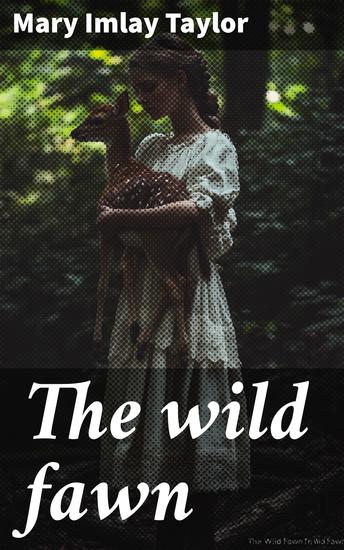
The wild fawn - cover

The wild fawn

Mary Imlay Taylor

Verlag: Good Press

  • 0
  • 0
  • 0

Beschreibung

Mary Imlay Taylor's "The Wild Fawn" presents a lyrical exploration of humanity's bond with nature through the eyes of a sensitive young protagonist. Set against the backdrop of early 20th century America, the narrative weaves together elements of coming-of-age, romanticism, and folk wisdom, showcasing Taylor's masterful command of evocative imagery and emotional depth. The rich, descriptive passages reflect the pastoral beauty and untamed wilderness, allowing readers to immerse themselves fully in the protagonist's emotional journey as she navigates the complexities of love, loss, and self-discovery. Mary Imlay Taylor, a prominent figure in early 20th century American literature, was deeply influenced by her own experiences in the natural world and her interactions with the social issues of her time. Her background in education and her commitment to environmental conservation informed her writing, as she sought to illuminate the fragile relationship between humanity and nature. Taylor's experiences as a woman in a rapidly changing society also shaped her perspective, enriching the narrative with layers of social commentary and emotional nuance. "The Wild Fawn" is a poignant read for those drawn to evocative prose and themes of nature's beauty intertwined with human emotion. Readers interested in ecological literature, personal transformations, and the psychological intricacies of youth will find Taylor's work both compelling and relatable. It offers a reflective experience, inviting the audience to reconnect with their own inner wildness.
Verfügbar seit: 02.03.2025.
Drucklänge: 90 Seiten.

Weitere Bücher, die Sie mögen werden

  • By Grace of Julius Caesar - cover

    By Grace of Julius Caesar

    Lucy Maud Montgomery

    • 0
    • 0
    • 0
    Lucy Maud Montgomery (November 30, 1874 – April 24, 1942), published as L. M. Montgomery, was a Canadian author best known for a series of novels beginning in 1908 with Anne of Green Gables. The book was an immediate success. The title character, orphan Anne Shirley, made Montgomery famous in her lifetime and gave her an international following.
    By Grace of Julius Caesar: Melissa sent word on Monday evening that she thought we had better go round with the subscription list for cushioning the church pews on Tuesday. I sent back word that I thought we had better go on Thursday.
    Zum Buch
  • The Ghost in the Cupboard Room - From their pens to your ears genius in every story - cover

    The Ghost in the Cupboard Room -...

    Wilkie Collins

    • 0
    • 0
    • 0
    Wilkie Collins was born on 8th January 1824 in Marylebone, London.  
    The family moved several times in his early years before, at 12, they travelled to France and Italy for 2 years where the sights and atmosphere made a deep and lasting impression on him. 
    He resumed his education at Mr Cole’s private boarding school in Highbury, Islington.  Here, he began his literary career under unusual circumstances: the school bully would give him no peace until he had been told a bedtime story.  This ‘little brute’ helped create one of England’s greatest writers.  
    On leaving school, in 1841, he became a clerk at a tea merchant before, 2 years later, publishing his first short story.  However, his first novel was rejected and remained so during his lifetime.  
    A brief stint at Lincoln’s Inn to please his father and to acquire a steady income was halted by his father’s death.  Collins then wrote and published his fathers’ memoirs.  He then completed his legal education though he would never practice.  
    In March 1851, he was introduced to Charles Dickens and there now started a period of sustained literary output and a remarkable lifelong friendship.  His stories were published in Dicken’s magazines, and he toured with Dicken’s theatrical before the two of them travelled to the Continent. 
    By the early 1860’s worrying signs of ill-health appeared with rheumatic gout.  As it worsened, he sought respite and cures in German spa towns and gave up writing to help his recuperation. 
    His personal life had become very complicated.  He was living with the widowed Caroline Graves and conducting an affair with a much younger Martha Rudd.  With the serialised release of ‘The Moonstone’ and vicious attacks of gout Caroline left him and married another.  Collins was now prescribed opium and was soon its lifelong dependent.  Martha bore him two children and with the return of a now divorced Caroline Graves he now divided his time between the two women. 
    In 1874 he set aside writing to tour North America on a reading tour. 
    Throughout his later years he continued to write and publish.  In all 30 novels, 14 plays, 60 short stories and over a 100 non-fiction essays as well as many more collaborations with Dickens. 
    In 1884 the Society of Authors elected him as it’s Vice-President. 
    Wilkie Collins died from a paralytic stroke on September 23rd, 1889, in London. He was 65.
    Zum Buch
  • Virginibus Puerisque IV: The Truth of Intercourse (Unabridged) - cover

    Virginibus Puerisque IV: The...

    Robert Louis Stevenson

    • 0
    • 0
    • 0
    Robert Louis Balfour Stevenson was a Scottish novelist, poet, and travel writer, and a leading representative of English literature. He was greatly admired by many authors, including Jorge Luis Borges, Ernest Hemingway, Rudyard Kipling and Vladimir Nabokov.
    VIRGINIBUS PUERISQUE IV: THE TRUTH OF INTERCOURSE: Among sayings that have a currency in spite of being wholly false upon the face of them for the sake of a half-truth upon another subject which is accidentally combined with the error, one of the grossest and broadest conveys the monstrous proposition that it is easy to tell the truth and hard to tell a lie.
    Zum Buch
  • Hunchback of Notre-Dame The (Book 6) - cover

    Hunchback of Notre-Dame The...

    Victor Hugo

    • 0
    • 0
    • 0
    Book 6: The Hunchback of Notre-Dame or Notre-Dame de Paris is a French Gothic novel by Victor Hugo, published in 1831. - The story is set in Paris in 1482 during the reign of Louis XI. The gypsy Esmeralda (born as Agnes) captures the hearts of many men, including those of Captain Phoebus and Pierre Gringoire, but especially Quasimodo and his guardian Archdeacon Claude Frollo. Frollo is torn between his obsessive lust for Esmeralda and the rules of Notre Dame Cathedral. He orders Quasimodo to kidnap her, but Quasimodo is captured by Phoebus and his guards, who save Esmeralda. Gringoire, who attempted to help Esmeralda but was knocked out by Quasimodo, is about to be hanged by beggars when Esmeralda saves him by agreeing to marry him for four years.
    Zum Buch
  • The Strange Case of Dr Jekyll and Mr Hyde - cover

    The Strange Case of Dr Jekyll...

    Robert Louis Stevenson

    • 0
    • 0
    • 0
    Strange Case of Dr Jekyll and Mr. Hyde is an 1886 Gothic novella by Scottish author Robert Louis Stevenson. It follows Gabriel John Utterson, a London-based legal practitioner who investigates a series of strange occurrences between his old friend Dr. Henry Jekyll and a murderous criminal named Edward Hyde. 
     
    Strange Case of Dr Jekyll and Mr. Hyde is one of the most famous pieces of English literature and is considered to be a defining book of the gothic horror genre. The novella has also had a sizable impact on popular culture, with the phrase "Jekyll and Hyde" being used in vernacular to refer to people with an outwardly good but sometimes shockingly evil nature.
    Zum Buch
  • The Life and Adventures of Robinson Crusoe - cover

    The Life and Adventures of...

    Daniel Defoe

    • 0
    • 0
    • 0
    The Life and Adventures of Robinson Crusoe is a novel by Daniel Defoe, first published on 25 April 1719. The first edition credited the work's protagonist Robinson Crusoe as its author, leading many readers to believe he was a real person and the book a travelogue of true incidents.
    Crusoe set sail from Kingston upon Hull on a sea voyage in August 1651, against the wishes of his parents, who wanted him to pursue a career in law. After a tumultuous journey where his ship is wrecked in a storm, his lust for the sea remains so strong that he sets out to sea again. This journey, too, ends in disaster, as the ship is taken over by Salé pirates (the Salé Rovers) and Crusoe is enslaved by a Moor. Two years later, he escapes in a boat with a boy named Xury; a captain of a Portuguese ship off the west coast of Africa rescues him. The ship is en route to Brazil. Crusoe sells Xury to the captain. With the captain's help, Crusoe procures a plantation.
    Zum Buch