Junte-se a nós em uma viagem ao mundo dos livros!
Adicionar este livro à prateleira
Grey
Deixe um novo comentário Default profile 50px
Grey
Assine para ler o livro completo ou leia as primeiras páginas de graça!
All characters reduced
Stay With The Mess - Notes On Running Breaking And Learning To Stay - cover
LER

Stay With The Mess - Notes On Running Breaking And Learning To Stay

Marlon Pollard

Editora: Publishdrive

  • 0
  • 0
  • 0

Sinopse

Ever feel like you’re constantly running—from yourself, from silence, from the weight of your own thoughts?
 
This book isn’t polished wisdom. It’s not a neat 10-step self-help guide. It’s late-night journal entries turned into raw chapters. It’s the truth about anxiety, loneliness, heartbreak, small joys, and the quiet practice of learning to stay when everything in you wants to escape.
 
Marlon Pollart doesn’t write like a guru—he writes like someone who’s been there. Every page feels like a midnight text from a friend who admits their flaws, their contradictions, their ugly moments… and somehow makes you feel less alone in yours.
 
Inside you’ll find:
 
Stories about leaving, returning, breaking down, and holding on.
 
Tangents, rants, confessions, and raw honesty.
 
Notes to self at the end of every chapter (scrappy, unfiltered, human).
 
A reminder that you don’t need to fix everything—you just need to stay.
 
This isn’t a clean book. It’s messy, like life. But if you’re tired of being told to “optimize” yourself, if you’ve ever felt like you’re drowning in the noise of your own mind, this book is for you.
 
Stay With The Mess is part memoir, part midnight survival guide, part conversation with a stranger who somehow gets it.
 
Read it slowly, or all at once. Underline it, throw it across the room, come back when you’re ready. Just… stay.
Disponível desde: 09/09/2025.
Comprimento de impressão: 100 páginas.


Outros livros que poderiam interessá-lo

  • The Second Fifty - Answers to the 7 Big Questions of Midlife and Beyond - cover

    The Second Fifty - Answers to...

    PhD Debra Whitman

    • 0
    • 0
    • 0
    Expert guidance for living a longer, healthier, more meaningful second half of life. 


    Americans are now living decades longer than previous generations. These added years offer exciting possibilities but also raise crucial questions. In her groundbreaking book, Debra Whitman provides a roadmap for navigating, and celebrating, the second half of life. Drawing on compelling stories from her own family and people across the country, interviews with experts, and cutting-edge research, she shares insights on brain health, the contributions and concerns of an older workforce, caregiving, financing retirement, and more. Her findings are often surprising: Americans over fifty are a boon to—not a drain on—the economy. Dementia rates have actually been declining as more people achieve higher levels of education and adopt healthier lifestyles. And while we've long known that staying connected to others is critical to mental health, it turns out it is also linked to a stronger immune system, lower blood pressure, and a longer life. 


    Whitman presents practical steps we can take to help create a better second fifty for ourselves. But we can't do it alone. Whitman also calls for urgently needed changes that would make it easier for every American to enjoy a vital and meaningful second half of life.
    Ver livro
  • Being Serious Without Belief - Malibu 1970 - Small Group Discussion 4 - cover

    Being Serious Without Belief -...

    Jiddu Krishnamurti

    • 0
    • 0
    • 0
    "Being serious without belief - 15 March 1970  
    • Can the intellect, a fragment, ever be serious? Serious in the sense of a 
    sustained observation without any distortion. 
    • Control 
    • What is living? 
    • How does it happen that one can be completely harmonious? 
    • What does awareness mean?"
    Ver livro
  • Rome and the Near East - The History of the Different Kingdoms that Fought the Roman Empire in the Region - cover

    Rome and the Near East - The...

    Charles River Editors

    • 0
    • 0
    • 0
    Rome faced many formidable enemies over the course of nearly 1,000 years, but perhaps none were as enigmatic and forgotten as King Mithridates VI of Pontus. Despite numerous ancient sources detailing the life of the foreign monarch and his wars with Rome, and despite being an interesting character who endured years as a fugitive in his youth, enjoyed a fascination with poisons, and held mercy and pragmatic ruthlessness in a delicate balance, very few scholarly books and works have been produced about the king. It may be that his largely unsuccessful military campaigns have contributed to his disappearance from active historical examination, but despite his poor record in engagements against the Romans, the Kingdom of Pontus dominated much of Asia Minor in the 1st century BCE, and the Romans themselves considered the kingdom one of its most dangerous enemies. According to Plutarch, when Mithridates died, the Roman soldiers felt that “in the person of Mithridates ten thousand enemies had died.” By then, it had required three of Rome’s most famous generals - Sulla, Lucullus, and Pompey - to finally subdue his kingdom.   
    	Among all the periods in ancient Egyptian history, the Ptolemaic Kingdom and its most famous ruler, Cleopatra, may be the most well-known today. By the 4th century BCE, it appeared as though ancient Egypt was in its final death throes. It had long ceased to be an influential kingdom in the Near East and Mediterranean regions, and it had been ruled over by a succession of foreign peoples including Libyans, Nubians, Assyrians, and Persians. But just when Egypt seemed doomed to pass forever into obscurity, it was reinvigorated by outsiders, most notably Alexander the Great. While in the process of campaigning to destroy the Achaemenid Persian Empire and conquer the world in 331 BCE, he made a pit stop in Egypt that forever changed the course of Egyptian history.
    Ver livro
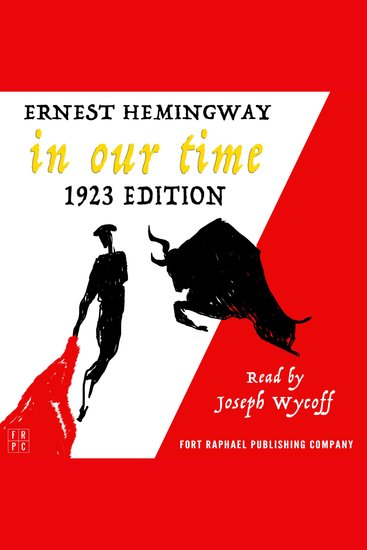
  • In Our Time - 1923 Edition - Unabridged - cover

    In Our Time - 1923 Edition -...

    Ernest Hemingway

    • 0
    • 0
    • 0
    In 1923, journalist and budding fiction writer Ernest Hemingway penned eighteen original short stories and published them in the magazine The Little Review with the help of his friend Ezra Pound. Hemingway would later add to this collection and re-publish the stories in 1925 under the same title and - after adding an additional story - would again republish the entire volume in 1930, again as "in our time" (all in lower case).   Presented here are the original eighteen "vignettes" as Hemingway originally published them in 1923. This collection of short stories would mark one of the most auspicious and earth-shattering debuts by an author in literary history and also introduced the world to the fictional character of Nick Adams, a protagonist Hemingway would re-visit repeatedly in his career.   Within a few years, Hemingway would become known as one of the most important voices of his generation and his stark prose - lean and brutal at times - would be imitated by generations of writers who followed him.
    Ver livro
  • The Scheme - How the Right Wing Used Dark Money to Capture the Supreme Court - cover

    The Scheme - How the Right Wing...

    Jennifer Mueller, Senator...

    • 0
    • 0
    • 0
    Following his book Captured on corporate capture of regulatory and government agencies, and his years of experience as a prosecutor, Senator Sheldon Whitehouse here turns his attention to the right-wing scheme to capture the courts, and how it influenced the Trump administration's appointment of over 230 "business-friendly" judges, including the last three justices of the United States Supreme Court. 


    Whitehouse traces the motive to control the court system back to Lewis Powell's notorious memo, which gave a road map for corporate influence to target the judiciary, and chronicles a hidden-money campaign using an armada of front groups and helped by the infamous Citizens United Supreme Court decision. The scheme utilized the Federalist Society as an appointments turnstile, spent secret millions to support the nominees, orchestrated an "amicus brief" signaling apparatus, and propped up front-group litigants to "fast-lane" strategic test cases to the friendly justices. 


    Whitehouse finds the same small handful of right-wing billionaires and corporations running operations that he likens to "covert ops," ultimately enticing the Senate to break rules, norms, and precedents to confirm wildly inappropriate nominees who would advance the anti-government agenda of a small number of corporate oligarchs.
    Ver livro
  • Robert Frost Lectures on Poetry - cover

    Robert Frost Lectures on Poetry

    Robert Frost

    • 0
    • 0
    • 0
    Robert Lee Frost (March 26, 1874 - January 29, 1963) was an American poet who frequently wrote about settings from rural life in New England in the early 20th century, using them to examine complex social and philosophical themes. Frost is the only poet to receive four Pulitzer Prizes for Poetry. He became one of America's rare "public literary figures, almost an artistic institution," and was awarded the Congressional Gold Medal in 1960 for his poetic works. The following recording is from a 1954 lecture Frost gave on poetry and writers Charles Dickens, Henry David Thoreau, Emily Dickinson, T. S. Eliot, Theodore Dreiser, William Faulkner, Walter Savage Landor, Gerard Manley Hopkins, Ralph Waldo Emerson, Percy Shelley, and John Masefield.
    Ver livro