¡Acompáñanos a viajar por el mundo de los libros!
Añadir este libro a la estantería
Grey
Escribe un nuevo comentario Default profile 50px
Grey
Suscríbete para leer el libro completo o lee las primeras páginas gratis.
All characters reduced
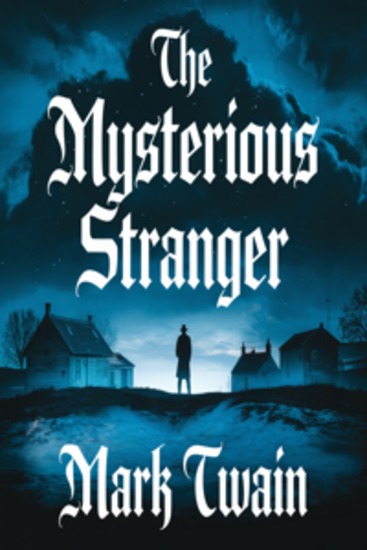
The Mysterious Stranger (illustrated) - cover

The Mysterious Stranger (illustrated)

Mark Twain

Editorial: Swish

  • 0
  • 0
  • 0

Sinopsis

The Mysterious Stranger  by Mark Twain is a fascinating collection of tales that delve into human nature, morality, and the supernatural. First published in 1916 and now in the public domain, the title story explores the life-changing encounter of three boys with a mysterious, otherworldly stranger in an Austrian village. Twain's signature wit, combined with profound philosophical insights, makes this book a timeless exploration of human contradictions and the search for truth. This edition is carefully formatted for digital readers, ensuring an enjoyable and accessible experience.
Disponible desde: 11/12/2024.

Otros libros que te pueden interesar

  • A Profitable Weakness - From their pens to your ears genius in every story - cover

    A Profitable Weakness - From...

    George Gissing

    • 0
    • 0
    • 0
    George Robert Gissing was born on November 22nd, 1857 in Wakefield, Yorkshire.  
    He was educated at Back Lane School in Wakefield. Gissing loved school. He was enthusiastic with a thirst for learning and always diligent.  By the age of ten he was reading Dickens, a lifelong hero. 
    In 1872 Gissing won a scholarship to Owens College. Whilst there Gissing worked hard but remained solitary. Unfortunately, he had run short of funds and stole from his fellow students. He was arrested, prosecuted, found guilty, expelled and sentenced to a month's hard labour in 1876. 
    On release he decided to start over.  In September 1876 he travelled to the United States. Here he wrote short stories for the Chicago Tribune and other newspapers. On his return home he was ready for novels. 
    Gissing self-published his first novel but it failed to sell.  His second was acquired but never published. His writing career was static.  Something had to change.  And it did. 
    By 1884 The Unclassed was published.  Now everything he wrote was published. Both Isabel Clarendon and Demos appeared in 1886. He mined the lives of the working class as diligently as any capitalist. 
    In 1889 Gissing used the proceeds from the sale of The Nether World to go to Italy. This trip formed the basis for his 1890 work The Emancipated. 
    Gissing's works began to command higher payments. New Grub Street (1891) brought a fee of £250.  
    Short stories followed and in 1895, three novellas were published; Eve's Ransom, The Paying Guest and Sleeping Fires. Gissing was careful to keep up with the changing attitudes of his audience.  
    Unfortunately, he was also diagnosed as suffering from emphysema. The last years of his life were spent as a semi-invalid in France but he continued to write. 1899; The Crown of Life. Our Friend the Charlatan appeared in 1901, followed two years later by The Private Papers of Henry Ryecroft. 
    George Robert Gissing died aged 46 on December 28th, 1903 after catching a chill on a winter walk.
    Ver libro
  • The Fall of the House of Usher - cover

    The Fall of the House of Usher

    Edgar Allen Poe

    • 0
    • 0
    • 0
    A point of view of the proceeding madness of a friend. The mind ponders the possibility of madness and redemption upon the eve of ones family name. Usher shall be no more!
    Ver libro
  • Cool Air - From their pens to your ears genius in every story - cover

    Cool Air - From their pens to...

    HP Lovecraft

    • 0
    • 0
    • 0
    Howard Phillips Lovecraft is among the greatest American masters of fantasy and the supernatural.  
    Born in 1890, a native of Providence, Rhode Island, his health was uncertain from childhood and he led a sheltered early life. His semi-invalidism enabled him to read omnivorously, and as a shy imaginative child he began to invent what would in his adult life become a whole macabre fantastic world of his own, peopled by creatures out of his own weird imagination.  
    As an adult he was retiring, almost a recluse. Tall, thin and pale, but with bright alert eyes, he was much given to wandering his native city in the dark hours of the night, and he became a devoted student of its antiquities.  
    Although he began to write early he had nothing published until he was in his twenties. He set many of his stories around the imaginary town of Arkham, and invented an entire mythology of his own, its core being the demoniac cult of Cthulhu, based on the lore or legend that the world was at one time inhabited by another race who, in practising black magic, lost their foothold or were expelled, yet live on outside, ever ready to take possession of this earth again. 
    Since his early death in 1937 his stories have continued to attract attention and praise from an ever-growing audience.
    Ver libro
  • Little Women - cover

    Little Women

    Louisa May Alcott

    • 0
    • 0
    • 0
    Little Women is a coming-of-age novel written by American novelist Louisa May Alcott, originally published in two volumes in 1868 and 1869. The story follows the lives of the four March sisters—Meg, Jo, Beth, and Amy—and details their passage from childhood to womanhood. Loosely based on the lives of the author and her three sisters, it is classified as an autobiographical or semi-autobiographical novel.
    Ver libro
  • A Summer Novella - cover

    A Summer Novella

    Stefan Zweig

    • 0
    • 0
    • 0
    Bored in a semi-deserted Italian hotel, the narrator of this short story spends his days observing the other residents. However, his routine changes when he finally finds a companion: a mysterious elderly gentleman who is willing to share an idea for an exciting novel...
    Throughout his writing career, Stefan Zweig showed great interest in psychology and, in particular, in the work of Sigmund Freud. This fascination with human nature led Zweig to create complex portraits of his characters and, as a result, works that continue to captivate readers for generations.
    Ver libro
  • Araby - From their pens to your ears genius in every story - cover

    Araby - From their pens to your...

    James Joyce

    • 0
    • 0
    • 0
    James Augustine Aloysius Joyce was born on the 2nd February 1882 in Dublin into a middle-class family, and the eldest of ten surviving siblings 
    Admired as a brilliant student he briefly attended the Christian Brothers-run O'Connell School before excelling at the Jesuit schools of Clongowes and Belvedere.  From there he went on to attend University College Dublin from 1898, studying English, French and Italian 
    In 1902, Joyce was now in his early twenties, and went to Paris to study Medicine but soon abandoned his teachings.  Back in Dublin to attend to his dying Mother he met Nora Barnacle. They bonded immediately into a life-long match. Together they decided to emigrate to Europe.  The couple lived in Trieste, Rome, Paris, and finally Zürich where Joyce pursued a variety of jobs and ventures to supplement his literary pursuits but none of these paid off.  
    After publishing a poetry volume, ‘Chamber Music’, in 1907, his short story collection ‘The Dubliners’, in 1914, helped establish his talent in the rapidly changing world.  
    Although far from home Joyce’s literary heart and works were set in his recollections of Dublin.  Characters are close resemblances of family and friends and indeed enemies.  His landmark work ‘Ulysses’, published in 1922, is set in the streets and alleyways of the city as it parallels Homer’s Odyssey in a variety of styles including its famed stream of consciousness. 
    His pen continued to produce classics of the order of ‘A Portrait of the Artist as A Young Man’ and ‘Finnegan’s Wake’ together with several volumes of poetry and a play ‘The Exiles, in 1918.   
    On the 11th January 1941, Joyce underwent surgery in Zürich for a perforated duodenal ulcer. The next day he fell into a coma. On the 13th after a brief period of lucidity in which he called for his wife and son he passed.  He was 58.
    Ver libro