Junte-se a nós em uma viagem ao mundo dos livros!
Adicionar este livro à prateleira
Grey
Deixe um novo comentário Default profile 50px
Grey
Assine para ler o livro completo ou leia as primeiras páginas de graça!
All characters reduced
The Million Pound Bank Note - cover
LER

The Million Pound Bank Note

Mark Twain

Editora: Carousel Books

  • 0
  • 0
  • 0

Sinopse

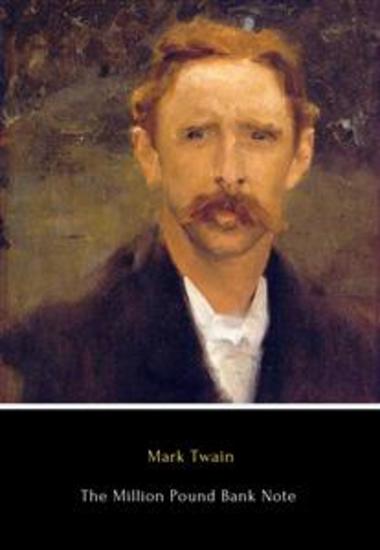
Henry Adams arrives in London down on his luck, hungry and penniless. His "luck" turns when two brothers, in order to settle a £20,000 wager they have made with each other, thrust a million pound note upon him. They bet that a man brandishing such a note would be able to live high on the hog without ever having to cash it. Similar to the myth of the Emperor with no clothes, The Million Pound Bank Note exposes the limits of human perception when confronted by money, majesty, and power.
Disponível desde: 11/10/2022.

Outros livros que poderiam interessá-lo

  • Space Chase - cover

    Space Chase

    Harold Anderson, Tom Lyons

    • 0
    • 0
    • 0
    Not everything they told you is true… 
    …because it was my job to ensure you never knew the whole truth. If the American people understood what really happened, the U.S. government feared life would have irrevocably changed for the worse. 
    In Space Chase, the premier installment of The Palmdale Files, former agent Harold Anderson reveals the true story behind a mysterious Lockheed U-2 "Dragon Lady" crash in the mountains of Nevada and the extreme efforts the U.S. government went through to hide what happened. Space Chase—also known as Event 21 Zeta—is the first in a series of forgotten and buried events the author once destroyed to protect the peace and security of the United States—events the government would rather hide forever. 
    Never heard of Palmdale? The author isn't surprised, and believes you never will outside of these short stories. The Palmdale Files share highlights from Harold Anderson's U.S. Air Force career, where he worked to defend the nation and the world from paranoid hysteria about unexplained phenomena and threats from above.
    Ver livro
  • Her First Ball - A Timeless Coming-of-Age Classic Short Story About Youth First Love and Fleeting Joy - cover

    Her First Ball - A Timeless...

    Katherine Mansfield

    • 0
    • 0
    • 0
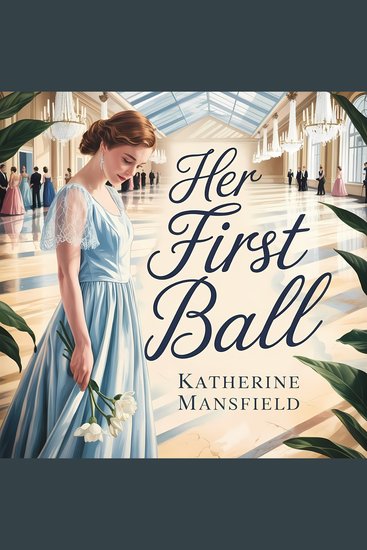
    What if your very first dance could sweep you into a world of dazzling lights, laughter, and unforgettable magic? In "Her First Ball", Katherine Mansfield tells the enchanting story of eighteen-year-old Leila, a wide-eyed country girl visiting the city for the first time. Stepping into her cousin’s grand ball, she is mesmerized by swirling gowns, sparkling chandeliers, and the thrill of being noticed. Every smile, every dance, every glittering detail overwhelms her with joy and wonder - until a cynical older man delivers a sharp reminder that youth and beauty are fleeting. Brimming with charm, elegance, and emotional depth, this timeless short story captures the thrill of first experiences, the bittersweet sweetness of growing up, and the fleeting but unforgettable sparkle of life’s earliest joys. Press play and join Leila on a journey through music, laughter, and wonder - an audiobook experience that will leave your heart dancing long after the final note.
    Ver livro
  • History Plays for the Grammar Grades - cover

    History Plays for the Grammar...

    Mary Ella Lyng

    • 0
    • 0
    • 0
    A charming collection of 14 short American history plays for the very young - ranging from Christopher Columbus to George Washington to Susan B Anthony. (Summary by Maria Therese)Cast: 
    Narrator; First Maid of Honor; Second Woman: AvailleNarrator; Queen Isabella; Pocohantus: CaprishaPageColumbus; First Merchant; Blount; Squanto; Robert E. Lee: Tom CausbyWise Man; Captain Newport; King; Court; People; Richard Henry Lee; Californians; Auctioneer; Union Soldier: Libby GohnLuis; John Smith; William Penn; Noble; First Woman; First Boy; British General; Men; Secretary to the President; Mr. President; Abraham Lincoln; Soldier: Charlotte DuckettSecond Merchant: Courtier; Officer: Aidan BrackPowhatan; William Penn, Sr; Second Maid of Honor; Samoset; Third Boy; Father Gibault; Senator Benton; Ezekiel Webster; Wise Man of Spain: Maria ThereseWalter Raleigh; Bradford; Young George Washington; Second Man of the House; Mr. Sherman; Elizabeth Cady Stanton: Elizabeth KlettQueen Elizabeth: Verity KendallIndian Chief; Second Man: rookieblueFrancis Drake; Governor Carter; Benjamin Franklin: Nathanial W.C. HigginsMan; First Man; Second Boy; Robert Livingston; Father; Mr. Seward: balaNarrator; Susan B. Anthony: Victoria MartinPeople; Third Man of the House; General Scott; Mr. Haynes: KristingjStandish: Thomas Jefferson; George Rogers Clark; Andrew Jackson; President Van Buren; Henry Clay; John Hanks; Ulysses S. Grant: Amanda FridayBrewster; Mr. Hancock; General Flores; Officer: David OlsonNarrator; One of the Girls: Pamela KrantzMrs. Washington: BrittaniaFourth Boy; Speaker; Member of the House: Frances BrownPatrick Henry: GraceMen of the House; Other Man; Member of Congress: TriciaGJohn Adams; John Fremont; John Calhoun: Arielle LipshawOlder George Washington: Delmar H. DolbierDaniel Webster: nomorejeffsAudio edited by: Maria Therese; Hugh Gillis; Elizabeth Klett and Arielle Lipshaw
    Ver livro
  • Bellerophon To Anteia - From their pens to your ears genius in every story - cover

    Bellerophon To Anteia - From...

    Mary Butts

    • 0
    • 0
    • 0
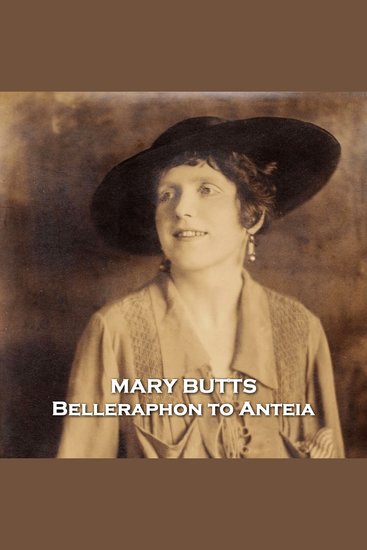
    Mary Frances Butts was born on 13th December 1890 in Poole, Dorset. 
    Her early years were spent at Salterns, an 18th-century house overlooking Poole Harbour.  Sadly in 1905 her father died, and she was sent for boarding at St Leonard's school for girls in St Andrews. 
    Her mother remarried and, from 1909, Mary studied at Westfield College in London, and here, first became aware of her bisexual feelings.  She was sent down for organising a trip to Epsom races and only completed her degree in 1914 when she graduated from the London School of Economics.  By then Mary had become an admirer of the occultist Aleister Crowley and she was given a co-authorship credit on his ‘Magick (Book 4)’. 
    In 1916, she began the diary which would now detail her future life and be a constant reference point for her observations and her absorbing experiences. 
    During World War I, she was doing social work for the London County Council in Hackney Wick, and involved in a lesbian relationship.  Life changed after meeting the modernist poet, John Rodker and they married in 1918. 
    In 1921 she spent 3 months at Aleister Crowley's Abbey of Thelema in Sicily; she found the practices dreadful and also acquired a drug habit.  Mary now spent time writing in Dorset, including her celebrated book of short stories ‘Speed the Plough’ which saw fully develop her unique Modernist prose style. 
    Europe now beckoned and several years were spent in Paris befriending many artists and writing further extraordinary stories.   
    She was continually sought after by literary magazines and also published several short story collections as books. Although a Modernist writer she worked in other genres but is essentially only known for her short stories.  Mary was deeply committed to nature conservation and wrote several pamphlets attacking the growing pollution of the countryside. 
    In 1927, she divorced and the following year her novel ‘Armed with Madness’ was published.  A further marriage followed in 1930 and time was spent attempting to settle in London and Newcastle before setting up home on the western tip of Cornwall.  By 1934 the marriage had failed. 
    Mary Butts died on 5th March 1937, at the West Cornwall Hospital, Penzance, after an operation for a perforated gastric ulcer. She was 46.
    Ver livro
  • The Cactus - From their pens to your ears genius in every story - cover

    The Cactus - From their pens to...

    O Henry

    • 0
    • 0
    • 0
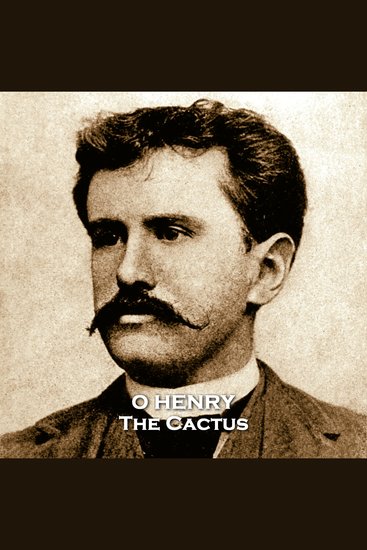
    William Sydney Porter was born on 11th September 1862 in Greensboro, North Carolina. At age 3 his mother died from tuberculosis. From an early age it was clear Porter had a large appetite for reading as he absorbed the world around him. 
    He first attended at a school run by his aunt before enrolling at the Lindsey Street High School and then worked at his uncle’s drugstore and gained a pharmacists’ license in 1881.  
    A persistent cough took him to Texas in the hope that a change of climate would help his symptoms. He took on various types of work, initially from ranch hand and cook and then as varied as pharmacist, draftsman, bank teller and journalist. He also began to write, though for now, purely as a hobby. 
    He was a member of several singing and dramatic groups when he met 17 year old Athol Estes, daughter of a wealthy Austin family. Despite her mother’s objection owing to Athol’s tuberculosis, they began courting and in July 1887, they eloped and soon married. 
    Athol, impressed by his writing, encouraged him to get them published. A job as a draftsman at the Texas General Land Office paid a healthy $100 dollars per month and life was good. 
    But then life turned cruel. His son died a few hours after birth although a daughter, Margaret, came the following year.  His job had to be vacated but another was found at the First National Bank of Austin. The bank operated informally and Porter was careless in keeping the books. He lost that job but began writing for the humorous weekly The Rolling Stone and the Houston Post. Some time later the federal Bank auditors went through his former accounts and he was arrested on charges of embezzlement. 
    Porter fled the day before his trial to Honduras. Holed up for several months he began to write.  Athol had become too ill to travel to meet him and learning that her health was deteriorating he surrendered to the court in February 1897.  Bail was obtained so that he could stay with Athol during her final days.  
    Porter was sentenced to five years at the Ohio Penitentiary in Columbus. His pharmacy qualifications got him the job of night druggist.  His sentence also gave him time to write and publish fourteen short stories. In December 1899 in McClure’s Magazine he published a short story as O Henry.  
    He was released two years early in July 1901, and reunited with Margaret, now 11, in Pittsburgh.  He now began his most prolific period of writing; a short story per week for the New York World, while also publishing works in other magazines.  Eventually over 600 of his short stories were published. 
    Porter was a heavy drinker and in 1908 his health, which had deteriorated for several years, took a dramatic turn for the worse, as did his writing.  
    O Henry died of cirrhosis of the liver complicated by diabetes and an enlarged heart on 5th June 1910.
    Ver livro
  • Inspiration An - From their pens to your ears genius in every story - cover

    Inspiration An - From their pens...

    George Gissing

    • 0
    • 0
    • 0
    George Robert Gissing was born on November 22nd, 1857 in Wakefield, Yorkshire.  
    He was educated at Back Lane School in Wakefield. Gissing loved school. He was enthusiastic with a thirst for learning and always diligent.  By the age of ten he was reading Dickens, a lifelong hero. 
    In 1872 Gissing won a scholarship to Owens College. Whilst there Gissing worked hard but remained solitary. Unfortunately, he had run short of funds and stole from his fellow students. He was arrested, prosecuted, found guilty, expelled and sentenced to a month's hard labour in 1876. 
    On release he decided to start over.  In September 1876 he travelled to the United States. Here he wrote short stories for the Chicago Tribune and other newspapers. On his return home he was ready for novels. 
    Gissing self-published his first novel but it failed to sell.  His second was acquired but never published. His writing career was static.  Something had to change.  And it did. 
    By 1884 The Unclassed was published.  Now everything he wrote was published. Both Isabel Claren-don and Demos appeared in 1886. He mined the lives of the working class as diligently as any capitalist. 
    In 1889 Gissing used the proceeds from the sale of The Nether World to go to Italy. This trip formed the basis for his 1890 work The Emancipated. 
    Gissing's works began to command higher payments. New Grub Street (1891) brought a fee of £250.  
    Short stories followed and in 1895, three novellas were published; Eve's Ransom, The Paying Guest and Sleeping Fires. Gissing was careful to keep up with the changing attitudes of his audience.  
    Unfortunately, he was also diagnosed as suffering from emphysema. The last years of his life were spent as a semi-invalid in France but he continued to write. 1899; The Crown of Life. Our Friend the Charlatan appeared in 1901, followed two years later by The Private Papers of Henry Ryecroft. 
    George Robert Gissing died aged 46 on December 28th, 1903 after catching a chill on a winter walk.
    Ver livro