Join us on a literary world trip!
Add this book to bookshelf
Grey
Write a new comment Default profile 50px
Grey
Subscribe to read the full book or read the first pages for free!
All characters reduced
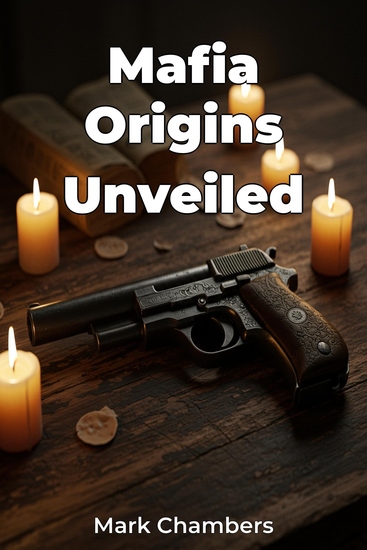
Mafia Origins Unveiled - cover

Mafia Origins Unveiled

Mark Chambers

Translator A AI

Publisher: Publifye

  • 0
  • 0
  • 0

Summary

Mafia Origins Unveiled explores the emergence of the Sicilian Mafia in the tumultuous landscape of 19th-century Sicily. Going beyond simple portrayals, the book investigates how the Mafia arose from societal chaos and a weak state, evolving into a complex criminal enterprise deeply embedded within the social and political fabric. Readers gain insight into how the Mafia's code of silence, "omertà," and intricate rituals contributed to its enduring power. The book meticulously examines the socio-political conditions, the evolution of Mafia rituals, and the documented criminal activities that solidified its influence.

 
Did you know that the Mafia initially filled a power vacuum created by ineffective governance and widespread social inequality? Or, that land disputes and extortion rackets were crucial in establishing the Mafia's financial and political dominance? These elements, analyzed through archival records and historical documents, reveal the Mafia's multifaceted nature.

 
Beginning with the historical context of Sicily, the book progresses through the formative stages of the Mafia, detailing its unique code and hierarchical structure. It culminates in showcasing how criminal activities intertwined to establish the Mafia as a pervasive force.

 
By focusing on the Mafia's formative years, Mafia Origins Unveiled offers a valuable understanding of its origins and persistent influence, appealing to those interested in history, true crime, and the complexities of organized crime history.
Available since: 02/21/2025.
Print length: 67 pages.

Other books that might interest you

  • White City and the Murder Castle The: The History of the 1893 Chicago World’s Fair and HH Holmes’ House of Horrors - cover

    White City and the Murder Castle...

    Charles River Editors

    • 0
    • 0
    • 0
    Walking around Chicago today, it’s easy to forget about its past as a rural frontier, which is due in no small part to the way Chicago responded to the Great Fire of 1871. Immediately after the fire, Chicago encouraged inhabitants and architects to build over the ruins, spurring creative architecture with elaborate designs. Architects descended upon the city for the opportunity to rebuild the area, and over the next few decades they had rebuilt Chicago with the country’s most modern architecture and monuments.  
    	Chicago recovered well enough within 20 years to win the right to host the 1893 World’s Columbia Exposition, an international fair commemorating the 400th anniversary of Columbus’ discovery of the New World. Covering nearly two square miles, the fairgrounds created a city within a city, and Daniel Burnham was in the middle of it all. With several other noteworthy architects, including Louis Sullivan, Burnham designed the layout of the grounds and the construction of the buildings. During the late 19th century, “neoclassicism” was in vogue, and American architects designed buildings incorporating ancient Greek and Roman architecture.  
    	Unfortunately for the international event and some of its guests, today the White City is best known for its association with one of America’s most notorious serial killers. Herman Webster Mudgett was born in 1861 in a small New Hampshire hill town, and he was dead before he turned 35, but in the years between, operating under a name he had constructed to replace his own, he built a hotel in Chicago designed to kill its guests, committed a number of murders whose exact count remains in dispute, and earned the distinction of being among the first Americans to whom the word “serial killer” - a term that did not yet exist in his lifetime - could reasonably be applied.
    Show book
  • Tough Guys in the Room - cover

    Tough Guys in the Room

    Howard Jackson

    • 0
    • 0
    • 0
    TOUGH GUYS IN THE ROOM  
    ‘WEAK IS NOT WHAT YOU ARE GOING TO REMEMBER ABOUT ME.’ 
    Al Capone. 
    Back then, hot headed gangsters, not so gentle dames and bullet riddled corpses filled the newspaper headlines. And some of the stories below the headlines were even true. The 1920s was a period in American history when even the respectable were unwilling to stay sober. And not so fast cars carried assassins across Chicago, a city that for many captures the essence of the USA.  
    In TOUGH GUYS IN THE ROOM, the story of Al Capone and his rivals is told in separate and stand-alone topics that cover key figures and events. The crimes and conflict are remembered, and the context that shaped those events and protagonists is explained. The police and the law abiding that made a doomed attempt to impose Prohibition also make an appearance. TOUGH GUYS IN THE ROOM offers a detached and impartial perspective on what happened between the Chicago gangs of the 1920s. There are also some surprises. 
    TOUGH GUYS IN THE ROOM is a must for fans of gangsterdom. This account of what happened in Chicago is kept simple but that does not prevent author Howard Jackson from taking an independent line on the St Valentine’s Day massacre and the character of Al Capone.
    Show book
  • Mindhunter - cover

    Mindhunter

    John Douglas

    • 0
    • 0
    • 0
    This is an independent summary & analysis of Mindhunter by John Douglas. It is not the original book. All trademarks and copyrights belong to their respective owners. For the full experience, please support the original work. 
    Why do some people cross the line into unthinkable violence—and how can understanding them make us smarter, safer, and sharper in our own lives? This 15-minute summary of Mindhunter follows the journey of the pioneer who helped create the FBI’s Behavioral Science Unit and turned “reading” crime scenes into a science of profiling. Through interviews with serial killers, breakthrough cases, and the birth of modern criminal psychology, the author shows how patterns of behavior reveal the mind behind the crime.
    Show book
  • True Crime Germany 2 - Real Shocking and Unknown Criminal Cases from Europe - cover

    True Crime Germany 2 - Real...

    Adrian Langenscheid, Benjamin...

    • 0
    • 0
    • 0
    "Nothing is crueller than people themselves. A thrilling and shocking look into the abysses of the soul" - No Mercy (Keine Gnade)- The True Crime PodcastIn 2019, Adrian Langenscheid's debut book, True Crime Deutschland, was published and rose from nowhere to the top of the winner's podium in the genre-relevant categories. Almost 2 years and 6 books later, Langenscheid is one of the best-known true crime authors in Germany.For the seventh work in his successful series, the bestselling author once again researched some of the most spectacular German criminal cases of recent decades. The result is a breathtaking and deeply harrowing portrait of human abysses that arouse powerful emotions precisely because of its cool and factually neutral descriptions.This gripping collection of accounts of murder, manslaughter, kidnapping, abuse, theft, and fraud will take you to the limits of what you can bear. They feature "people like you and me"; people whose lives no longer are what they were before due to tragic circumstances.With expertise and excellent mental cinema, the expert on true crime, in collaboration with thriller author Benjamin Rickert, summarizes the most important findings from court hearings, files, psychological reports, interrogations, and investigation protocols in his eventful narratives.Captivated, stunned, amazed, and moved to tears, you will question everything you thought you knew about human nature. True crime cases, true crimes, and thus the full force of reality hits you in ten detailed, familiar, and unfamiliar case histories!Click on "BUY NOW" to discover Germany's dark side."A go-to for every True Crime fan"- True Crime Podcast
    Show book
  • 15 Cold Case Stories: Real Crimes Solved After Decades of Silence - cover

    15 Cold Case Stories: Real...

    Davidson David

    • 0
    • 0
    • 0
    For sixty-five years, a young couple's murder in Montana remained an unsolved mystery. Patricia Kalitzke and Lloyd Bogle were found brutally killed in 1956, their case going cold as decades passed and investigators hit dead end after dead end. Then DNA genealogy technology did the impossible—it reached back through time and finally revealed the truth. This audiobook contains fifteen of the most gripping true crime stories where justice arrived decades later, proving that no case is ever truly unsolvable. 
    From a teenager's murder forgotten by time to a man wrongfully imprisoned for twenty years, from serial killers hiding in plain sight to DNA evidence that becomes a silent confession—these are real crimes, real families, and real investigators who refused to give up. Discover how cutting-edge forensic genealogy, persistence, and the power of preserved evidence have transformed cold case investigation across America. Listen as mysteries that seemed permanent suddenly find resolution, and families who waited generations for answers finally receive the closure they desperately needed. 
    Each story reveals how modern science is rewriting the rules of justice, proving that DNA technology can identify perpetrators decades after their crimes, that genealogy databases are becoming powerful investigative tools, and that the truth has a way of emerging no matter how long it takes. These are stories of hope, determination, and the remarkable breakthroughs that give voice to victims who have been waiting in silence for justice. 
    Perfect for fans of true crime, forensic investigation, and stories of justice finally served.
    Show book
  • Murder in Boston - A Woman Murdered A City Torn Apart A Crime That Gripped a Nation And That's Just the Beginning - cover

    Murder in Boston - A Woman...

    Ken Englade

    • 0
    • 0
    • 0
    A shocking true story of crime, punishment, and injustice in a major American city. Charles Stuart claimed it was a black man who carjacked him, shooting both himself and his wife, ending both her life and the life of their unborn child. The accusation and subsequent manhunt enflamed the long-simmering racial tensions of Boston, leading to the arrest of an innocent man. It was then discovered that Stuart had killed his wife and shot himself to cover up the crime, seeking a big insurance payout. When his crimes were exposed, Stuart jumped off a bridge to his death. Ken Englade explores the story with panoramic vision and a stunning eye for detail. Looking at the crime itself and the police response, Englade shows how Stuart's crime unraveled, how the truth came out, and what the media's response can tell us about the biases through which we view the worst of crimes.
    Show book