Junte-se a nós em uma viagem ao mundo dos livros!
Adicionar este livro à prateleira
Grey
Deixe um novo comentário Default profile 50px
Grey
Assine para ler o livro completo ou leia as primeiras páginas de graça!
All characters reduced
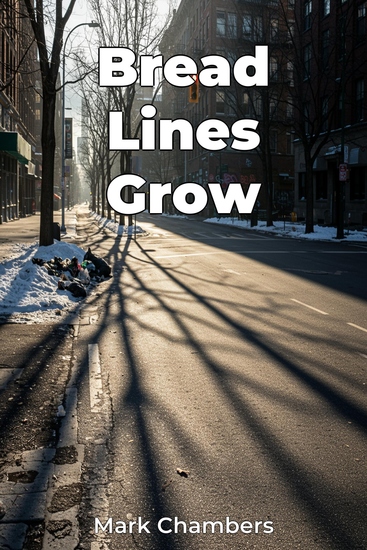
Bread Lines Grow - cover
LER

Bread Lines Grow

Mark Chambers

Tradutor A AI

Editora: Publifye

  • 0
  • 0
  • 0

Sinopse

Bread Lines Grow examines the profound crisis of urban hunger in the United States during 1932, a pivotal year in the Great Depression. It analyzes the political, social, and economic factors that led to widespread food insecurity, and investigates the diverse strategies employed to combat it. The book highlights that existing social safety nets were woefully inadequate, and the scale of suffering forced a re-evaluation of the government's role in providing for its citizens, laying the groundwork for the New Deal.

 
The book progresses by first establishing the economic and social landscape of 1932, then comparing the effectiveness of various local hunger relief efforts across cities like New York and Chicago. Finally, it explores the political debates surrounding government intervention versus individual responsibility.

 
By focusing on 1932, Bread Lines Grow provides an in-depth look at the intersection of individual suffering, community responses, and governmental actions during a crucial period in American history, making it valuable for understanding the origins of American social welfare and the ongoing challenges of poverty.
Disponível desde: 27/02/2025.
Comprimento de impressão: 56 páginas.

Outros livros que poderiam interessá-lo

  • Life's a Risk - cover

    Life's a Risk

    Will

    • 0
    • 0
    • 0
    It is no secret to anyone that our lives are riddled with ups and downs. Moments of great triumph happen alongside times of deep regret; people enter our lives and leave them; our lives feel full of purpose some days, and completely absent of it on others. When the time comes to face these roadblocks, how do we find the strength to carry on or the empowerment to believe in our goals and see them through? How do we summon the will to recover from heartache, self-doubt, and discouragement?Life's a Risk. A Guided Self-Help & Devotional Journal for the Seasons of Life, author Will seeks to help us find these answers for ourselves. Featuring motivation quotes, daily affirmations, and insight on knowing that life is a risk and that even the tough people you see today were in the same spot as you. This book primarily functions as a journal through which you can examine your spiritual condition in all these areas. Whether you struggle with maintaining discipline, taking risks, recognizing your strengths, or anything else, this spiritual, inspirational.
    Ver livro
  • The Epic of Gilgamesh - The World's Oldest Mythical Tale - cover

    The Epic of Gilgamesh - The...

    Julia Blacksmith

    • 0
    • 0
    • 0
    The Epic of Gilgamesh stands as one of the greatest literary works of the ancient world and the oldest surviving epic poem in human history. Originating from ancient Mesopotamia over 4,000 years ago, it was inscribed on clay tablets in cuneiform script and preserved through centuries of oral tradition. This epic tells the story of Gilgamesh, the mighty king of Uruk, whose adventures, friendships, and struggles with mortality continue to captivate readers to this day. As both a historical and mythical figure, Gilgamesh represents the universal human desire for glory, wisdom, and eternal life.  
      
    The epic was rediscovered in the 19th century among the ruins of the great Assyrian library of King Ashurbanipal in Nineveh. Scholars painstakingly translated its fragmented tablets, revealing a narrative that predates even the Homeric epics of Greece. Its influence can be seen in later mythologies, including biblical and classical traditions, with themes and motifs that echo throughout world literature. The story’s philosophical depth, particularly its exploration of human limitations and the acceptance of mortality, remains profoundly relevant.  
      
    Central to the Epic of Gilgamesh are its rich mythological elements, which reflect the beliefs and values of ancient Mesopotamian civilization. The gods play an active role in shaping the fate of mortals, highlighting the intricate relationship between divine forces and human ambition. From the creation of Enkidu as Gilgamesh’s equal to the wrath of the gods following their defiance, the narrative explores the balance between power and responsibility. The story also delves into themes of friendship, grief, and self-discovery, making it a timeless reflection of the human condition. 
    Ver livro
  • It Ends With Us: Book Summary & Analysis - cover

    It Ends With Us: Book Summary &...

    Briefly Summaries

    • 0
    • 0
    • 0
    This is a concise summary and analysis of It Ends With Us, by Colleen Hoover. It is not the original book and is not affiliated with or endorsed by Colleen Hoover. Ideal for those seeking a quick and insightful overview.
     
    It Ends With Us is a poignant contemporary romance novel that delves into complex themes of love, resilience, and personal empowerment. The story follows Lily Bloom, a young woman who builds a new life for herself in Boston, away from her tumultuous past. When she meets neurosurgeon Ryle Kincaid, their chemistry is undeniable, but as their relationship deepens, Lily must confront painful truths and make difficult choices that challenge her understanding of love and self-worth. With heartfelt prose and emotional depth, Hoover crafts a narrative that explores the resilience of the human spirit and the transformative power of courage in the face of adversity.
    Ver livro
  • Power and Politics - The Structure and Struggles of Roman Rule (3 in 1) - cover

    Power and Politics - The...

    Rogan Fish

    • 0
    • 0
    • 0
    This bundle offers an in-depth exploration of how political institutions, civil unrest, and power dynamics shaped the Roman Republic and Empire. Beginning with the early Republic, this book dives into the foundational structures of Roman governance—such as the Senate, consuls, and tribunes—highlighting how the balance of power evolved in response to internal challenges and external expansion. The early sections emphasize the ideals of civic virtue and republicanism that underpinned Rome’s initial governance, and how those ideals were tested by growing inequality and political rivalry. 
    As Rome expanded, the book traces the emergence of social conflict between the patricians and plebeians, the rise of populist leaders, and the violence that accompanied land reform and calls for justice. From the Gracchi brothers to Julius Caesar, readers will witness how political ambition and civil war undermined the Republic’s foundations. Key events such as Caesar’s dictatorship, the assassination that followed, and the shifting alliances during the subsequent power vacuum demonstrate how Rome’s political system struggled to contain individual ambition and the burden of imperial management. 
    Finally, the book examines the transformation into empire, where power became centralized under emperors who ruled with divine authority and military backing. Though the empire brought relative stability, it came with corruption, oppression, and loss of representative governance. This section looks closely at the early emperors, the role of the Senate under imperial rule, and the public’s shifting relationship with authority. Power and Politics serves as a gripping account of how Roman ideals clashed with political reality, offering timeless lessons about governance, ambition, and civic duty.
    Ver livro
  • The Whigs and the Know Nothings - The History of the Influential Political Parties that Collapsed Before the Civil War - cover

    The Whigs and the Know Nothings...

    Editors Charles River

    • 0
    • 0
    • 0
    It was in the wake of the election of Andrew Jackson that the Whigs emerged as opponents to the Jacksonian Democrats during a period of American history known as the Second Party System (1828-1854). Initially, the conflict was rooted not only in different visions for the United States – the Whigs believed in a strong central bank and federally funded infrastructure projects (known as “internal improvements”) – but also in opposition to one man: Andrew Jackson. When it first formed, the Democratic Party coalesced around Jackson, and his beliefs and actions became Democratic Party dogma, which left the diverse group of people who opposed Jackson to become the Whigs.  
    The problem with this arrangement is that while the Whigs scored some notable successes as an opposition party, they found governing more difficult. The two Whigs elected president, William Henry Harrison and Zachary Taylor, died in office, raising to the presidency their respective vice-presidents, John Tyler and Millard Fillmore. Neither man succeeded in uniting the Whig Party behind him (a gargantuan task, to be sure), and neither was ever elected president in his own right. The increasing rancor over slavery is what finally killed the Whig Party.  
    	In the wake of contemporary debates over immigration, the “Know-Nothings” have been regularly cited as an example of how dangerous nativist attitudes can become and, indeed, have proven to be in America’s history. Several columnists, for instance, have striven to make comparisons between the Know-Nothings of antebellum America and the country’s recent immigration policies, helping in part to generate modern interest in a political party that many Americans have heard of but tend to know little about. The Know-Nothing movement can actually be tied to a number of violent episodes and ethnically charged riots that occurred during the late 1850s.
    Ver livro
  • Addictions and the Future - The Challenges Our Young Generation Is Facing (4 in 1) - cover

    Addictions and the Future - The...

    Valerie Vogue

    • 0
    • 0
    • 0
    This book contains the following 4 titles: 
    Hooked on Tomorrow - The rapid pace of technological and social change has become the defining characteristic of modern life. We live in an age where innovation is constant, and the desire to keep up with it is almost addictive. From the devices we use daily to the way we communicate, everything is designed to keep us moving forward, often faster than we can comprehend. The term "progress" is no longer just about improvement but about a relentless drive toward the future, regardless of the consequences. 
    Narcissism -  At its core, narcissism is a defense mechanism that helps individuals maintain an exaggerated sense of self-worth. This inflated self-image may stem from deep insecurities or past trauma, and it can be a way for individuals to shield themselves from feelings of inadequacy or vulnerability. Narcissists often rely on external validation—through admiration, praise, and attention—to affirm their worth, which means their sense of self is fragile and dependent on how others perceive them. 
    The Future with Gen Z - Generation Z, often referred to as Gen Z, comprises individuals born roughly between 1997 and 2012. This cohort represents a unique blend of cultural, social, and technological influences, making it distinct from previous generations. Growing up in an era defined by rapid technological advancements and global interconnectedness, Gen Z is the first true generation of digital natives. 
    The Singularity Paradox - Artificial intelligence (AI) has evolved from the realm of science fiction to become an integral part of modern society, influencing nearly every aspect of human life. This transformative technology, once envisioned as futuristic and far-fetched, is now a driving force behind innovations in industries ranging from healthcare to transportation, and it continues to reshape the way we live and work.
    Ver livro